
Are Fake Security Cameras Worth Using?

So you’ve just moved into your new house, and you’ve got already got a hundred home improvement ideas buzzing about in your head. One of your main concerns is protecting your investment in your new home with home alarm systems, locks, and maybe even security cameras.

We all want the best protection for our houses, and as far as protection goes, security cameras are the most interactive part of the security system. But if you just bought a house, money can be tight, and a single high-quality camera can set you back hundreds of dollars.

If you can’t afford the real thing, fake security cameras are a tempting way way to provide some protection at a low price. But you have to ask yourself: Are the savings worth it?

So Let’s Start with: What is a Fake Security Camera?

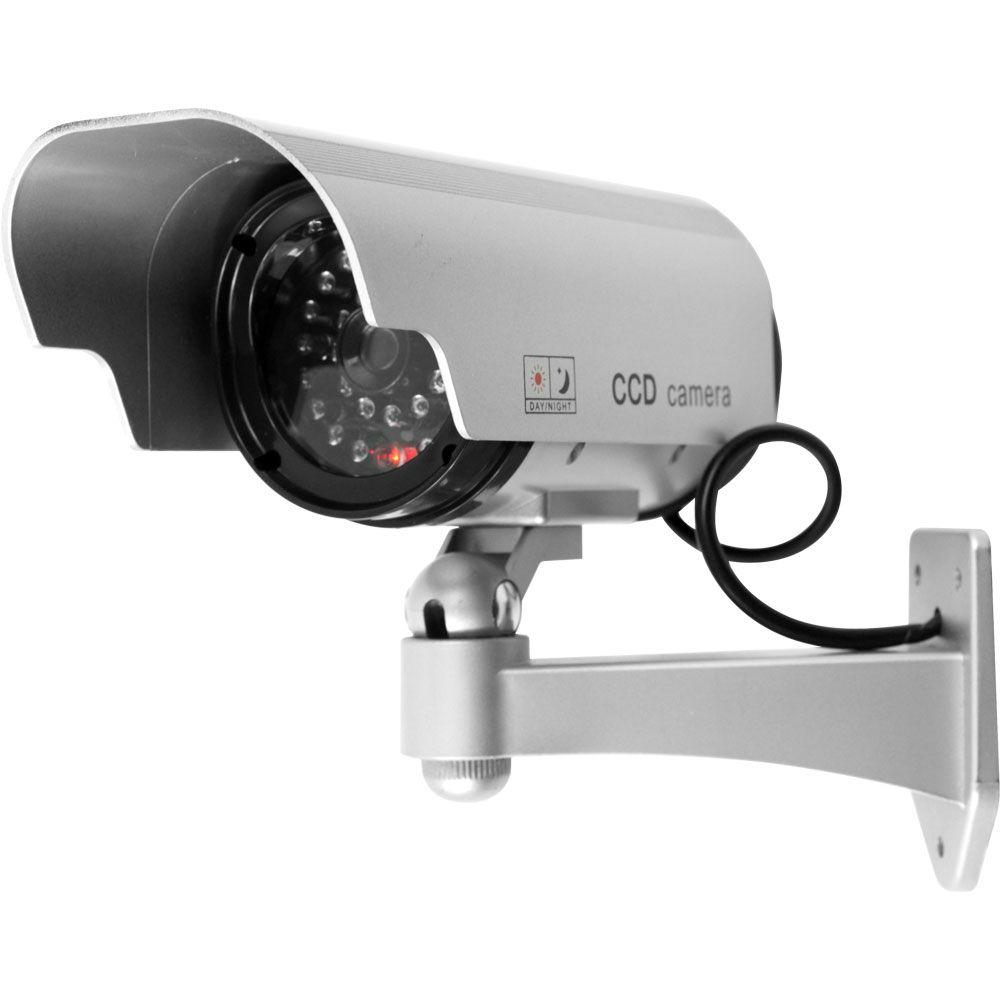
Fake security cameras are designed to look like real security cameras in appearance, but don’t have the features, capabilities and functions of real ones. They are also called dummy cameras, simulated cameras, or decoy cameras.

Now the fake cameras for security come in a wide range of shapes and sizes, such as the fake security cameras with red light and motion detectors.

The price of outdoor fake security cameras can be lower than the real ones, but they are often built with inferior materials and many fake security cameras don’t have real lenses or other components to create a more believable facade.

Some may prefer fake outdoor security cameras to install outside your house or at your business, because you think they can fool intruders and stop home break-ins.

They can’t, however.

Keep reading to learn more about fake security cameras and how to optimally protect your assets.

Real vs. Fake Security Cameras

Security cameras have plenty of advantages when it comes to protecting your home—there’s no doubt about it. First, they serve as a deterrent. If prospective burglars look around and spot the cameras, they may decide that your home is more trouble than it’s worth. The last thing criminals want is for their face to end up on the evening news and all over the internet.

The other main advantage of security cameras is that if prospective thieves don’t spot the cameras and manage to enter your property, you may be able to capture their faces on record.

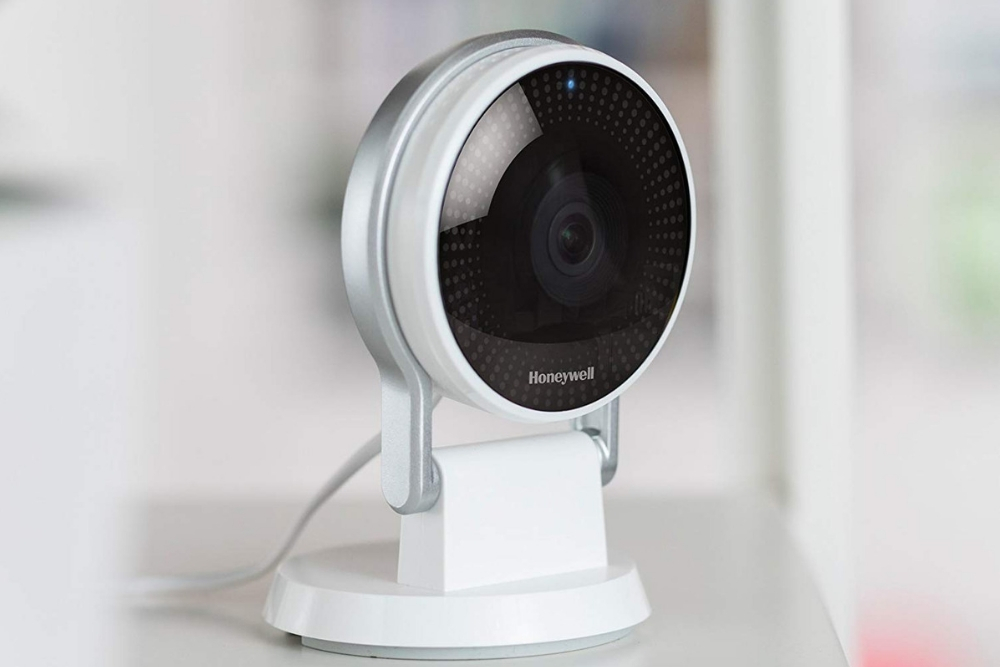
c2-indoor-camera-cropped-on-table

You can check how many people were there, what time the burglary occurred and what was taken from your home. The more helpful information you can provide to law enforcement officers, the more resources they can devote to bringing the burglars to justice.

Fake cameras provide that initial deterrence, relying on their visibility as a threat. They’re bluffing, basically. If burglars don’t see the camera, if they know it’s fake or if they just don’t care, then the fake camera is useless.

With that in mind, there are three main reasons to go for fake security cameras instead of real ones.

  1. They’re cheap. The cost of a few real cameras can get you a full array of fake ones to place throughout your home. If you really can’t spare the money but need to secure your house, they might pass muster. The appearance of security is enough to scare off some burglars, and having some deterrence is better than having none at all.
  2. They’re easier to install. Fake cameras don’t have any circuitry or connections like the real ones do, so all you have to do is secure them where you want them with screws or double-sided tape.
  3. Fake security cameras will deter inexperienced, low-level criminals. After all, they don’t want to get caught. If potential burglars think they’re being watched and recorded, that may be enough to scare them off and keep your house safe another day.

But are these advantages enough to make up for the downsides of installing fake security cameras?

The Negatives of Fake Security Cameras

  1. Fake cameras don’t record. Camera footage by itself won’t directly stop someone from breaking into your house, but you’ll have a record to give to police officers when they take your statement. If your home is burgled, you’ll have less information to assist with any investigation if you only have fake security cameras. A real surveillance camera can catch burglars or thieves “in the act”, which is exactly what a fake security camera fails to do. In the end, fake video security cameras just become a decoration.

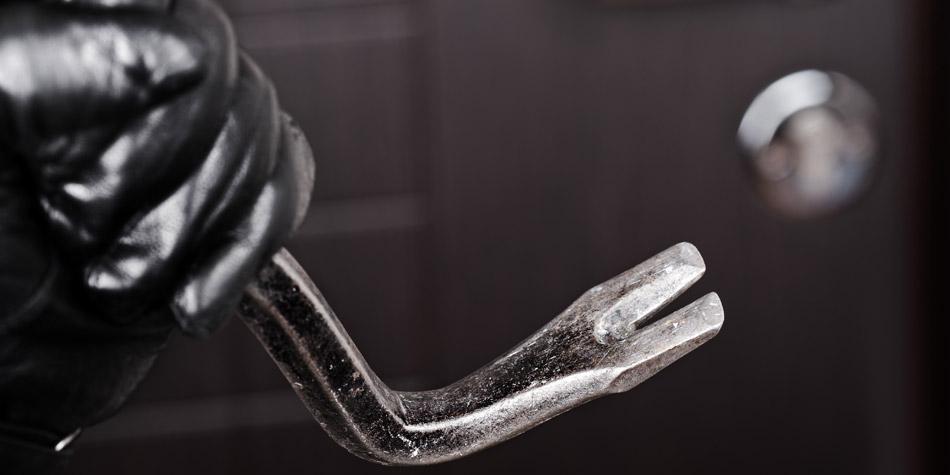
    burglary prevention

  2. Experienced criminals can tell a fake camera from a real one. They will realize you neglected to buy real cameras and know you’re cheap on security and thus an easy mark. Burglars are much cleverer than you think. A knowledgeable or experienced criminal can easily tell the difference between a fake security camera and a real one.
  3. Fake security cameras are risky to use anywhere other than your home. At home, it’s your house, and you can do what you want with it. But if you’re running a business and you use fake security cameras, you could very well open yourself up to legal trouble on the grounds that you’re creating a false sense of security for employees and visitors.
  4. There have been lawsuits where people, trusting that security cameras were real, left their vehicles in view and were subsequently robbed or carjacked. It’s unfair to your employees, and it’s just plain bad business: Who would want to work with someone who doesn’t value their business and their employees’ safety?
  5. There is no remote access with fake security cameras or remote access. A fake security camera falls short when you want to know who is in your house, if your children are back from school, if the baby wakes up, what the dog is getting into, and whether your package arrives. One features of real security cameras is that you can have remote access to your home and business from anywhere and anytime on your mobile devices.

    What if someone breaks into your house? Fake security cameras aren’t able to notify you in case of an emergency. A real surveillance camera can send you push notifications, emails and audio alarm (siren) when it detects motions and finds dangers. You can react in real-time and call 911, to reduce your loss.

Is It Worth Using a Fake Security Camera?

If you’re trusting of your neighborhood and you are absolutely certain you’ll never get anything but petty thieves, then you might be able to get by with fake security cameras.

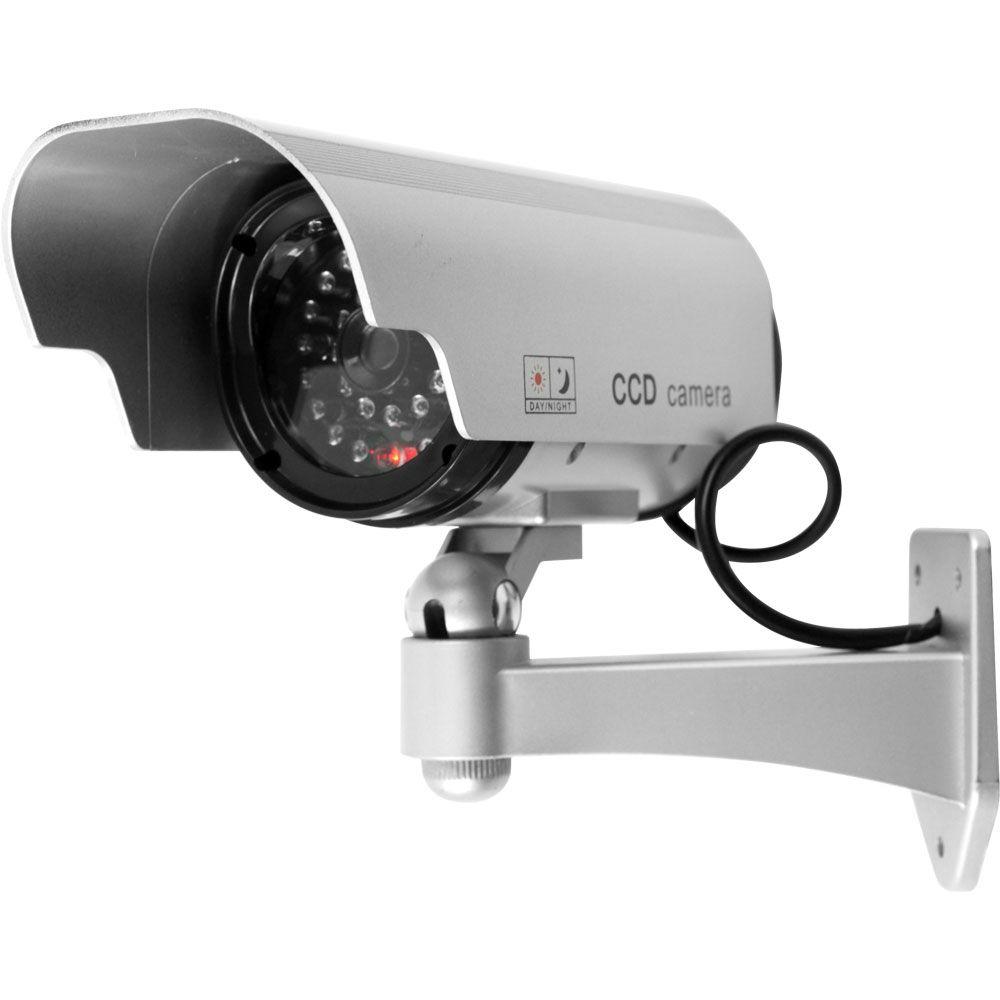
fake-security-camera

But any thief worth their salt won’t be deterred by fakes, and they may even be encouraged once they recognize them. Your belongings and your peace of mind are worth more than temporary savings. Besides, real security cameras aren’t that much more expensive than fake ones anymore.

Most fake cameras are cheaper than real ones; after all, blinking lights in a plastic case is always going to be cheaper than an actual camera and its circuitry. Most fake cameras go for around $20 for single units.

But not all real security cameras will break your bank. High-end consumer-grade cameras can go for upward of $200, but they’re hardly the only ones available on the market. Plenty of cameras fall within the more affordable range of $80 to $100, with minimal video quality loss. Some even have wireless and cloud storage capability.

You’ve got a lot of options for security at your fingertips, whether you need just one or two cameras covering the vital areas or a more comprehensive solution. Don’t leave your home unprotected: Get real security cameras and real protection.

So, as you consider using fake security cameras, make sure you factor in what would be the best choice to deter crime?

The answer is obvious: real security cameras are able to not only reduce your exposure to theft but provide peace of mind.

And the proof?

According to the home burglary statistics, homes with security camera systems are up to 300% less likely to be broken into.

Using fake security cameras, on the contrary, would only make your home or business the target of crimes, and put your family and property into the risk of being robbed.

6 Key Differences Between Unmonitored and Monitored Security Systems

Whether you’re moving into a new home or simply rethinking how you live in your current residence, one of your top concerns is likely, “How do I keep this place safe?”

Protecting your property and, more importantly, yourself and your family is a top priority. Deciding how to go about protecting your home is a big decision. Many homeowners turn to security systems to keep themselves, their family, and their property safe. And the type of home security system you choose could make a difference in an emergency situation.

When it comes to security systems, you can choose an unmonitored security system or a monitored security system.. Both options have pros and cons. Here are the major differences between unmonitored versus monitored security systems and how to choose between them for your home.

Monitored home security system

Unmonitored Security Systems

An unmonitored security system consists of tech like security cameras, sirens, and other devices that activates or alerts you when something is amiss but does not contact emergency services directly.

There are two categories of unmonitored security systems: self-monitored systems, which link to your phone and send you notifications, and truly unmonitored systems, which simply record video footage from security cameras or set off a loud siren when an intruder is detected.

Security camera monitoring

Unmonitored is More Affordable

The primary advantage of an unmonitored security system is that it tends to be less expensive than a monitored one. You only have to pay for the upfront costs of the equipment itself. You can install the equipment yourself with your trusty screwdriver, or you can hire a professional to install it for an installation fee. After that, the system is ready to go, and the only additional costs going forward are maintenance costs.

Unmonitored is Less Safe

The main downside to an unmonitored security system is that while it may deter some criminals and can alert you to an intruder, the system won’t actually do anything to stop someone determined to commit a crime. The best you can hope for is that a blaring siren and a visible security camera will scare off potential burglars.

Unmonitored is Less Convenient

When an unmonitored security system goes off, you’ll typically get an alert on your phone, and you’ll have to contact the police yourself, as opposed to having an alarm monitoring company evaluate the situation and reach out to emergency services on your behalf.

Being the sole point of contact for your security system has some disadvantages: What if you miss the notification? What if your phone dies and you don’t receive the notification? What if you’re asleep and have your phone on do not disturb? As with any alarm system, your neighbors may be mindful enough and call the police for you when they hear your alarm going off, but there’s no way to guarantee that.

An unmonitored security system is better than no security system, and you can always call in emergency services and respond to alarms yourself. But with an unmonitored system, there will always be gaps in your home security. That’s why some people opt for monitored security systems.

Monitored Security Systems

alarm-monitoring-support-service-1280Monitored security systems use the same equipment (security cameras, alarms, etc.) as unmonitored systems but also include the services of professional home security technicians to keep an eye on your home security system monitoring and respond to alerts in real time.

Monitored Reacts Faster

These monitoring services fill in the gap of unmonitored systems—the fact that all responsibility lies on you. Did a fire manage to get out of control? Your monitoring company has seen it and has contacted the fire department. Burglars broke in through the window? The company was notified of a glassbreak sensor going off and has called the police.

Monitored Makes Life Easier

Your alarm monitoring company will keep you in the loop, and you won’t need to lift a finger. And while the professionals are keeping an eye on things, you’ll also have the opportunity to notify them in case of a false alarm.

Monitored is More Expensive

The downside to a monitored security system is the cost. Unlike an unmonitored system, where you just pay upfront for the equipment and installation, monitoring is a recurring expense.

In most cases, security companies require that you sign a contract for alarm monitoring services. Each company offers a set of plans, and you can choose which one has the features you need. The company handles everything else once you pay and sign the contract.

Contract length can range from one year to five years (the industry standard is three years). Your monthly bill from a security company covers a few things: the ongoing fees of monitoring, the repayment for the equipment installed, ongoing maintenance for the equipment, and, as always, overhead.

The contract includes equipment and installation, and the technicians will use their expertise to ensure that coverage is as comprehensive as possible. You won’t have to worry about a poorly placed camera or buying the right equipment.

The longer your contract with a monitoring company, the lower your monthly bill generally is. And should you wish to end it early (because you plan to move elsewhere, for instance), you also take the remaining cost onto yourself.

Monitored Gets You Discounts

The good news: Your insurance company may offer you a discount on your homeowner’s insurance when you install a monitored security system, so call and ask how much it’ll save you.

Here are potential reasons insurance costs could be reduced with a monitored security system:

1. Boosting home safety

Insurers may provide a discount on insurance premiums if homeowners have a security system, which can help increase home safety. The potential decrease in incidents that result in damaged properties could show insurance companies that homeowners are less of a risk and could qualify them for discounts.

They also see that a monitored security system could reduce their exposure to substantial risk if response times are cut dramatically.

2. Save on insurance premiums

Homeowners could see their insurance premiums drop up to about 15 to 20 percent if they install a comprehensive home security system, according to the Insurance Information Institute.

3. Lower risk of cost hikes

To avoid higher insurance costs, homeowners should make sure that they carefully read their policies. Home insurance companies may decide to increase home insurance rates in case a burglary occurs, according to The Simple Dollar.

If the insurance company feels like their risk has been minimized or reduced they are less likely to increase premiums.

4. Reduce theft claim quota

Security systems can also help save neighbors money by limiting the total theft claim quota. The Simple Dollar recommended homeowners ensure their neighborhood has not reached their theft claim quota, or the number of thefts within a certain area.

5. Install system with other safety features

Additionally, homeowners can also look for other safety features to lower their insurance premiums. These include smoke alarms and deadbolts, according to the Insurance Information Institute. The combination of a security system and other ways to protect their home could save them the stress of worrying about safety and money.

If you’re installing a monitored security system, check with the city clerk’s office about setting up a monitored system in your home. Some cities require you to have a permit so that emergency services can be dispatched to respond to an alarm, and sometimes these permits come with a small fee.

Choosing Between Unmonitored and Monitored Security Systems

Unmonitored security systems are more budget friendly but place responsibility of your home’s security solely in your hands. Monitored systems do require an ongoing cost, but they’ll keep your home safe even when you’re not looking by offloading the responsibility of responding to emergencies to your alarm monitoring company’s technicians.

The choice comes down to the price you put on safety, security, and peace of mind when it comes to protecting your home.

What are you looking for in a home security system?

If you’re looking for the most peace of mind and convenience you can get, and you can afford to spend a little more, a monitored security system is probably right for you. But if saving money is more important, and you don’t mind the extra responsibility of watching over your system, then an unmonitored security system may be your best bet.

Apartment Security: 8 Safety Tips for Renters

Renting an apartment presents a unique challenge when it comes to home security. Ultimately, the best way to stay safe when living in an apartment is to rent one located in a safe neighborhood, but remember: low crime doesn’t mean no crime.

Still, there are some important apartment security tactics you can use to protect yourself and your loved ones when you are renting.

As a renter, your options for adding security are limited. But you might be surprised at the number of easy security measures you can implement, even in a large apartment building or complex. We’ve put together a guide to help you understand what apartment security issues you should consider before signing a lease, plus things you can do after you move in to give yourself top-notch apartment security.

Research the Neighborhood

When considering an apartment to rent — it’s no different than buying a home — you will want to start by researching the area thoroughly before you move in. Besides knowing if the immediate area is safe, you want to find out if the neighborhood where the apartment is located borders any parts of the city that are less safe. High crime rates in some parts of a city can spill over into other areas in the warmer months when criminals are more active.

Your realtor is correct; Location, Location, Location! Before you decide on a place to call home, it’s essential to research the area’s crime rates and talk to residents.

Check online to see the local crime statistics for that area. Numerous online resources can provide that crime data to you including: https://www.crimereports.com or https://www.areavibes.com.

Visit the Area

Get your feet on the ground and explore potential neighborhoods as if you live there.

If the apartment you’re considering is in a building with other tenants, try to speak with them about the area and what it’s like to live there.

Take note of what other kinds of buildings and businesses are adjacent to your home and the amount of noise pollution they produce. Visit at different times of the day, at different days of the week. Browse nearby shops or sit down at a couple restaurants. Some areas may seem quiet and peaceful during daytime but turn into bustling hotspots at night.

It’s also important to take note of the type of street where the apartment is located. Is it a busy city street with a lot of pedestrian and vehicular traffic or is it a quiet residential street? There are certainly busy areas that are perfectly safe, but it’s a good idea to be aware.

As you are walking around check for outdoor security cameras that will deter crime and provide an additional layer of security.

Check online sites like SpotCrime to see what’s been happening in the area crime-wise, and talk to neighbors, police, and local business owners to find out more about the neighborhood before you sign on the dotted line.

If at any point you feel uncomfortable walking around, especially at night, you may want to re-evaluate whether this location is a good place to live.

Check the Apartment’s Access Points for Home Security

While you may like the idea of a first-floor apartment for the sake of convenience, ground-floor apartments are much more likely targets for burglaries due to how easy it is to gain entry.

For this reason, try to be at least on the third floor or higher. Be mindful of all access points to the building (including fire escapes) before committing to anything.

air conditioner

You will want to make sure that any doors and windows that are at accessible at the street level are sturdy and feature robust locking mechanisms. Securing your windows can be especially challenging given that property management may make it difficult to make significant changes.

Additionally, take notice of the apartment building’s entry and exit points and their security. Many apartment buildings require a separate set of keys, a remote key fob, or electronic door lock with numeric keypad, providing some protection against strangers entering your building.

The first line of defense in apartment security for renters are the entrances, both to your own apartment and to your building or complex. Check all entrances for secure locks and additional safety measures like peepholes, chain locks, key codes, cameras, and remote unlocking. Ask management how often keys and key codes are changed. You don’t want to run the risk of a past tenant having access to your apartment.

Some buildings have multiple layers of locking doors, sophisticated access control systems, or even security guards on watch 24/7. The more “filters” there are between the apartment lobby and the residential units above, the safer you’ll be.

Apartment Security Tips for After You’ve Moved In

Well, you found it. And have moved into your new place. There are important precautions you can take while you live there to help keep you and your family safe.

Get Renter’s Insurance

If you are renting, it is essential to make sure that you get renter’s insurance to protect your belongings. While renter’s insurance is not a requirement like homeowners’ insurance when you have a mortgage, the protection it provides vastly outweighs the cost.

Despite all the safety precautions you might take, unfortunate events still happen, and it’s a good idea to hedge your bets with renters insurance. Unlike your landlord’s insurance that covers only the building you live in, your own renters insurance will cover personal property like furniture, electronics, clothing, and more that could be lost in a burglary or disaster.

You can purchase a renter’s insurance policy relatively inexpensively and it provides an additional layer of protection against loss of property.

Install a Security System

If your apartment does not come with an up-to-date apartment security system already, we recommend that you have one installed. Today, you can find cost-effective wireless security systems designed for cozy living spaces that are easy to install and simple to transfer to a new home if you relocate.

Man coming home to wife washing a dish

Many security cameras today are Wi-Fi enabled, and you can control them right from your smartphone. Installing a wireless apartment security system is easy and should not concern the landlord as you don’t need to drill into the walls.

Security Camera in Nursery

The best places to set up security cameras in your apartment are at the main access points, so usually the front door and maybe one for a balcony or window if you’re near the ground floor. Many wireless cameras will eat up your bandwidth so make sure you have a decent internet plan that can handle the influx of data.

Check Exterior Lighting Around the Building

Burglars often target apartment buildings that are poorly lit to increase the likelihood of them escaping unnoticed. Check around your apartment building to see what kind of lighting is installed.

Are the back alleys appropriately lit with motion-sensing floodlights? Are all lights working correctly? If not, contact your landlord right away to get it fixed.

Replace the Door Locks

A good landlord will make sure that the locks are re-keyed or replaced before renting to a new tenant. If your landlord does not provide this service and you want to do it yourself, ask for approval first before contacting your nearest locksmith. (In fact, this is an important question to ask before renting the unit.)

You can also bolster your apartment security by installing a sturdy deadbolt on your doors if they don’t already have them. Be sure to check with your landlord to make sure that you are cleared to install these as some property management companies may have strict requirements regarding add-ons.

deadbolt

Get to Know Your Neighbors

Getting to know the other renters next to you can be beneficial for many reasons. Having a good relationship with your neighbors usually means that they will keep an eye on things for you when you are away and report any suspicious activity. And you’ll be able to do the same for them.

kids playing with toys in front of parents

Apartment living offers you the chance to try out different neighborhood in a city. While security varies from building to building, there are some important steps you can take to find the right building in the right neighborhood.

Whether you are moving into an apartment on your own or with the whole family, doing your research is critical. And it doesn’t take much time between asking a few questions, walking the area, and understanding potential vulnerabilities for the building and your particular unit.

Your safety should be a priority so you can truly make your apartment a comfortable home.

Moving into a new place is exciting, and knowing your new home is secure makes the experience even sweeter. Real apartment security is about doing the small things that make a big difference. Check out the related articles below to learn more about how you can be safer in your new place:

The Top 4 Tips For Secure Property Management

How a duplex security system can protect your tenants and your investment

As a multi-family property owner or building developer, you want to provide the best property protection services to your tenants.

water bug 2

Here at Alarm New England, our property protection technology is the newest and best on the market. Unlike past technologies, our technology is wireless, which means low upfront costs and a building that is secure and automated – a great affordable benefit for developers! This type of property protection attracts high-end tenants, which makes investing in our services worth every penny.

equipment

But a duplex security system is not just about security cameras and locks. Secure property management is comprised of a package of options that work together to make your property safer and more appealing to tenants. Combining cameras with electronic locks, flood monitors and unit-specific systems provides holistic protection for your tenants and your property. Comprehensive property security allows you to keep an eye on your property at all times, reduces locksmith fees, provides early detection of floods and fires, and allows you to charge higher rents for each secure unit on your property.

november-infographic

Here are our four top tips to create the ultimate property protection package.

1. Install Security Cameras

As a multi-family property owner, you want to make sure you know what’s happening on your property. It can be difficult to keep track of daily comings and goings. It also isn’t very reassuring to know that over 70 percent of burglaries are likely to happen at residential properties as compared to stores, offices or businesses.

One line of defense for secure property management is making sure you have eyes on your property at all times by using security cameras. The number one position for a security camera is at the entry point and exit point of your buildings. For multi-family properties, it would be a good idea to place them at every door leading outside of the building. This will help with the reduction of liability by having the entrance and common area covered by security camera.

You want to place cameras in a way that a person can’t touch them or move them so as not to be seen. With security cameras, landlords have access to view live video via a smartphone at any time. The cameras record for two weeks before erasing the video.

Plus, video can be downloaded at any time to be used as evidence in a case or to check your property for signs of burglars casing the area. That said, security cameras are just the first step in a comprehensive duplex security system.

2. Utilize Electronic Locks

Electronic locks provide a needed extra level of security for secure property management.

Most of the time, burglaries happen to homes that left their doors unlocked. The burglar didn’t even have to try that hard—they just turned the knob. Which is why knob locks aren’t the greatest.

The traditional model of a locksmith door with a key allows for a higher rate of break-ins, and it costs a lot of money to have new locks constantly installed. All a burglar has to do is get a copy of the key or use something to pick the lock. It’s also easy to get a knob off a door—just use a hammer, pliers or a saw to get it off, and you have easy access. There’s also the old credit card trick, where you just slide a card in and push the latch back to gain entry.

If a property owner uses electronic locks, all of these options are gone. With electronic locks, tenants must know a code to enter the home, which saves the time of getting out keys. They don’t have to worry about lost keys, they save money on hiring locksmiths when locked out and property owners can track and adjust the usage of all electronic locks through alarm.com.

If for some reason electronic locks aren’t an option, at the very least get a deadbolt and add it to your knob-locked door. It should be positioned six to eight inches above or below your doorknob. This way, all of the burglar’s tricks are mostly moot because the latch on the deadbolt is longer and it’s, in general, more structurally secure.

3. Install Temperature and Flood Monitors in the Basement

Burglars aren’t the only thing ransacking properties these days. Natural disasters can lead to a lot of property damage if the right steps aren’t taken to deal with their effects. In 2018 alone, natural disasters cost over $91 billion in the U.S. from events such as wildfires, tornadoes and hurricanes.

The first line of defense against natural disasters in a comprehensive duplex security system is installing temperature and flood monitors throughout your properties.

A flood monitor does exactly what the name says—it tracks the presence and levels of water in your property. It’s good for alerting you if there’s a leak or if the torrential downpour has now entered into the basement of your property. Water damage can cause all sorts of problems for property owners, including structural damage and destroying valuables.

A smart thermostat adjusts the temperature in a property automatically throughout the day to keep the temperature where the owner wants it. They learn from your behaviors, and some allow you to control them wirelessly, like through your phone. The main point of using them is to allow your property to become more energy-efficient.

Just like a smart thermostat can save you money, so can a flood monitor, especially in the basement. Basements flood regularly due to hurricane season or heavy rain here in New England, so investing in a monitor will be beneficial in the long run. You will be able to handle an issue when it happens, before too much damage is done, saving you time and money.

4. Offer Security Systems in Each Unit

It is also in a property owner’s best interest to offer security systems for each unit. There are multiple options you can give tenants, but three main components that come to mind are alarm keypads, motion detectors and door contacts.

According to the F.B.I., burglars are 2.7 times more likely to target homes without alarm systems. Offering this service to your tenants will increase their peace of mind and statistically make their unit safer just for having a system in place.

A motion detector allows the chance to scare away whoever may be lurking in the shadows. Passive Infrared Sensors (PIR) are usually on residential properties and detect energy released as heat from animals or humans.

A door contact sensor is another important tool for secure property management. A door contact is a two-piece system with one part sensor and the other part magnet. This wireless tool can either be surface mounted or recessed into the door and door jam. When a door is opened, if the alarm is on, and the sensor and magnet will separate, the sensor will get a signal to the alarm panel and an alarm – a chime or voice announcement will sound announcing the door has been opened.

By providing all of these options, a property manager is benefitted as well because you know all of your properties are protected in every way possible to keep them safe. If people hear that your property is safe, they’re more likely to come to see it and, if it’s a multi-family property, come and stay there.

Protect Your Property

As a property manager, you want your tenants to have peace of mind knowing they live on a safe property—safe from both burglars and problems.

As a property developer, you want to have the peace of mind that your business is protected when you’re not there. With a package of options, you provide layers of safety that, when working together, can provide benefits to both tenants and owners.

Because we’ve been in business for more than 47 years, we know how to protect individuals, families and businesses. We’re dedicated to providing the latest security innovation and technology and giving you the peace of mind you deserve.

If you’d like to speak with one of our team members about taking your security back, reach out and call us, so we can create a security package specifically for you—your way, your choice.

17 Features to Consider When Building a New Home

It’s finally happening – you’ve secured a property or piece of land and now it’s time to build your own home. It’s easy for new home builders to get caught up in the excitement of it all or panic over keeping to the budget. With some careful planning and reading through our recommended must-haves, you’ll be well equipped and ready to make your dream home a reality.

By now you’ve most likely researched the plot and created a first or second draft of the building plan. The architect has helped with sketching out the rooms and hallways, and now you need to visualize how each room functions.

Fortunately, none of this needs to be overly technical or confusing. Below is a brief guide of the most popular features a modern home should have. We also break down what each is, how it functions, and whether it is worth installing in your home.

Essential Features Every Home Needs

Built-in storage: To keep the house uncluttered, storage space is necessary. Built-in storage areas offer a sleeker, tidier solution than traditional free-standing cabinets and wardrobes. What’s better is that it can seamlessly blend into the wall or become a decorative feature. Make use of built-in storage all over the home, not just in the kitchen.

Open plan kitchen: This room has become the focal point of the modern home. Kitchens have become more prominent in homes and transformed into a place to entertain guests.

open-plan-kitchen for a modern home
Design a kitchen that can accommodate more than just one cook, and can instead host a small group of people while simultaneously giving you ample preparation space. A large kitchen island can assist with both of these needs and can provide additional storage space.

Lighting: Although an abundance of lighting may not be noticeable by a potential future buyer, a lack of it certainly will. Think outside the box when it comes to lighting. If you plan on having walk-in closets of any size, it may be wise to install lights within them.

indoor-lighting-installation for optimal home security

Understand the function of the room and how will it be used so you can use lights to highlight or draw attention to certain features.

Laundry room: Consider building the laundry on the same level as the bedrooms. This saves both time and effort in terms of moving clothes, duvets, and linen to the laundry downstairs. If this isn’t possible, consider a laundry chute.

Laundry chute: This is a vertical tunnel or passage in the wall by which laundry can be dropped into and carried down to the laundry room. The laundry chutes are sometimes found in each bedroom, or there is often one per floor.

It’s a quick way to throw individual dirty pieces of clothing or linen into a laundry basket without needing to walk all the way to the laundry room. Check with your local building inspector first about safety regulations.

Recycling chute: Green homes are a growing trend, and laundry chutes are now being converted to or adapted as recycling chutes. As the name suggests, this vertical passage allows for the quick disposal of recyclable materials from the kitchen into an exterior bin.

Things like egg cartons, cereal boxes, and plastic bottles (a leading cause of pollution) can be discarded into the recycling chute rather than dumped with the rest of the rubbish. This is an easy fix and one that allows you to contribute to saving the planet.

Hidden power outlets: Electrical outlets and cables are essential in a kitchen but can quickly cause clutter. Make these as inconspicuous as possible so as to not distract from your home’s aesthetics. Consider having the electrical outlets installed under the cabinets or shelves so that they are not visible from eye-level. Modern power outlet designs, like ones that pop out from the countertop, offer a good solution too.

Energy savers: Building an energy-efficient home reduces energy use, which in turns saves money. Orienting a window towards a certain direction can act as a passive energy saver. North-South facing rooms typically capture the most light during the summer and winter.

honeywell t6 smart thermostat for smart home automation and efficiency

Consider installing continuous insulation which acts as a sealed layer in the exterior walls, keeping the heat in and minimizing moisture buildup. Choose an energy-efficient water heater or one that is solar powered.

Smart thermostats are another great addition, as they can automatically adjust the heating and cooling on your home to maximize energy efficiency.

Consider adding additional home automation features to your home. Home security systems are an essential component of keeping your home safe and providing peace of mind.

Features to Consider Before Building a New Home

Flexible floor plans: Designing a home that is dynamic enough to cater to a variety of different uses is a big plus. For instance, a bedroom that can easily be converted into a study or lounge offers the homeowner the flexibility to accommodate present and future needs. Creating spaces with sliding doors or movable partitions allow for a broader range of purposes.

Private outdoor spaces: Consider including a space where one can enjoy the benefits of the outdoors without compromising privacy, for instance a perfect location to bask under the sun without worrying about neighbors or passersby.

The location should capture as much daylight as possible, offer views of any natural features or landscapes, and be readily accessible and connected to the home.

Also, the right outdoor lighting can provide additional highlights to the features of your home and landscaping while providing additional home security.

Wider balconies and decks: In areas where summertime means being outside and entertaining family, this is a must. Think about the size of your family or friend groups and whether your deck or balcony will be able to fit everyone for a barbecue or Thanksgiving dinner. This area can also double as a space to cultivate vegetables or herbs, grow potted plants or practice yoga.

home-deck-for great outdoor living

Outdoor fireplace: The larger balcony or deck space pairs well with an outdoor fireplace. Outdoor fireplaces are a great addition to any home in colder regions of the country, or perfect for a crisp, cool, autumn evening. Imagine snuggling up beside the flame, whilst staring up at the stars or listening to the distant sounds of trucks motoring along the highway.

ash-blaze-bonfire-546337-1

Mudrooms: Essentially a small space that separates the main interior from the outside. This is where you can hang up snow-covered parkas or muddy boots before entering the house. It is usually connected to or situated off the kitchen or garage area. The room typically features a shower or tap as well as a drainage system in the floor.

Wash off surfboards, snowshoes, sports equipment, and umbrellas, before hanging them up on a rack or shelf. This is becoming a popular addition to most modern homes, and assists with improving the cleanliness of the home.

Extended garage space – In one study, property developers noted that home buyers preferred a garage that had additional space or an extended area built along with it. This allows not only the motor vehicle to be parked comfortably in the garage, but also enough place to store additional items, like a motorbike, bicycles, or equipment.

secure garage with home security system
By extending the dimensions slightly on your building plan, you will benefit from this additional space and the garage can be used for more than just parking your car.

Luxury Accessories Worth Considering in Your New Home

Replace the decorative drawer under the sink with one that stores sponges and scourers: This keeps the sink looking clean and uncluttered. Sponges and other cleaning tools are often unsightly or lack a permanent spot in the kitchen. With a small fold-out drawer under the sink, they are out of sight yet easily accessible.

Install power outlets in bathroom drawers: This allows you to quickly pull out an already plugged in hair straightener or hair dryer from the drawer and immediately use it without needing to first find an electrical point.

Consider a skylight: One of the best ways to let natural light into your home is through a skylight. Although an expensive feature to add, skylights offer benefits that often make it worthwhile—provided you can maintain it.

Not only are skylights beautiful, but they also allow light to seep into rooms at the center of the floor plan that would otherwise be dark. Enjoy watching the snow fall onto the glass during winter, while maximizing the amount of light entering into room.

Making it Happen

Think through what is important to you or your family’s needs before building a new home. How often do you plan to host guests, will you have any pets, and what type of hobbies or activities will you engage in? Be smart about what you want from your new home and build accordingly.

The above is a guide based on the most popular attributes and features new homeowners consider when building. Spend time researching online, speak to architects and designers, and learn the region’s climate and regulations. Happy home building!

X

GET FREE QUOTE

What are you protecting?*

Step 1 of 4

Is your property currently monitored?*

Step 2 of 4

What size is your property?

Step 3 of 4

Who is this personalized quote for?*

By clicking this button, you consent for Alarm New England to use automated technology to contact you at the number provided. This consent is not required to make a purchase from us.

Step 4 of 4