How Much Does a Home Security System Cost in 2026?

This post was last updated on 4/23/2026

There are many options when it comes to buying a home alarm system, including doorbell cameras, motion detectors, security cameras, and electronic locks. Regardless of variety, a home alarm system can be crucial in stopping a break-in, documenting important events and making homeowners and businesses always feel safe.

However, understanding everything about home alarm system cost, including labor, equipment, and system functionality can be difficult. Here’s how to help yourself out when it comes to alarm systems.

Local vs National Home Security Cost

A local security comany, with over 47 years of experience, Alarm New England helps families and businesses feel safe and taken care of here in New England. With our extensive knowledge of security, we’re here to help you understand the cosst of home security and create the perfect alarm system for your home.

Smaller, local security companies specialize in home security in your community or town. Typically, local, privately-held security companies are known for better service and pricing. National companies may have better name recognition, but that doesn’t mean they are the best choice for you or your family. National security companies sometimes cannot work on brands of home security systems that you already have, while local home security companies can work with you to reuse any current home security system you are using.

Another benefit of using a local security company is that they are based near you. They can get to you quickly and usually have several home security technicians working in your area. National companies tend to have one technician for an entire region. Finally, most local alarm companies will work with you to create a customized system for your home. They are not just selling you cookie cutter packages. They want to custom design the best home security system for your home and family.

Know What You Need

When it comes to equipment, you should ask yourself what you’re wanting to protect and how much protection you want.  Selecting these items all contribute to your security system cost.

When it comes to equipment, you should ask yourself what you’re wanting to protect and how much protection you want. Do you want to make sure no one is lurking around outside? Do you want to see who’s at your front door at all times? Is controlling your system from your smartphone a must have? Selecting these items all contribute to your security system cost. There are various pieces of equipment that can come with a comprehensive alarm system such as:

  • Motion Detectors: There are multiple kinds, but all motion detectors are used to alert you when someone inside your home when they shouldn’t be. Motions can be extremely effective at covering a large space in place of window contacts. Higher quality motion detectors can usually understand the difference between a pet or a human; however, it’s important to read the product specifications to make sure you won’t be getting false alarms.
  • Video Doorbells: It can be scary to open the door when you don’t know who is on the other side. Video doorbells take that fear away by allowing one to see who’s on the other side of the door. Newer video doorbells may offer two-way talking so you can talk to who is at the door and they can answer you. In some cases video doorbells can trigger a doorbell when someone approaches and send alerts if children leave areas they aren’t supposed to. It can also protect packages that are dropped off at your door and a homeowner can see everything happening from your iPhone app.
  • Electronic Locks: Electronic locks can be a great way to keep your home safe. Electronic locks come in many shapes and sizes and are better than regular deadbolt locks because they require special codes or biometrics to unlock them.
  • Security Cameras: It may be obvious, but security cameras have so many advantages. They deter criminals, allow you to have a constant eye on your property and save video that you can use if someone breaks in. There is a wide range of pricing, functionality, and overall quality for cameras. Wireless cameras can be cost effective but comes at the price of changing batteries every few weeks. In contrast, hard-wired traditional cameras can be expensive depending on the functionality. Often, the best cameras are exclusive to dealer channels without ever being on the market direct to consumers.
  • Smoke Detectors: Fires happen every day. The best way to keep your family and property safe is by having smoke detectors integrated with your alarm system. When smoke detectors are included with your security system, they are controlled by a keypad or control panel. If the system detects signs of fire it may alert you with a horn, siren or lights as well as notifying the alarm company which will react accordingly. The goal of smoke detectors are to ensure your safety by making sure everyone is aware of the threat, has time to evacuate and notify emergency personnel.
  • Door and Window Contacts: Door and window contacts are a two-piece system with one part sensor and the other part magnet. When a door or window is opened, if the alarm is on, and the sensor and magnet will separate, the sensor will get a signal to the alarm panel and an alarm – a chime or voice announcement will sound announcing the door has been opened.

It’s important to remember that burglars aren’t the only thing you need to protect your home from. Natural disasters and everyday events can wreak havoc on your life as well. Whether that be a fire, flooding or an earthquake, your alarm system can save you thousands of dollars if all the parts are working together.

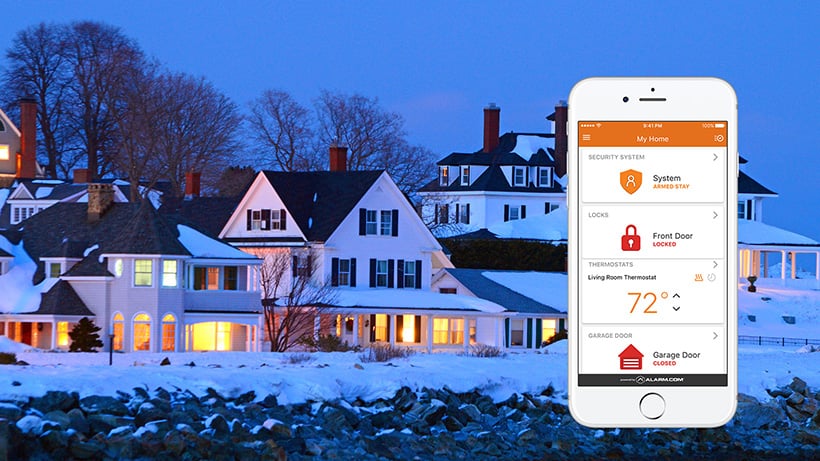
  • Smart Thermostats: Families can easily turn their regular thermostats up and down all day long to make their home a comfortable temperature. Smart thermostats get rid of that hassle and handle your home temperature settings for you. Once you set temperatures for every time of the day you want, the smart thermostat takes it from there. Did we mention it could save you some money?
  • Flood Monitors: These monitors are usually offered as add-ons to most alarm systems. Flood monitors are used to detect leaks and water before a catastrophe happens. It could potentially save thousands of dollars because your home won’t get ruined due to flooding.

Think Long Term

Wireless vs. wired alarm systems is something to think about when looking at home alarm system costs. Wired alarm systems are connected through telephone and wires running through the walls connecting the devices on the system to the control panel. Wireless systems are connected through sensors, alarms, and other equipment. These pieces are are monitored through a control panel in the house.

With wireless systems, almost everything is easier. Running wires in a finished home is very expensive and can damage your walls making wireless systems also more cost effective.

Another item to think about is whether you get an unmonitored or monitored security system. There are two types of unmonitored systems: self-monitored and truly unmonitored systems. Self-monitored systems are all hooked up to the house and send you notifications through a control panel and your connected smartphone.

Unmonitored systems are truly unmonitored; they record video and then set off an alarm when an intruder is detected. There are no notifications. Unmonitored systems may be more affordable, but they are also less safe and less convenient.

Monitored systems have the same equipment and can still notify you but they have professional home security technicians to keep an eye on things as well. a central monitoring center watching your home 24/7. Without monitoring, what happens when you are driving or in a meeting or asleep? Monitored may be more expensive but it’s less hassle, more secure, and has a higher rate of handling emergency situations.

Read the Fine Print of Your Home Security Contract

When it comes to looking at home alarm system costs,  it is very important to read the fine print. Which is usually where contracts come in and people can get confusted about security system cost.

When it comes to contracts in the security business, it is very important to read the fine print . Which is usually where contracts come in and people get confused about security system cost. When making a choice on a security company and working on a contract, pay attention to every detail including equipment costs, labor, monthly monitoring fees and contract terms.

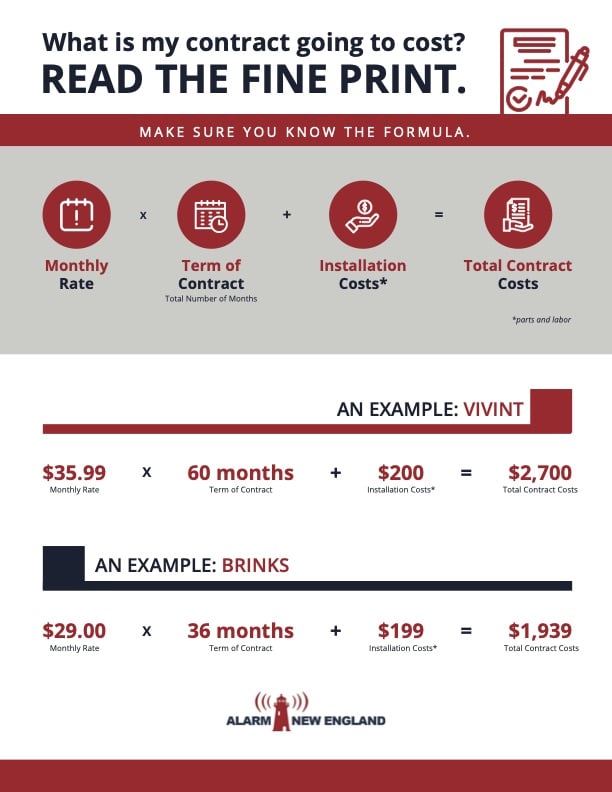
A recommended approach – calculate total contact cost: monthly fee times number of months on the contract plus up front labor and equipment costs and compare companies that way.

An example: Brinks Security 29.00 monthly fee x 36 months of the contract plus the $199 labor and equipment costs equals total contract cost of $1,939.00.

Also, when looking at home alarm system costs, check to make sure the company cannot raise your rates while you are under a contract term. It may seem more affordable up front, but there could be higher monthly fees or long-term contracts.

One thing that’s important to know is that nothing is ever free. Anything that is offered as “free” is really only free when you enter into the correct contract and the fee is covered by that payment.

Each customer is different – some want monthly payments and others want to get it all out of the way, like ripping off a band aid. A few alarm companies will give you the option for paying for everything up front and give you the flexibility of a month to month contract. Most will require a termed contract of 3 years or more but these companies will often help reduce your upfront cost.

A month-to-month option offers flexibility to those who need to cancel and restart their alarm system. Customers pay the full cost of the equipment and installation and then pay for monitoring every month. There’s also the chance that a three-year contract could say the monthly cost starts at one price but then increases. So, we’ll say it again, read the fine print.

Consider Your Budget

If you are like most people, the cost of home security will also be a big consideration. While every company offers different prices, an average alarm system can cost can range anywhere from $300 to $3000. This cost depends on equipment, monitoring fees, and system features.

Alarm New England: Here to Help

For over 53 years we’ve been helping families and businesses feel safe and taken care of here in New England. With our extensive knowledge of security, we’re here to help you find and create the perfect alarm system for your home.

We offer a variety of technologies such as doorbell cameras, security cameras, motion detectors, and smart thermostats. Our dedicated team has experience with all areas of New England and can make the new move an easier process by providing you the tools for building an alarm system that fits your needs.

Dedicated to providing the latest technology in security systems, we can guarantee you’ll love the safe feeling of having our recommended products installed in your home within the budget you want. If you’d like to speak with one of our team members about managing the cost of home security, reach out and call us, so we can create a security package specifically for you—your way, your choice.

Get a Free Quote

3 Best Local Alarm System Companies in Rhode Island

You should feel safe in your home. That’s why it is so important to find the right security company to suit your needs. Determining which security company is right for you can be tricky. To help you narrow down your choices, here is our list of the top three local alarm companies in Rhode Island.

Alarm New England

alarm new england serving rhode island

Alarm New England is a local alarm company, as well as a family-owned business. It is one of the security industry’s best-kept secrets. Why? The company works with reliable manufacturers like Alarm.com and Qolsys. It comes as no surprise, then, that so many families trust Alarm New England with their homes.

Price

Whether it is through a monthly plan or a three-year contract, Alarm New England offers customers payment flexibility.

Customers can feel confident choosing Alarm New England because of its satisfaction guarantee. Clients can get a full refund if they’re unsatisfied within the first 100 days with the company. Alarm New England offers six home security packages to choose from, starting at $31.99 to $51.99 per month.

Features and Equipment

Alarm New England’s equipment covers all the basics, from remote access to home integration, and its UL-approved monitoring station has all the latest features you’d expect in a modern home security system.

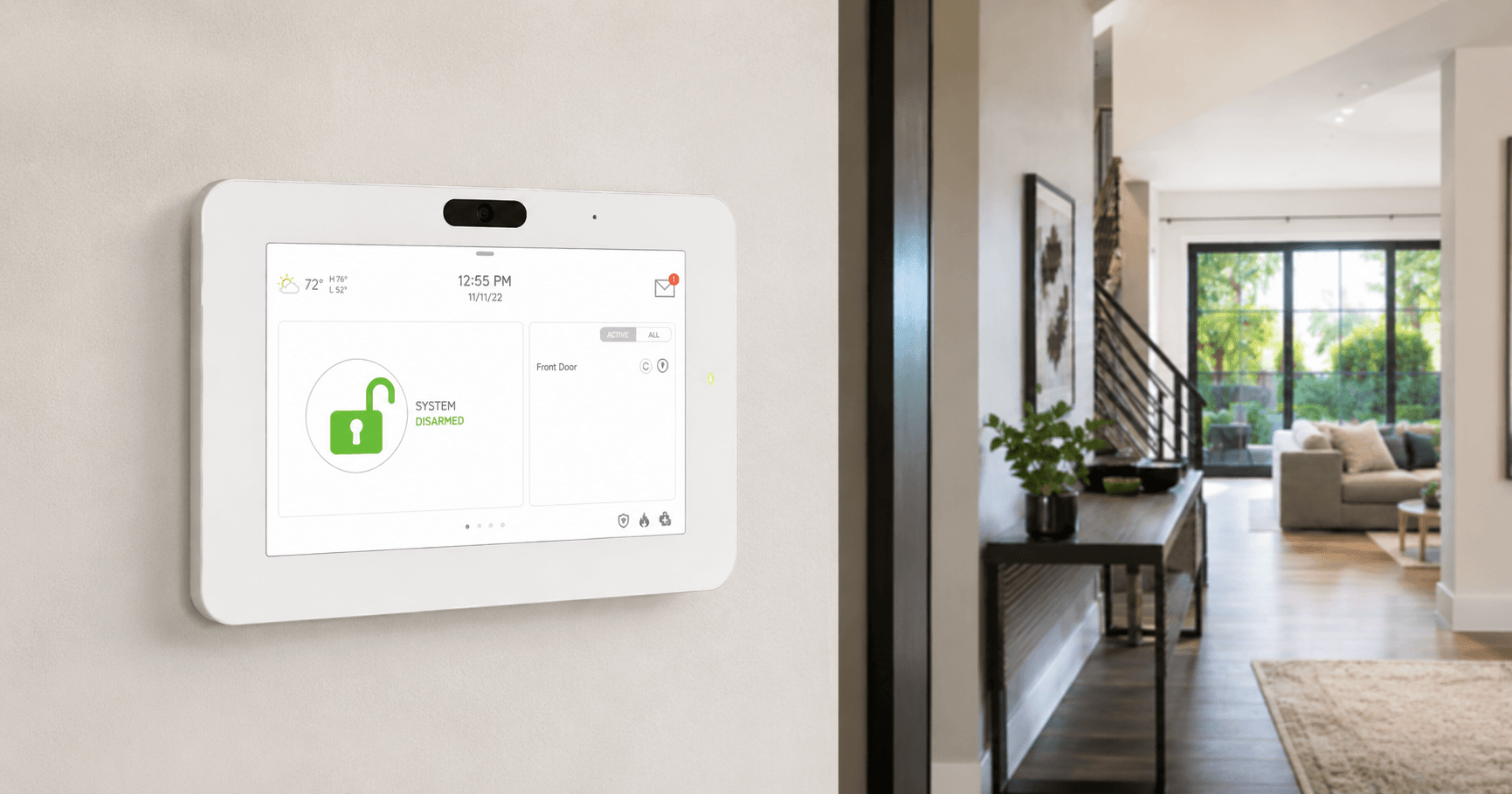
Both apartments and houses can benefit from Alarm New England’s Qolsys hardware. The IQ4 has an interface that’s easy to use and a 7-inch HD touchscreen. Its wireless radios and built-in 5-megapixel camera make this an award-winning home security system.

This RI home security system also has a touchless disarming feature and glass break detector.

The hardware will warn customers of sudden changes in the home environment, including changes in temperature and carbon monoxide detection. Customers can rest assured that they will be safe in their home with this security equipment.

Clients of this local alarm company have the ability to reallocate their security system, whether you move outside of the state or change service providers.

Alarm New England can also take on commercial properties, providing security services such as video surveillance and access control to RI customers.

Customer Service

For outstanding customer service, homeowners need not look further than this local fire alarm company in Rhode Island. Across various rating platforms, customers say Alarm New England is quick to respond to users’ questions and complaints.

Pros

  • Excellent customer service
  • The option between professional installation or self-installation
  • Monthly options available
  • Plans start at $26.99 per month
  • The ability to reuse existing equipment

Cons

  • Available only in New England
  • Can only service properties smaller than 10,000 square feet

Alliance Security

Alliance Security is an authorized Brinks Home Security dealer and 2GIG Technology partner.

Price

Packages start at $44.99 per month and can cost up to $59.99 per month. That makes this local alarm company more expensive than the competition.

Another disadvantage is the duration of their contracts: five years. The company is also known to hike up prices throughout the contract.

However, Alliance Security’s website does transparently state its cancelation policy and warranty information.

Features and Equipment

This local alarm company has their equipment manufactured by 2GIG Technologies. They only offer professional installation. Clients, therefore, don’t have the option of going the DIY route.

Alliance Security uses a 4G LTE wireless system, eliminating the need for landline monitoring. Through a mobile device, customers can have remote access to their smart home security devices. Clients may also choose an add-on called the Vision option for live video surveillance, but the wireless cameras’ battery life is quite short.

The starting package includes several pieces of equipment including a keypad, motion detector, door and window contacts, keyfobs, and a smart doorbell.

Alliance Security’s professional monitoring is outsourced to Brinks Home Security. Its technology integrations are associated with Alarm.com.

Customer Service

In 2014, Alliance Security’s reputation took a hit after being caught calling consumers on the National Do Not Call Registry.

Other clients complain that the local home security company’s customer service team is understaffed. Response time for customer inquiries and complaints is slow.

That being said, many customers who do talk with a service rep have a positive experience.

Pros

  • An array of possibilities for home security and automation
  • Five diamond certified monitoring center

Cons

  • Monitoring is outsourced to Brinks Home Security
  • Hard credit check required
  • No DIY installation option
  • High installation costs and monthly fees

Protect America

Protect America is considered the jack-of-all-trades of home security; not the cheapest option out there, and not the most expensive either. However, like ADT they rely heavily on offers of free equipment, which is never a good sign.

Price

Clients can choose between five different packages, starting at $19.99 per month. But Protect America’s contracts are three years long, and customers who opt out of their contract find themselves paying the balance of it in full.

Depending on how early the contract is canceled, we can be talking hundreds of dollars. This is in stark contrast with most local home security companies that only require a percentage of the balance to be paid.

Protect America’s cancelation policy is valid for the first 30 days following the shipping date of the security equipment. The system must be returned to the company. There may be a $79 restocking fee, depending on the payment method used.

Features and Equipment

We appreciate the way this alarm company offers free equipment, with no upfront costs. Protect America is also forward-thinking with its innovative technology. Its equipment is manufactured by 2GIG and CE. Protect America’s technology integrations are compatible with Google Home, Amazon Alexa, IFTTT, Z-Wave, and Zigbee.

Customers can use the Simon XTi control panel and access it via their Smart Connection mobile app. The company offers a variety of home security features to choose from, as well as options for home automation.

Protect America offers 24/7 monitoring options via cellular, broadband, or landline.

Customer Service

Protect America has room for improvement when it comes to customer service. There are many more negative reviews online than there are positive ones. Key issues revolve around monthly payment plans and contract information.

Other customers pointed out flaws with the security equipment in their reviews. Some motion sensors were experiencing technical difficulties, sending off false alarms.

Pros

  • No installation or activation fees
  • A low upfront cost for equipment
  • Possibility of home automation
  • Money-back guarantee

Cons

  • Limited cancellation policy
  • No monthly contracts
  • Limited equipment options

Best Home Alarm Security Systems in Rhode Island 2026

Smart home security is rapidly becoming mainstream, and many homeowners are looking to either replace or upgrade their home security systems to take advantage of technological advancements.

Some people like the idea of being able to remotely control their entire house from their smartphone, while others enjoy not having to navigate a complicated touchpad control.

No matter what your reasons are, now is a great time to check out the best home security systems in Providence, RI to find one that meets your needs. We’ve taken the time to list some of the best companies on the market in Rhode Island today to help you narrow down your choices.

How We Choose the Best Home Security Systems

There are hundreds of home security companies out there, each with complicated pricing systems and a whole host of features. It can be tricky to navigate this market, even if you’ve taken the time to read up on home security system reviews.

We’ve evaluated some of the most popular home security systems in Rhode Island according to three criteria—price, features, and customer service—to help you find one that will suit your requirements.

Pricing

Security companies often will offer multiple pricing options, making it hard to find a standard list of what’s affordable and what isn’t. Some companies will separate equipment and monitoring costs. Others allow you to pay off the equipment along with your monthly fee but will still require installation and activation fees.

We’ve tried to clarify pricing to make it clear which home security systems offer reasonable prices for their services.

Customer service

Customer service covers a vast range of interactions, including sales, emergency response, and typical day-to-day inquiries. Smaller companies tend to have better customer service than nationwide home security providers, which may range in quality based on location.

Features and equipment

Lyric Control Panel

Ideally, you want the best home security system for your needs and don’t want to spend on extras that you’ll never use. Many companies offer high-tech solutions, such as smart home security systems, that many users don’t want or need. Some customers want home security systems with cameras, which usually fall under their monitoring and equipment plan.

We also evaluate systems based on how easy they are to use. It’s surprising how many basic systems can be quite complicated to set up. Yet many of the newer home security systems offer intuitive touchpad controls that are much easier to use.

Here are some of the top home security providers in Rhode Island to consider.

Alarm New England

ane providence

We primarily operates three states: Massachusetts, Rhode Island and Connecticut Despite being smaller than companies like ADT, we’ve gained a large and loyal following of customers who love our service, making us one of the largest privately-owned security companies in the nation. We use high-quality equipment and offer fair prices for monitoring services.

Additionally, our equipment can be reused if you move out of our service range.

Pricing

We bundle equipment with monitoring services in three plan levels. The most basic plan costs $27 per month and includes monitoring as well as essential security system equipment. The most expensive plan tops out at just over $50 for security cameras and cloud storage in addition to monitoring and home automation integration.

Unlike many other security services, we don’t require you to sign a long-term contract. If you like the idea of long-term security, you may sign a three-year contract to receive reduced monthly rates. But if you prefer flexibility, you can opt for month-to-month plans.

The company also has lower upfront costs or activation fees, and you can install the entire system yourself.

Customer service

We have spent the time to build up an excellent reputation as one of the best home security systems in Providence, RI based on extraordinary and responsive customer service.

You can reach customer service through a variety of channels, including email and telephone, or you can use our website FAQ to get answers to common questions. We even have how-to videos on its website to show you how to install the equipment.

Features and equipment

We offer a range of equipment and features for every type of household, from simple to complex. Our most straightforward plan comes with a control panel and wireless sensors.

You can also opt into our higher-tier plan, which gives you access to Touch Connect 2.0, an app that allows you to automate much of your security and household. If you’re looking for a home security system with cameras, there’s also a plan with live video surveillance and video recording to help you keep an eagle eye on your home.

ADT

ADT has been in the security business for over a hundred years and has seen many technological changes during that time. As such, it knows the value of keeping up with security changes and trends and is willing to pass its expertise on to its customers. It has a variety of flexible security plans available that should suit most households.

Pricing

ADT’s security suite is known as Protect Your Home, which comes in four primary packages depending on your security needs. ADT agents can also customize these packages to find the perfect security fit for you.

The basic plan starts at $28 per month and includes monitoring and a basic alarm system consisting of a control panel, base alarm system, and several sensors.

The main drawback of this plan is that it uses a landline to connect to the monitoring center. If you don’t have one, you’ll need a more expensive plan to install a system with cellular communication.

The packages then increase in price and in the number of features the packages offer. The most expensive package is the ADT Pulse Monitoring plus Video package, which costs $59 per month.

ADT can offer these competitive rates because it is tied to two- or three-year-long contracts with no reasonable option to terminate the contract early. It does provide a six-month money back guarantee, but that only comes into play if ADT hasn’t been able to resolve your service or installation issues.

Customer service

Because ADT is a national service, its call center-based customer service is usually responsive and quick to solve your problems. However, ADT also uses regional dealers to interact with customers, and some dealerships are better than others. Make sure to read up on some local reviews to see how your local dealer fares.

It’s relatively easy to contact ADT with concerns, as it has a 24/7 emergency hotline as well as a customer care line that operates during business hours. You can also use email or live chat if you prefer dealing with customer services electronically.

Features and equipment

The base ADT package comes with a base security system, control panel, motion sensor, and several wireless sensors, as well as a wireless remote, which is all you need for a simple wireless home security system.

If you’re looking to add extra security features, ADT offers a whole host of additional equipment, including indoor cameras, a keychain remote control with a panic button, and a variety of sensors.

If you want to add automation features, you can add in a keypad door lock that you can control remotely. ADT Pulse wireless security systems also come with automation features, allowing you to use the app to control your thermostat, smart lights, smart switches, and plugs. You can lower your energy bill and add an extra layer of convenience to your life.

Vivint

If you want to go all-in on home automation and smart home security systems, Vivint is one of your best options. All of Vivint’s equipment is specially designed and requires a licensed technician to install. Unfortunately, high-tech security doesn’t come cheap, and Vivint is one of the most expensive home security systems in Rhode Island.

Pricing

Vivint offers two pricing plans. The first option is to buy the equipment package and monitoring package separately and pay between $30 to $50 per month for monitoring and other services. The other option is to finance the equipment by adding it to the monthly monitoring bill, though this does lock you into a five-year contract.

Vivint offers several customizable equipment packages, but they aren’t cheap. The basic package costs $700, while the most advanced one costs just under $1800. It’s a substantial upfront cost, which is why Vivint then offers the Monthly Flex Pay that you can use to offset your initial costs.

Also, because Vivint uses expert technicians to carry out the installation, you can expect to pay at least $50 for the installation in addition to any other costs.

Customer service

Vivint has a reputation for underhanded sales tactics, and you may find its pricing schemes challenging to understand. It has been taken to court in multiple states and has since put in a lot of effort to make its pricing more transparent and its service more customer-friendly.

As you’d expect from such a high-tech security system, Vivint offers plenty of ways to contact its customer support, including social media, live chat, and traditional email and telephone channels.

Features and equipment

Vivint focuses on home automation and high-tech security, which means that it isn’t suitable for households that want a basic burglar alarm and fire detector. The basic Vivint starter package includes a touchscreen panel and six smart sensors of your choice.

You can then add on a doorbell camera, door locks, remote garage door control, and outdoor cameras. You can also integrate your Vivint security system with your Nest or Amazon devices for a seamless smart home experience.

The wireless remote is entirely customizable, allowing you to perform essential functions like arming or disarming the alarm and also giving you the freedom to adjust your lights or lock your doors remotely.

Despite all of the tech used in Vivint’s security system, the Vivint system is straightforward to use thanks to its touchscreen control panel. It’s designed to be intuitive, with large icons and text to make the entire process simple and easy to understand. You can also use voice commands instead of using the control panel to arm your alarm or lock your doors.

Guardian Protection

guardian protection providence

Guardian Protection has been in the security industry for several decades and has expanded its service into 18 states. It has a reputation for being a solid, reliable choice when it comes to home security systems, and it offers a variety of packages to suit most people’s needs.

Pricing

Guardian has three standard packages that include equipment and monthly monitoring fees. The basic plan includes basic equipment options and smart home automation. Its premium package contains all the same equipment as the basic package, in addition to video equipment and surveillance services.

Guardian offers only fixed-term contracts with a termination fee for early cancellations. It also has a hefty $100 installation fee, which may be too much for some potential customers.

Customer service

Guardian has taken the time to develop an excellent reputation for customer service, and this is reflected in its online reviews. It has a 24-hour customer care hotline that’s available at all times, even on weekends. It also has a social media presence and offers several tutorials online to help new users navigate their security system.

Features and equipment

Guardian provides a host of security and automation features. Even its most straightforward plan gives access to its smartphone app in which users can remotely arm or disarm their system, set a location-based arm or disarm trigger, and get text alerts when a sensor has been activated.

The basic security system can be further expanded by the addition of various sensors, including medical sensors and carbon monoxide detectors. If you want to automate your home entirely, you can also get the garage door control, smart thermostat, keyless door locks, and video doorbell camera.

And if you want video surveillance, you can get indoor and outdoor cameras that can be hooked up to a streaming video recorder that can stream the video directly to your phone or PC.

Alliance

Alliance is a local home security systems company based in Rhode Island. It offers comprehensive and customizable security solutions with a whole host of devices and features to suit anybody’s needs.

Pricing

Alliance is one of the more expensive offerings; its base plan costs $45 and its most costly plan tops out at $60. It also has incredibly long-term contracts and has previously raised its prices during the contract term.

While the plans come with the necessary equipment, any additional equipment is subject to an extra cost, ranging from $50 for door sensors to $200 for image sensors. Luckily, there is no upfront installation or activation fee, so you know up front what you’re paying for.

Customer service

Alliance has, unfortunately, a less-than-stellar reputation when it comes to customer service. It has used robocalls to market its products and obtained contact information illegally. Alliance has also taken months to respond to customer complaints, though the customer service representatives are usually helpful and pleasant.

If you want to avoid the customer helpline, Alliance does have a comprehensive FAQ on its website. It also offers various tutorial videos featuring safety tips and how-to guides.

Features and equipment

Alliance has a vast array of equipment for customers to choose from, with a heavy focus on integration and home automation. Its devices are integrated with Amazon’s Echo as well as Nest and Lux smart devices.

Alliance has an app to consolidate all the smart home features, allowing you to control your home at the press of a button. It offers a wide range of high-end cameras for video surveillance as well as remote door locking and doorbell cameras. If you’re looking for a local alternative to Vivant, Alliance may well be it.

Selecting the Right Home Security System

With the variety of options on the market in Rhode Island, you’ll be able to find a home security company that works for you. No matter which company you go with, take the time to select a home security system package and equipment that covers your needs.

Is Boston Safe? – Boston Crime Rate & Statistics 2026

Boston remains one of the safest major cities in the United States heading into 2026, though the picture is more nuanced than a single headline can capture. The city finished 2025 with 31 homicides, a 30% increase over 2024’s record-low of 24 (the lowest since 1957). That figure is still the second-lowest total in the past two decades. Overall violent crime continued its downward trajectory, with shooting victims and gunfire incidents both reaching historic lows, down more than 30% compared to five-year averages.

Property crime tells a slightly different story. Larceny and theft remain the most common offenses city-wide, particularly in high-traffic commercial areas like Downtown Crossing, Faneuil Hall, and the Back Bay shopping corridors. Burglary rates vary significantly from neighborhood to neighborhood, a central theme we’ll explore in the interactive tool below. For homeowners evaluating their options, understanding these local differences is a crucial first step in choosing the right home security system.

Early 2026 BPD data (January through mid-March) shows crime trends continuing largely in line with the prior year. The Boston Police Department publishes weekly comparisons against 2025 figures, and so far the numbers suggest the city is holding steady.

Sources: Boston Police Department Weekly Crime Reports (2026), BPD Year-End Press Conference (Dec 2025), FBI UCR Data (2024 calendar year, released Oct 2025), NeighborhoodScout, AreaVibes, CrimeGrade.org.

Key Crime Statistics at a Glance

31
Homicides (2025)
↑ 30% vs 2024
6.2
Violent Crimes per 1K
↓ 4% vs 2024
~21
Property Crimes per 1K
↑ 4% vs 2023
1 in 47
Property Crime Risk
Annual odds

While the homicide increase drew media attention, Police Commissioner Michael Cox stressed that it followed a historically low baseline. Shooting victims and gunfire incidents both remain at historic lows, down more than 30% versus the five-year average. Retail theft arrests rose 113% in 2025 as BPD made shoplifting enforcement a higher priority downtown.

Is Boston Safe?

Yes. Boston is one of the safest major cities in the United States. According to FBI Uniform Crime Report data, Boston’s violent crime rate is approximately 35% lower than Philadelphia’s and its property crime rate is nearly half that of comparable metros. Multiple independent rankings place Boston in the top 10 for major-city safety nationwide.

The city’s 2024 homicide total of 24 was the lowest since 1957. While 2025 saw a modest increase to 31 homicides, that figure remains the second-lowest in two decades. Shooting victims and gunfire incidents both hit historic lows in 2025, down more than 30% from the five-year average. Overall violent crime fell 4% year-over-year.

That said, safety varies significantly by neighborhood. Areas like Beacon Hill, Back Bay, West Roxbury, and the Seaport consistently record crime rates well below the city average, while parts of Dorchester, Roxbury, and Mattapan see higher numbers. Even those areas, however, have seen meaningful improvements in recent years. For a detailed breakdown, use the interactive neighborhood comparison tool below or explore the crime density map.

Is Boston safe at night?

Most of Boston is safe at night, particularly in well-trafficked neighborhoods like the North End, Back Bay, Beacon Hill, and the Seaport. Downtown Crossing and Faneuil Hall have active nightlife with strong police presence. Areas to exercise more caution after dark include parts of Roxbury, Mattapan, and the Mass Ave & Cass corridor. As with any major city, sticking to well-lit main streets and using rideshare services for late-night travel is advisable. Homeowners concerned about nighttime safety should consider a home security camera system with night vision and motion-activated alerts.

How does Boston’s crime rate compare to other cities?

6.2
Boston
Violent crimes per 1K
8.5
U.S. Average
Violent crimes per 1K
9.6
Philadelphia
Violent crimes per 1K
5.2
New York
Violent crimes per 1K

Boston’s violent crime rate of approximately 6.2 per 1,000 residents sits well below the national average and considerably lower than peer cities like Philadelphia. While New York City posts slightly lower per-capita numbers, Boston’s smaller footprint and concentrated patrol zones contribute to faster response times and higher clearance rates. For Massachusetts-specific rankings, see Mass.gov EOPSS crime data.

Live in Boston? See how a security system can protect your home.

Get a Free Quote

Explore Crime Stats by Neighborhood & Suburb

Select a Boston neighborhood or Greater Boston suburb to see estimated crime rates and safety context.

Select a neighborhood or suburb above to view its crime statistics.
—
Property Crime per 1K
—
Violent Crime per 1K
—
Burglary per 1K
—
Safety Grade

Note: Neighborhood and suburb-level estimates are compiled from BPD district reports, NeighborhoodScout, CrimeGrade.org, and AreaVibes (2024 FBI data, the most recent available). Figures are approximate and meant to illustrate relative safety differences between areas, not exact incident counts. Suburban data reflects city-wide rates for each municipality. Actual 2026 data will be available from respective police departments later this year.

Boston Crime Map: Neighborhood Crime Density

Visual comparison of crime rates across Boston neighborhoods. Toggle between crime types to see how safety varies across the city.

Low Moderate Elevated High

Rates shown per 1,000 residents. Data compiled from BPD district reports, NeighborhoodScout, and FBI UCR (2024). For detailed incident-level mapping, visit the BPD Crime Hub.

Crime Rates by Boston Neighborhood

Below is a snapshot of crime conditions in each major Boston neighborhood. These summaries supplement the interactive comparison tool and crime density map above, and are based on BPD district data, NeighborhoodScout, and 2024 FBI UCR figures.

Dorchester Crime Rate

Dorchester is Boston’s largest and most diverse neighborhood, with an estimated total crime rate of approximately 38 per 1,000 residents. Violent crime (11.8 per 1K) is above the city average, but these numbers vary dramatically block to block. Areas like Savin Hill and Adams Village are quiet and family-oriented, while certain corridors see higher concentrations of incidents. BPD data shows shooting incidents in Dorchester have declined significantly from five-year averages thanks to focused community policing. Burglary sits at approximately 1.9 per 1K. Homeowners should consider a professionally monitored alarm system.

Roxbury Crime Rate

Roxbury has historically recorded some of Boston’s highest crime rates, with an estimated violent crime rate of 14.2 per 1,000 residents and a property crime rate of approximately 28.6 per 1K. However, the trajectory is positive: shooting victims and gunfire incidents city-wide are at historic lows, and Roxbury has benefited directly. The Nubian Square area is undergoing significant revitalization. Burglary occurs at about 2.3 per 1K, making a home security system an important investment for Roxbury residents.

East Boston Crime Rate

East Boston has a mixed safety profile with an estimated total crime rate of approximately 23 per 1,000 residents. AreaVibes data shows the neighborhood’s overall crime rate is roughly 45% below the national average. The Seaport-adjacent areas and Jeffries Point score low on violent crime (5.5 per 1K overall), while Maverick Square and Eagle Hill see somewhat higher numbers. Rapid development and new construction are improving safety across the neighborhood.

South Boston Crime Rate

South Boston, locally known as “Southie,” enjoys a violent crime rate approximately 32% below the city average (4.5 per 1K). Property crime sits at about 16.8 per 1K, driven mainly by car break-ins. The waterfront and new condo developments are particularly safe. After dark, pockets around Andrew Square see more bar-related incidents, but active police patrols keep overall numbers in check. South Boston earns a B+ safety grade.

Jamaica Plain Crime Rate

Jamaica Plain’s crime profile is as diverse as the neighborhood itself. The overall violent crime rate is approximately 6.2 per 1K, with property crime at 19.6 per 1K. Blocks near Jamaica Pond and along Centre Street are among the city’s most desirable and safe addresses, while other pockets see elevated property crime. JP has been one of the neighborhoods where BPD data shows historically concentrated shooting incidents, though numbers have declined meaningfully.

Safest Neighborhoods in Boston

Several Boston neighborhoods consistently record crime rates well below the city average. Beacon Hill, Back Bay, the North End, West Roxbury, and the Seaport all earn top safety marks, with violent crime rates running 13% to 35% below the city mean. These areas benefit from a mix of high foot traffic, active community policing, well-lit streetscapes, and engaged neighborhood watch programs. Even in these safe areas, a basic home security system adds a valuable layer of protection.

West Roxbury, on the city’s southwestern edge, stands out as a family-friendly enclave with some of the lowest property and violent crime numbers in Boston. The North End, known as Boston’s “Little Italy,” benefits from a tight-knit community and heavy tourist foot traffic that provides natural surveillance throughout the day and evening hours.

What makes these neighborhoods safer?

Common factors include higher median household incomes, lower population density (relative to downtown), active business improvement districts, widespread residential security camera usage, and proximity to university or hospital campus police forces. In Allston-Brighton, for example, Boston University and Boston College campus police supplement BPD patrols.

Neighborhoods With Higher Crime Rates

Dorchester, Roxbury, and Mattapan have historically reported higher crime rates, particularly for violent offenses. BPD data has consistently shown that approximately 80% of the city’s shooting incidents between 2018 and 2025 were concentrated in these four neighborhoods plus Jamaica Plain. The factors driving this pattern are complex and systemic. Decades of economic disinvestment, housing instability, and income inequality all play a role.

It’s important to note that even within these neighborhoods, crime is concentrated on specific corridors and blocks rather than spread uniformly. Dorchester, for instance, is Boston’s largest and most diverse neighborhood, and many of its residential streets are quiet and family-oriented. The same is true of Jamaica Plain, where some pockets see elevated property crime while others are among the city’s most desirable addresses. Regardless of where you live, following proven home security tips can make a meaningful difference.

In 2025, the city reported an 8% decline in total violent crime in the Mass Ave & Cass corridor, a longtime hotspot for drug-related incidents, following a 54% increase in arrests and expanded community policing programs.

Property Crime & Burglary: What Homeowners Should Know

For homeowners, property crime is the most relevant metric. Boston’s overall property crime rate sits at approximately 21 incidents per 1,000 residents (based on 2024 FBI data), meaning roughly 1 in 47 residents can expect to be affected by property crime in a given year. That includes larceny and theft (by far the most common category), motor vehicle theft, burglary, and arson.

Burglary specifically occurs at a rate of roughly 1.3 per 1,000 residents city-wide, though this varies dramatically by neighborhood. Rates range from as low as roughly 0.9 per 1,000 in the northeastern parts of the city to approximately 1.8 per 1,000 in central neighborhoods. Nearly two-thirds of residential burglaries in Boston occur during daytime hours (6 AM to 6 PM), when homes are most likely to be unoccupied. That makes a professionally monitored alarm system one of the most effective deterrents available.

Motor vehicle theft saw a statewide decline of 16.1% in 2024, and BPD has noted that scooter and moped theft make up nearly 80% of transit-related vehicle thefts. Package theft and porch piracy continue to rise as a quality-of-life concern, especially in denser neighborhoods with multi-unit housing. A video doorbell camera is one of the most effective tools for deterring porch pirates.

Nearly two-thirds of Boston burglaries happen during the day. Is your home protected?

Design Your System →

Seasonal Crime Trends in Boston

Crime in Boston follows clear seasonal patterns. Spring and summer months (May through September) consistently see higher rates of both violent and property crime, a pattern that aligns with national trends. Researchers attribute this partly to more time spent outdoors, longer daylight hours, and increased foot traffic creating more opportunities for both interpersonal conflict and property offenses.

For homeowners, the summer travel season presents a specific risk. Homes left unoccupied during vacations become more attractive targets for burglars, particularly in residential neighborhoods where a break in routine is noticeable. Simple steps like timed smart home automation, visible security cameras, and professional alarm monitoring can significantly reduce this risk.

The holiday season (November through January) brings a secondary spike in property crime, driven largely by package theft and retail-area larceny.

Heading out of town this summer? Smart home automation can make your house look occupied 24/7.

See Plans & Pricing

How to Protect Your Boston Home

Understanding your neighborhood’s crime profile is the first step. The second is taking action. Here are the measures that BPD, security experts, and the data itself point to as most effective for Boston homeowners:

Professional alarm monitoring. Homes without security systems are up to 300% more likely to be targeted by burglars, according to a UNC Charlotte study of convicted offenders. A professionally monitored alarm system with a UL-Listed central station, like the one operated by Alarm New England, ensures that police are dispatched immediately, even if you can’t reach your phone.

Visible security cameras. Modern HD cameras with motion detection and video analytics serve a dual purpose: they deter opportunistic criminals and provide clear evidence for police investigations. Smart cameras can send instant alerts to your phone when motion is detected around your property.

Smart home automation. Timed lights, smart locks, and thermostat automation create the appearance of an occupied home. This is one of the simplest and most effective burglary deterrents. Many homeowners control all of these through a single app alongside their alarm system.

Window and door sensors. Given that forced entry through doors and windows accounts for the majority of residential burglaries in Boston, sensor-based detection provides the critical first seconds of alert time that make the difference between a completed burglary and a deterred one. Learn more in our guides to window security measures and reinforcing your doors.

Community engagement. Neighborhood watch programs, BPD’s community policing partnerships, and the city’s “BPD SafeWatch” app all contribute to the kind of social cohesion that makes Boston’s safest neighborhoods so safe. And if the worst does happen, knowing what to do if your home gets broken into can help you recover faster.

Frequently Asked Questions About Boston Crime

Does Boston have a high crime rate?

No. Compared to other major U.S. cities, Boston has a relatively low crime rate. The city’s violent crime rate of approximately 6.2 per 1,000 residents is well below the national average of 8.5 per 1K. Boston’s 2024 homicide count of 24 was the lowest since 1957, and while 2025 saw a slight increase to 31, overall violent crime continued its downward trend. FBI data consistently places Boston among the top 10 safest large cities in America.

Is Boston safe at night?

Most of Boston is safe at night, especially well-trafficked areas like the North End, Back Bay, Beacon Hill, the Seaport, and the Financial District. Downtown Crossing and Faneuil Hall have active nightlife with a strong police presence. Areas to exercise more caution after dark include parts of Roxbury, Mattapan, and the Mass Ave & Cass corridor. Using rideshare services for late-night travel and sticking to well-lit main streets is always advisable.

What are the safest neighborhoods in Boston?

The safest neighborhoods in Boston include West Roxbury, Beacon Hill, the North End, Back Bay, and the Seaport district. These areas record violent crime rates 13–35% below the city average. West Roxbury stands out as the safest overall, with crime rates roughly 60–70% below the Boston average. Common factors include higher median incomes, active community watch programs, and strong police presence. See our interactive neighborhood tool for detailed stats.

Is there a lot of crime in Boston?

Boston’s overall crime rate is lower than most major U.S. cities of comparable size. Property crime (particularly larceny, shoplifting, and car break-ins) is the most common concern, especially in commercial areas like Downtown Crossing and Faneuil Hall. Violent crime is concentrated in a small number of neighborhoods and has been trending downward. Approximately 80% of shooting incidents are concentrated in four neighborhoods. The vast majority of Boston is safe for residents and visitors.

What is the most dangerous neighborhood in Boston?

Roxbury and Mattapan have historically recorded the highest crime rates among Boston neighborhoods. Roxbury’s violent crime rate is estimated at approximately 14.2 per 1,000 residents, well above the city average of 6.2. However, both neighborhoods have seen meaningful improvements in recent years, with shooting incidents at historic lows. Crime within these neighborhoods is also concentrated on specific blocks and corridors, not spread evenly throughout.

Is Boston safe for families?

Boston is an excellent city for families, with numerous safe neighborhoods to choose from. West Roxbury, Roslindale, Hyde Park, and the suburban communities of Brookline, Newton, Arlington, and Milton all offer low crime rates combined with strong public schools. Community policing programs, neighborhood watch groups, and family-oriented amenities make these areas particularly welcoming. For added peace of mind, many Boston families choose to install a home security system.

How can I protect my home from burglary in Boston?

Boston’s residential burglary rate is approximately 1.3 per 1,000 residents, with nearly two-thirds occurring during daytime hours. The most effective deterrents include a professionally monitored alarm system, visible security cameras, smart home automation (timed lights, smart locks), and reinforced door and window hardware. Homes without security systems are up to 300% more likely to be targeted. Alarm New England has protected Boston homes for over 50 years. Get a free quote today.

Find Out How Safe Your Boston Home Is

Alarm New England has been protecting homes across Massachusetts for over 50 years. See what 31,000+ customers say about our local, family-owned approach to home security.

Get a Free Quote →

Crime data sources: Boston Police Department, FBI Uniform Crime Reports (2024), NeighborhoodScout, AreaVibes, CrimeGrade.org, Mass.gov EOPSS. Neighborhood-level estimates are approximate. Always consult official BPD reports for the most current data.

Alarm.com vs. Ring – 2026 Comparison

When choosing a home security system, Alarm.com and Ring are two of the most popular options. While both offer reliable security solutions, they differ significantly in terms of features, pricing, monitoring options, and overall functionality. This article compares and contrasts these two platforms to help you determine the best fit for your security needs.

Overview

Key Differences

1. Equipment and Integration

2. Installation and Ease of Use

3. Monitoring Options

4. Mobile App and Remote Access

5. Video Surveillance

6. Pricing and Subscription Costs

Which One Should You Choose?

Both platforms have their advantages, and the right choice depends on your budget, installation preference, and security needs.

Want to learn more? Discover more Alarm.com product reviews – or call us with any questions. You can reach our security experts at (857) 445-4010.

X

GET FREE QUOTE

What are you protecting?*

Step 1 of 4

Is your property currently monitored?*

Step 2 of 4

What size is your property?

Step 3 of 4

Who is this personalized quote for?*

By clicking this button, you consent for Alarm New England to use automated technology to contact you at the number provided. This consent is not required to make a purchase from us.

Step 4 of 4