
What Can I Do to Prevent a House Fire?

While we have made significant progress over the years in educating people about fire prevention and taking precautions in the home, it’s striking to see the following statistics.

In 2015, the National Fire Protection Association reported that:

  • One home structure fire was reported every 86 seconds.
  • One civilian fire injury was reported every 34 minutes.
  • One civilian fire death occurred every 2 hours and 40 minutes.

In fact, the National Fire Protection Association (NFPA) reported there were 1,345,500 fires in the United States in 2015 alone. These fires caused 3,280 civilian deaths, 15,700 civilian injuries, and $14.3 billion in property damage.

The state of Massachusetts has recently increased its efforts in fire prevention by providing grants to 234 community fire departments for fire safety training to school children and senior citizens. Due to education efforts such as the SAFE program in Haverhill, the number of children who die in fires every year in Mass has decreased by 70% in the past few decades.

Home fire prevention

6 Suggestions for Keeping Your Home and Family Safe from Fire

  1. Talk with all family members about a fire escape plan and practice the plan twice a year.
  2. Annual maintenance for both wood burning and gas fireplaces is essential to ensure that no latent fire hazards are present.
  3. If you own a gas fireplace, a safety screen is an essential safety element as they protect your pets and children from contact with hot glass and metal.
  4. Do not burn candles near curtains, and other flammable objects.
  5. Test your home safety devices, including carbon monoxide detectors and smoke alarms for functionality and battery life.
  6. Install smoke alarms as part of a monitored fire detection system on every level of your home, and especially inside bedrooms and outside sleeping areas.

Home Automation

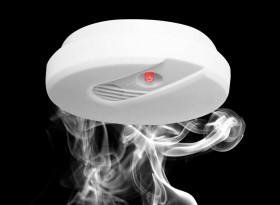
As technology continues to advance incorporating all of your home monitoring systems into the palm of your hand. Smoke and fire detectors are an essential part of your home or apartment safe. Loud, piercing alarms should wake you if there’s a problem, so you and your loved ones can safely escape. Smart smoke detectors go a step further, as they can send an alert to your smartphone. If you’re at work, or out of town, you can call the fire department or have a neighbor check on your house, to see if everything is OK. Another benefit of a smart smoke detector is that you can temporarily silence the alarm from your smartphone — so there’s no more trying to jab the Silence button with a broomstick after you set it off while cooking.

Understanding Your Town’s Fire Code

Having worked out in the field as both a service and installation technician, I can lend some insight on how fire code works.

If you are ever going to sell your property, you are going to need to bring it up to code. Rather than wait until you are going to sell your home, it makes sense to do it ensure it is up to code while you are living there to help keep you and your family safe.

The good new is that, if your town’s fire code requirements can be found online, it is a much more cost-effective endeavor than is used to be. Be sure to double check the fire code in your town, but these guidelines will help you to start thinking about it.

Start by counting how many smoke detectors are located within your property and note each location.

Today’s code requires that you have:

  • (1) smoke detector per floor or (1) smoke detector per 1200 square feet of living space.
  • Massachusetts also requires (1) smoke detector within each bedroom.
  • Carbon Monoxide detection is also required per code. Since 2006, carbon monoxide detectors are required in the following formation: (1) per floor and (1) within 10 feet of every bedroom.

It’s possible that your current fire and carbon monoxide monitoring system may not be up to these code. That’s because some homes were was “grandfathered” into the new regulations.

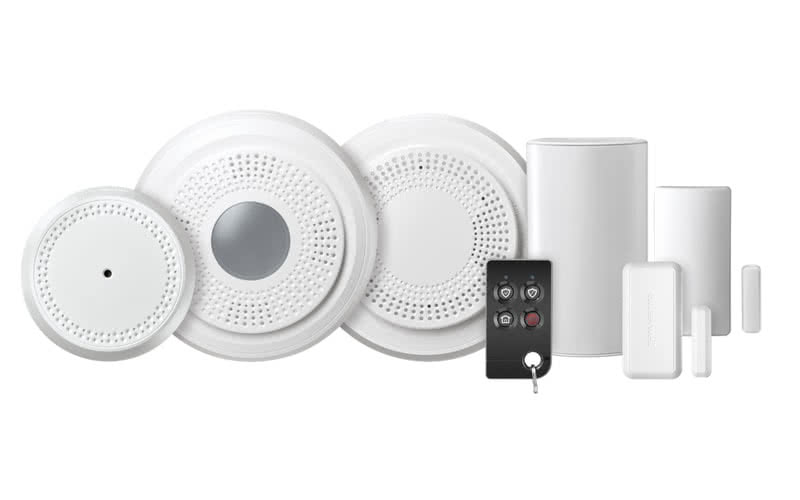
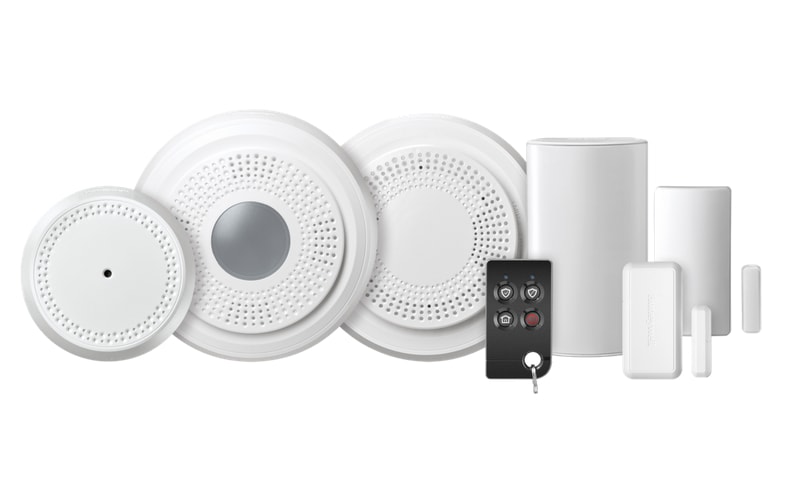
We can bring it up to code by simply replacing existing smokes detectors with our new top of the line Honeywell wireless devices. We will then map out the additional smoke detectors you need to meet your town’s fire code. An added benefit is that this could also lead to some discounts on your homeowner’s insurance.

smoke and co2 detectors for home saftey

Depending on when your house was built or modified you can fall under different sets of guidelines and regulations. Code varies from state to state, and sometimes even county to county within a state itself.

Always reach out to your local fire department and see if what is listed above meets the code requirement in your state and county.

Important Sensors to Protect Your Home

Technology has come a long way. Today, there are a variety of new sensors and improved technology that was not available to homeowners years ago.

Low Temperature Sensor
These sleek, small devices monitor the temperature and when the building drops below 42 degrees it sends in a notification to our UL listed Central Monitoring Station. These are especially important for a property that is often empty, like a second home, to help prevent a burst pipe.

frozen-pipes can cause major damage

If you have ever had a burst pipe, you may be shivering remembering the experience. This past winter we experienced temperatures as low as -10 degrees on the Cape. I called a few friends of mine who are licensed plumbers and they reported that last winter they responded to hundreds of calls about frozen pipes and dead furnaces.

I also asked a union-licensed plumber what the average cost is to repair busted or frozen pipes and he said the cost ranges from about $400 dollars to fix for a minor burst and close to $1500 if for a larger incident because it often also include both plumbing and patch work. That cost does not even take into consideration the cost of mitigating the flood damage.

This spend could have easily be prevented with a nominal additional equipment spend and zero additional monthly monitoring. At Alarm New England, we sell motion detectors with low temp sensors already built in to provide this value at no additional cost to our customers.

Flood Sensor
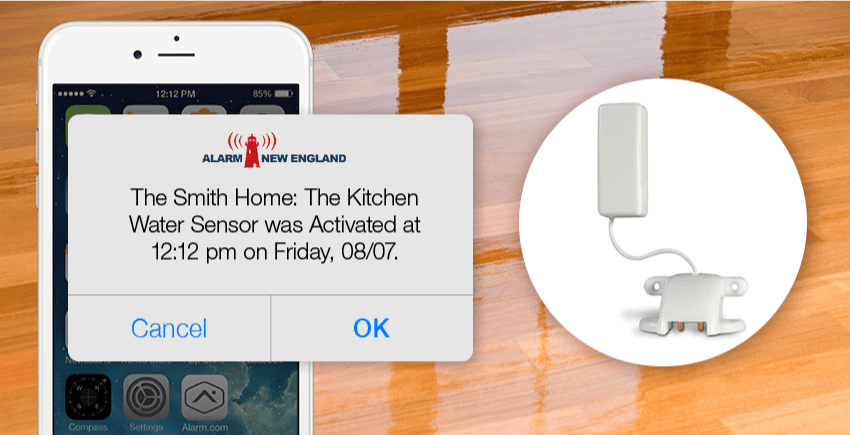
I can speak from experience that this device can be a huge headache-saver. You simply install the device near some valuables you don’t want to get wet. I usually install them in areas prone for flood: close to a hot water tank, near a sump pump and underneath bath/kitchen sinks.

house-flood from burst pipe

I recently had some flooding in my basement but, thanks to the flood sensor, was alerted quickly and was able to move some valuables out of the area instead of sleeping through another 4 hours of flooding. This saved me the cost of replacement goods. It also gave me a heads-up that my basement needed some preventative patch work. Early detection means huge potential savings.

Fire and Carbon Monoxide Sensors
Roughly 400 Americans die from unintentional CO2 poisoning each year. There are 20,000 visit emergency rooms for small cases and more than 4,000 of those require hospitalization.

People often overlook adding smoke and CO2 detectors to new alarm systems because they already have hard-wired systems in place. Hard-wired devices are required by building code and a great basic line of defense. Where they fall short, however, is if they are activated when no one is home. By tying them into monitored alarm systems, our central monitoring station is watching them 24 hours a day, so if you’re not home, we will be alerted and can quickly notify you and dispatch the authorities.

Residential Smoke Detector

According to the NFPA (National Fire Protection Association), deaths from fires in which no smoke alarms were present or in which smoke alarms were present but did not operate, accounted for 60 percent of all home fire deaths.

Smoke alarms were lacking in 37 percent of home fire deaths. At least one alarm was present but non-operational in 23 percent. I know when I was growing up, if a smoke detector started to chirp, my parents would pull it off the ceiling, take the battery out and put it in a drawer somewhere until they were able to put a new battery in it.

Keep a stash of the appropriate batteries handy so you do not make this potentially fatal mistake. Also make sure to test smoke alarms at least once a month. Replace any smoke alarm that is more than 10 years old. Smoke detectors older than 10 years start to lose sensitivity and can provide you and your family with a false sense of protection.

A Few Final Tips

Based on my years of experience as a technician, I have compiled some fire safety tips that you can implement immediately:

  • Watch your cooking: Stay in the kitchen when you are frying, grilling, or broiling food. If you must leave, even for a short time, turn off the stove. If you are simmering, baking, roasting, or boiling food, check it regularly, remain in the home while food is cooking, and use a timer.
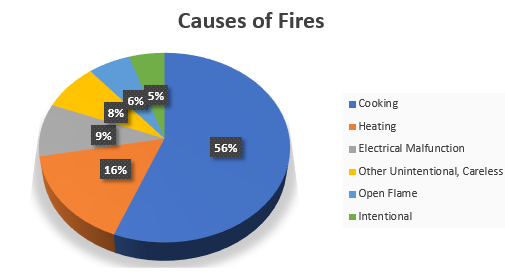
Cause of fire statistics
  • Give space heaters space: Keep fixed and portable space heaters at least three feet from anything that can burn. Turn off heaters when you leave the room or go to sleep.
  • Smoke outside: Ask smokers to smoke outside. Have sturdy, deep ashtrays for smokers.
  • Keep matches and lighters out of reach: Keep matches and lighters up high, out of the reach of children, preferably in a cabinet with a child lock.
fire and smoke alrm system
  • Inspect electrical cords: Replace cords that are cracked, damaged, have broken plugs, or loose connections.
  • Be careful when using candles: Keep candles at least one foot from anything that can burn. Blow out candles when you leave the room or go to sleep.
  • Have a home fire escape plan: Make a home fire escape plan and practice it at least twice a year.
  • Install monitored smoke alarms: During the sales process ask your sales rep about getting your home or business protected with monitored smoke detectors

Cooking is the Leading Cause of Home Structure Fires

The NFPA report also shows cooking equipment was involved in almost half (47%) of all reported home fires and almost half (45%) of reported home fire injuries. Unattended cooking was by far the leading contributing factor in these fires and in fire casualties.

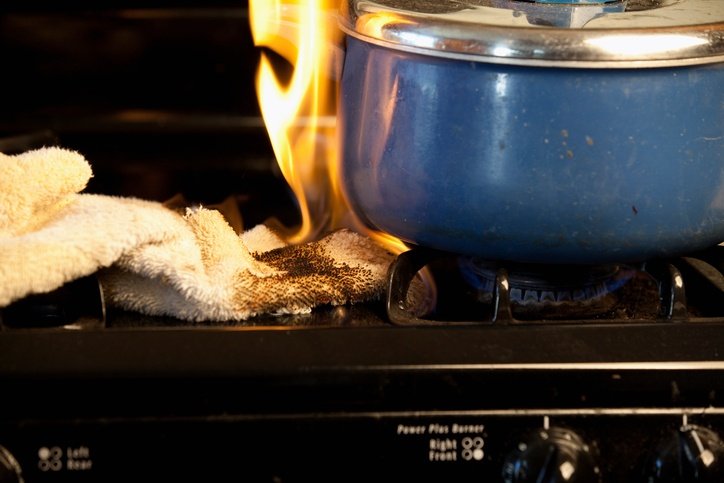
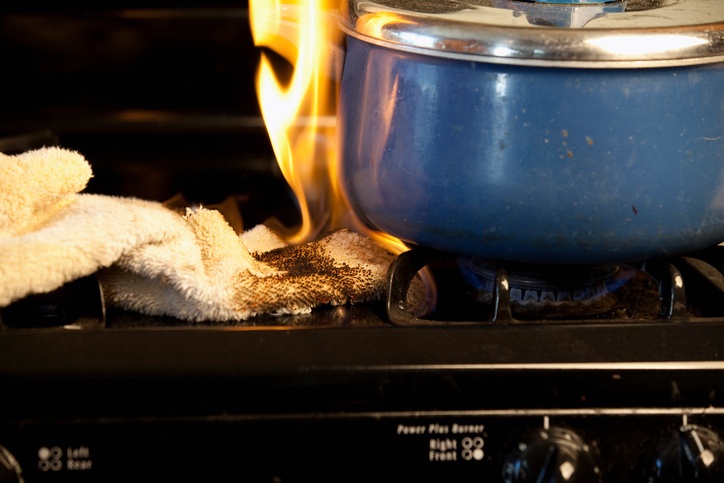
pot handle on fire setting off smoke detector

Cooking Safety Tips

  1. Keep flammable items away from fires – Paper towels, oven mitts, and other items can become torches very quickly should they get accidentally nudged towards the stove. Make sure to keep these items away from open flames or hot pots and pans.
  2. Always watch food that is cooking – They say a watched pot never boils. Although that old saying can feel true, it’s important to supervise hot foods as they’re being prepared. With many distractions such as relatives arriving and the kids running around, it’s important that at least one adult as an eye on the open flames at all times.
  3. Do not deep fry near walls or curtains – Deep frying a turkey is delicious but potentially dangerous. Make sure the turkey is properly thawed and that you fry the bird away from tree limbs, walls and hanging curtains.
  4. Keep fire extinguishers and baking soda handy – Never put water on a grease fire and ensure you have proper items to extinguish flames should they get out of hand. These simple tools can save lives.

Does your home need to be brought up to code to meet local regulations and insurance requirements?

Alarm New England can help. Contact us to learn more about how we can help your home meet fire safety standards in your state.

Home Security Contracts: Why Do Companies Use Them?

Home security contracts can be an especially confusing topic when you’re researching which company to choose for security equipment and alarm monitoring to protect your home. The more you understand the motivation of the Home Security industry the better you can understand how to partner with them.

Trust is a big deal in the home security industry, so we aim to be transparent about the way we operate and help our customers make informed choices. We’d like to break down why home security companies use contracts and what to look for before signing one. The bottom line the more informed you can be the better positioned you will be to choose the right alarm system for you and your family.

The Myth of the Free Alarm System

A free alarm system is “free” in the same way a new phone from Verizon, AT&T, or T-Mobile is “free”: You agree to a monthly contract, which will cover the cost of the “free” equipment.

At Alarm New England, we’re running a business; if we gave out security systems for free, we couldn’t afford to protect the tens of thousands of customers who depend on us. We need to pay our employees, purchase alarm equipment, and cover the cost of installation and alarm monitoring.

alarm companies implement contracts for alarm monitoring

Our customers have their own needs as well: Many prefer to pay for large purchases over smaller monthly payments rather than all at once.

That’s why a contract helps everyone.

Every alarm company hopes to build a reciprocal relationship with each customer. We invest in you by absorbing some of the initial cost of the security equipment and make buying a home security system as easy as possible. We also want to make home security accessible to a wide range of homeowners.

And in return, you invest your trust in us by signing a contract to pay a certain amount each month to cover your home security equipment and monitoring.

Read Your Home Security Contracts Carefully

Overall, contracts in the home security industry are a win-win. But some companies make contracts frustrating for their customers by not fully explaining the contents of the document.

To further complicate matters, customers don’t always read these contracts as closely as they should.

We know contracts are boring and tedious to get through, but you’ll feel more at ease knowing exactly what you’ve signed up for.

Family meeting with home security professional to install alarm system

Some people sign home security contracts without realizing that the cost of their system will be split over the course of three years, which means that if they want to cancel early, they’ve got to pay off a percentage of the remaining balance.

That’s why we strongly encourage you to read your contract to make sure you know what to expect.

Especially the fine print.

3-Year Home Security Contracts Vs. Upfront Payment

While the contract is an industry standard, the requirements in contracts vary from company to company. Some alarm companies (Alarm New England included) provide the option to pay for all of the equipment upfront and not be on a three-year plan.

These month-to-month plans benefit people who move around more frequently and like having the added flexibility of being able to cancel or restart their alarm monitoring at will. The customer pays the full cost of the equipment and installation, so they only pay for monitoring each month.

Home security camera installation

Be careful when searching for month-to-month options, however, as the quality of equipment and monitoring can vary widely.

Research the home security company carefully, read as many customer reviews as you can, and don’t jump into a purchase unless you’re completely confident in what the company sells.

What Happens to Your Security System Contract When You Move

One essential thing you should check on in your contract is whether you can transfer the contract to your new home. Be sure that if you were to relocate, you would be able to easily transfer your alarm system to your new home.

securing your home with the right security

Moving to a new home is expensive and stressful enough as it is. Ask your sales rep about this, and be on the lookout for the relevant clause in the contract.

If you’ve got a hardwired system like a Honeywell Vista, there will absolutely be an expense involved with moving that system to a new property. In fact, the cost may be so high that it’d be cheaper to buy a new system altogether.

To avoid those extra fees, consider a wireless security system that’s easy to set up and take down yourself without needing power tools.

alarm system door sensor installation

If you do foresee yourself moving to a new house or apartment in the next three years, a wireless security system will make your life way easier. All you have to do is take your equipment off the walls, windows, ceiling, and doors, put everything in a box, bring those to your new home, and call us when you’ve re-mounted everything so we can reactivate the system.

If you’re moving into a larger home and need additional equipment, let us know and we’ll make sure you’re taken care of.

Researching Home Security Company Contracts

When you’re considering home security companies, look for a company that fits your needs. Know whether you’d prefer a wired or wireless system, and ensure the contract will work in your favor should you move to a new home. Finding the best alarm solution for your home can be intimidating but once you understand the basics on how these contracts work you will be that much closer to the best fit.

Regardless of what kind of system you ultimately go with, we hope that you do careful research on each alarm company and their contracts—and make sure you’ve read the fine print!

12 Simple Ways to Prevent Home Security False Alarms

One of the biggest issues with the use of an alarm system is the problem of false alarms. Most false alarms are caused either by user error or equipment malfunction.  Being familiar with your security system and partnering with a company that is dedicated to the latest technology can help reduce false alarms.

These are responsible for 94% to 98% of all alarm calls and most police departments have fines in place in an effort to cut down on false alarms.

False alarms are not only embarrassing and costly for homeowners; they eat up a lot of valuable police resources and tax dollars that could be better spent elsewhere.

What can you do to prevent false alarms? Here are some easy steps that every owner of an alarm system should follow.

  • Keep your alarm system in good operating condition. Test it once a month. Have it inspected as necessary by trained, professional technicians. Report and repair faulty devices immediately.  It’s hard to remember to perform monthly checks on the equipment so make sure you put a reminder into your calendar.
  • Keep ground-floor doors and windows in good condition. Doors that won’t latch properly should be repaired so that the wind doesn’t blow them open. Windows that are not secured properly in their frames could lead to an accidental alarm.  Not only does this reduce false alarms it also helps secure your home against intruders.
  • Ensure that everyone who is going to use the alarm system is trained in its proper operation. Make special arrangements for house-guests, cleaning companies, delivery people or repair technicians.  It is important to make sure family members are familiar with the system in case of an emergency. 
  • Make sure that all authorized users of the system know the passcode. The passcode is our only method of identifying you over the telephone. We need that information to cancel an alarm or to discuss your account. You can have more than one passcode.
  • Advise all authorized users to answer the telephone if it rings after they’ve accidentally set off the alarm system. Your monitoring station will be calling to verify the alarm so don’t ignore that ringing telephone.
  • If you accidentally set off your alarm you can also try calling your central monitoring station first. Do so from a cellular phone or another line, however, because the alarm system may still be in the process of using your telephone line to send additional signals.
Alarm Monitoring
  • If you accidentally set off a silent alarm that calls for immediate police response such as a panic, duress, or hold-up alarm, it is imperative that you call the monitoring station immediately! Unless you have notes on your account stating otherwise, your monitoring station will NOT call to verify a silent alarm; they will immediately send the police.
  • Keep your account up-to-date! Immediately inform your alarm company of any changes to your account such as authorized users, telephone numbers, passcodes, addition of pets, etc.
  • Always use exhaust fans when cooking. This makes it less likely that you accidentally set off a smoke detector.
  • Don’t leave things hanging from the ceiling (balloons, decorations, etc.) in a room that contains a motion detector.
  • Before arming the system, make sure that everyone has left the premises.
  • Always notify your alarm company before you do any remodeling and make sure that they are aware of any changes or additions that might affect the proper operation of your alarm system.

Overall, one of the best ways to avoid accidentally triggering an alarm is to be familiar with all your system’s components.

How Motion Detectors Work in a Security System

While motion detectors are undoubtedly an integral part of your home security system, few people outside of the industry understand how these devices differentiate between and intruder and a person who is meant to enter the home.

This article will discuss exactly how motion detectors work and when you should install them in your home.

How Motion Detectors Work

There are a few options available when it comes to picking a motion sensor for your home, and each one functions slightly differently. Most of today’s motion detectors are wireless, electronic, and use either active or passive sensors.

Active Sensors

Active sensors are also referred to as radar-based motion detectors and they work by emitting ultrasonic sound waves. When an interference in the sound waves is detected, the sensor will then send a signal to sound an alarm.

ultrasonic-motion-detector

Some active sensors will activate a light when tripped or even open a door as opposed to sounding an alarm.

Photosensors

Another type of active motion detector uses light instead of sound. If you’ve ever seen a spy movie where the main character has to pass through a bunch of invisible laser beams (revealed by chemical fog) to infiltrate a facility, you know what photosensors are. When something moves into the path of the beam, disrupting the flow of energy, the alarm goes off.

laser-sensors

Some systems even illuminate a light beam on the intruder when he or she is detected. Consumer products like driveway alarm systems use similar technology to detect cars coming up to the home.

Passive Infrared Sensors

Also known as PIR motion sensors, this is the type of motion detector that is most commonly chosen to protect residential homes due to its cost-effectiveness and ease of use. These sensors detect infrared energy that is released from the body heat radiating off of humans and animals.

motion sensor walk2

PIR sensors are intuitive and can come with a variety of features such as a 90-degree look down, so that no intruder will be able to sneak underneath the sensor’s range of vision.

Motion Detector Set up and Installation

While you may be able to figure out how to set up your motion detectors on your own, many people benefit from getting the help of a professional to ensure the equipment is set up correctly.

When motion detectors aren’t installed the right way, they’re far more likely to result in false alarms, becoming a source of frustration rather than peace of mind.

Should you opt to install motion detectors, enlist the help of a security professional to either set it up for you or show you exactly where to mount it on the wall.

Another reason to consult with a security expert is that motion detectors may not always be the best method of protection for your property. If you have small children or pets in the home, you might want to consider adding window sensors and glass break sensors to your home or apartment security system instead.

Where Should Motion Detectors be Installed?

The first place to consider is near your front door as most intruders will try to gain access to the front door before trying to open your windows.

Second, we suggest placing them in hallways or living rooms that an intruder would have to traverse to reach their primary target: the master bedroom.

Motion detectors are not only used for keeping intruders out; if you have little ones at home that you want to keep safely within a certain part of the house, you can install a self-monitored motion detector that will notify you when the device detects any movement in the off-limits part of your home.

Are Motion Detectors Necessary?

The benefits of having motion detection technology in your home are numerous. When used in conjunction with other security measures like glass break detectors, motion detectors are highly effective.

You can never be too cautious when it comes to protecting your family and since we can’t physically be everywhere at once, motion detectors provide an extra layer of security and peace of mind.

How Do Glass Break Detectors Work?

One can never be too cautious and prepared when it comes to protecting their family and home. Installing a security system is one the best ways to protect your home against intruders.

With so many layers of protection available out there, it can be difficult to know exactly what you need. One commonly overlooked security measure is glass break detectors.

What are Glass Break Detectors?

Simply put, glass break detectors are security devices that sound an alarm when glass is broken and are a critical piece of a home or business security system.

Unlike door or window contacts that detect when an entryway is opened on your home, glass break detectors will sound the alarm if there is any break in the glass.

This, in conjunction with your other home security devices, ensures that you are protecting your home and family to the highest extent.

How Do Glass Break Detectors Work?

Glass break detectors use intuitive sound and microphone technology that is programmed to recognize the frequency of glass breaking. If the detector picks up that specific frequency, the alarm will sound.

With a working radius of several feet, you can place the break detector in the middle of a room that has several windows and it will provide protection for all of the windows in that room. You won’t need to buy a separate detector for every single window and door in your home.

Do I Really Need Glass Break Detectors?

If you are serious about securing your home and providing the highest level of security, then yes you do. Placing motion sensors in every room may not be a advisable depending on your living situation and the pets you own.

Most window and door sensors detect the motion of the door or window being opened. If the intruder instead breaks that glass and you lack that extra layer of protection, they will be able to gain access to your home without setting off the alarm.

While glass break detectors are not sufficient in arming your home on their own, they are an essential part of a home’s security system.

Installation

Glass break detectors should be installed inside the rooms in your home that have windows. Typically, you will want to place these on the wall facing the pane of glass. Rooms with sliding glass doors are of particular importance to protect in this way, as burglars are likely to view glass doors as an easy opportunity to gain entry.

Many people choose to install these detectors in the bedrooms of their home to give them peace of mind that their family is safe from intrusion.

The detectors do not need to be pointed directly at the window or door, they just need to be in close proximity, so they can pick up on the sound. This eliminates the need for multiple detectors in each room of your home, saving you money.

Set Up and Maintenance

While you may be able to purchase and set up your glass break detectors on your own, many customers prefer having a professional come to their home to set things up for them.

Once set up and functioning properly, most devices will require little maintenance other than the periodic battery change every 4 years or so. Don’t worry, this process is pretty simple. Most devices will alert you when it is time to switch out the batteries. Changing the batteries is simple enough where most people can do it on their own.

Important Considerations

While glass break detectors are a vital part of your home security system, like anything else, they aren’t ideal for every situation. Since they are designed to pick up on the frequency of breaking glass, even the sound of glass breaking on TV will set them off if the volume is too high.

The benefits of having glass break detectors installed in your home far out weigh the negatives. Installing these detectors in your home will give you and your family peace of mind so you can rest easily at night and know that your home is fully protected.

X

GET FREE QUOTE

What are you protecting?*

Step 1 of 4

Is your property currently monitored?*

Step 2 of 4

What size is your property?

Step 3 of 4

Who is this personalized quote for?*

By clicking this button, you consent for Alarm New England to use automated technology to contact you at the number provided. This consent is not required to make a purchase from us.

Step 4 of 4