When it comes to safeguarding your home and loved ones, nothing should be left to chance. A state-of-the-art home security system is more than just a set of sensors and alarms—it’s a meticulously crafted shield that ensures your peace of mind. In this ever-evolving realm of security technology, what makes a system truly exceptional? Let’s talk about the 6 characteristics of a world-class security system.
1. Custom-Made To Your Needs
No two homes are alike, and neither should their security systems be. It’s important to design a custom system that includes everything you need, and nothing you don’t.
2. Advanced Technology Designed To Serve You
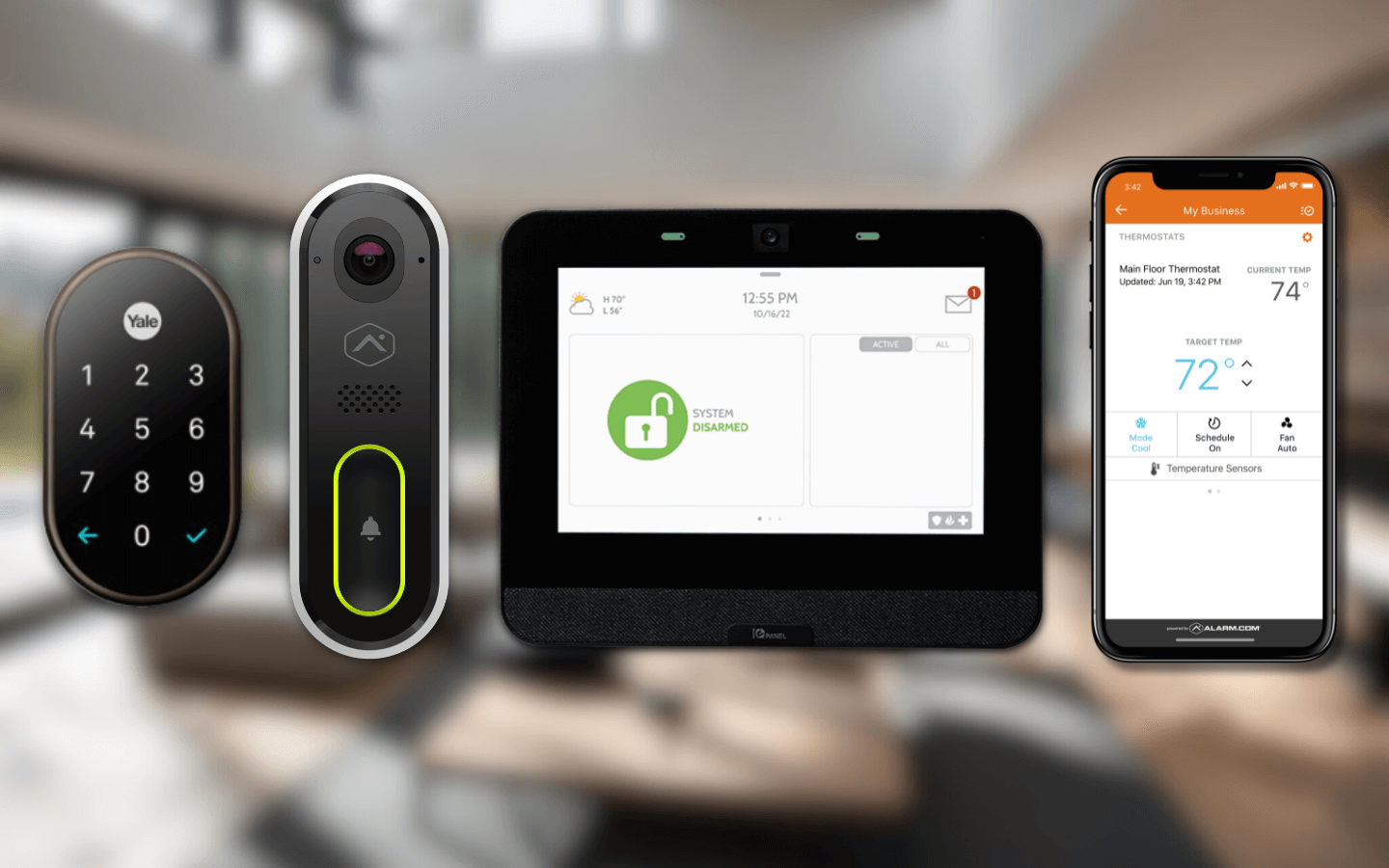
A leading home security system leverages the latest technological advancements, incorporating smart automation to create a cohesive network. Mobile app integrations allow for real-time alerts and remote access, empowering homeowners with the ability to monitor and manage their home security from anywhere in the world.
3. Monitoring Around The Clock
Beyond passive defense, a top-tier security system provides proactive monitoring. This involves the use of a central monitoring station to keep an watchful eye and provide a proactive response in emergency situations. A proactive approach is critical in mitigating risks and ensuring a rapid response.
4. High Quality Components
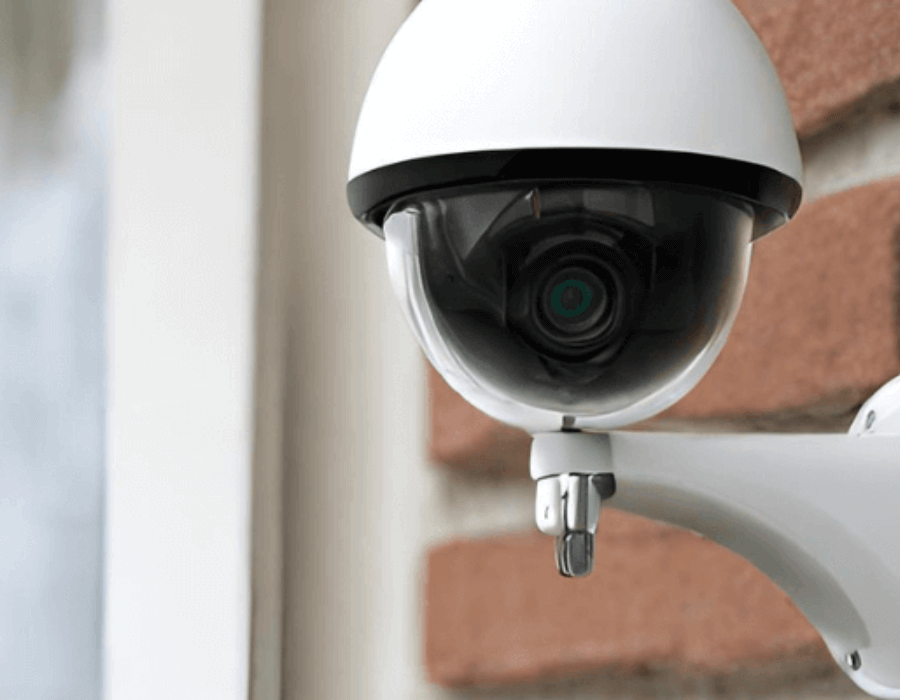
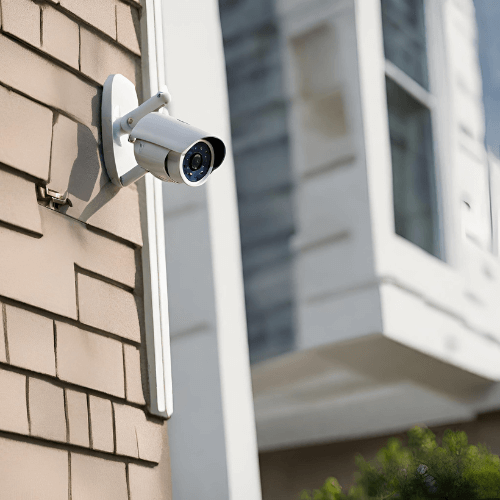
The effectiveness of a home security system is directly tied to the quality of its components. High-resolution cameras, motion detectors, and reliable alarms are a must to provide comprehensive coverage. Quality hardware combined with sophisticated software results in top-notch performance and durability.
5. Easy-To-Use And Convenient
Accessibility is critical. State-of-the-art systems are equipped with intuitive interfaces that simplify the user experience. Whether it’s through a mobile app or voice commands and smart device integration, interacting with your security system should be straightforward and hassle-free.
6. End-To-End Encryption
In an era where data privacy is increasingly important, securing the transmission and storage of information is a necessity. Advanced security systems employ end-to-end encryption to protect your data from unauthorized access, preserving the confidentiality and integrity of your surveillance footage and personal details.
7. Professional Installation And Service Plans
Even the world’s best security system is rendered ineffective if it is not installed correctly. The best systems are professionally installed and maintained regularly. Be sure to choose a security provider that offers professional installation to ensure the system is working properly, and regular maintenance to keep it in good shape.
Don’t Wait, Get Better Security Today
Ready to elevate your home’s security? Contact Alarm New England today. Discover how our advanced security solutions can help, giving you and your loved ones the confidence that comes from knowing you are well protected.
Ready to elevate your home security? Contact us today for a personalized consultation.
The history of home security systems is rich and varied, stretching back over many years. Today, we might be familiar with home security systems boasting advanced technology and automation. But what we might not know is how it all started. Among the key figures in this journey is the home security system inventor, Marie Van Brittan Brown, whose invention in the 1960s laid the groundwork for the sophisticated systems we rely on today. Brown’s story is not just one of innovation but also of necessity, insight, and the desire to create a safer living environment.
Marie Van Brittan Brown was born on October 30, 1922, in Jamaica, Queens, New York. Living in a neighborhood with a high crime rate and slow police response times, Brown sought a way to feel safer in her own home. Working as a nurse, with irregular hours that often left her home alone at night, she was acutely aware of the vulnerabilities that came with her situation. This personal need for safety and security led her to conceive an idea that was revolutionary for its time.
[popup_anything id=”18269″]
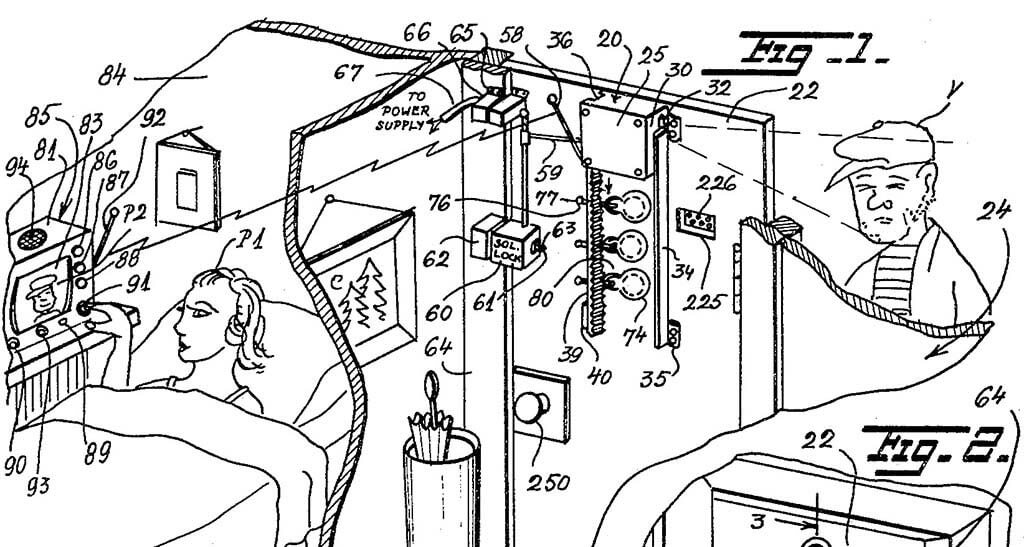
In 1966, Brown and her husband, Albert Brown, an electronics technician, devised a system that would allow her not only to see who was at her door but also to communicate with them without opening it, and to alert authorities if necessary. This system was comprised of four peepholes, a camera, monitors, and a two-way microphone. The camera could be moved to look out of any one of the peepholes, allowing Brown to see who was outside at varying heights, including children. The images captured by the camera were then transmitted to a monitor inside the home. Additionally, a panic button was included to immediately alert the police if the homeowner felt threatened.
Marie Van Brittan Brown filed a patent for her invention in 1966, and it was granted in 1969. The patent described a system that provided a front door with a camera, monitors, and a two-way microphone. The revolutionary aspect of Brown’s invention was not just in allowing homeowners to see who was at their door without opening it, but also in its incorporation of a communication system and an alert mechanism to notify the police, which significantly enhanced home security.
Brown’s invention laid the foundational technology for the modern home security systems we use today, which include motion detectors, automatic police notification, and video surveillance. While technology has clearly evolved and expanded upon her initial concept, the principles behind Brown’s system remain at the core of home security. Today, smart home security systems integrate cameras, motion sensors, and internet connectivity to provide real-time surveillance, remote access, and instant alerts to homeowners and law enforcement.
Marie Van Brittan Brown’s contribution to home security is a testament to the power of innovation driven by personal need. Her work exemplifies how thoughtful, inventive solutions can create lasting changes that benefit countless individuals. Brown’s legacy is not only in the device she created but also in the sense of safety and security that her invention has provided to homes around the world. As we continue to develop and refine home security technology, it is important to remember the pioneering work of Marie Van Brittan Brown, whose vision and ingenuity have made an indelible mark on the field.
It always pays to be vigilant when you or an elderly loved one are living alone. Senior citizens are often targeted in home security incidents. Keep reading if you would like to know more home security tips for seniors.
Important Things To Know
Criminals often target elderly people for burglary and at-home related crimes because they are more vulnerable. Seniors often have predictable routines, allowing criminals to know when they are present and not present at the home. Plus, senior citizens are assumed less likely to retaliate back if targeted during a crime.
According to data from the CDC, slips and falls are the most common form of injury for people aged 65 and older. Medical alert devices such as panic buttons can be a lifesaver in the event of a dangerous at-home fall. Other devices designed to use in the home, like automated alarm systems and video doorbells can also help the elderly stay safe at home.
Keeping windows locked, doors secured, and staying away from the bad habit of hiding a spare key somewhere outside the home can help to keep a senior’s home safe from potential burglars.
Why Seniors Are At Risk, And How To Keep Them Safe At Home: Our Best Tips
As we get older we become more and more vulnerable to potential criminal acts. Home security for seniors doesn’t just mean preventing a home invasion, it also means protection from a much more likely threat: medical emergencies.
Even a short fall can cause severe issues for seniors who are less physically able. By combining medical alert systems with home security systems, you can provide your parents with comprehensive protection, even when you’re not around to help.
The elderly can also benefit from cutting-edge features like home automation and doorbell cameras, allowing them to be better able to control their homes at the touch of a button.
Why do criminals target the elderly?
Mental and Physical Health: The biggest reason why seniors are a likely target of crimes is that they are likely to be living alone and isolated from the outside world. Also, they may have mental or physical disabilities, making them easy targets for con artists and other scammers. Older people are more likely to fall for all sorts of email and phone scams that younger people would ignore. Also, since older adults tend to be less physically active, burglars can see their inability to fight back as an opportunity.
Predictability: Seniors tend stick to the same routines, making it easy for a criminal to guess when they won’t be at home.
Location: Many seniors live close to town so that they don’t have to walk or drive as far to get groceries and see the doctor. Cities are more likely to have higher crime rates than rural locations.
Crime Reporting: Seniors are assumed to be less likely to go to the police or be able to fill out a proper incident report after a crime is committed, making it easier for the criminal to escape justice.
How can we protect our aging parents?
Medical Alert Systems
While the threat of a break-in is always scary, a health crisis is a far more likely occurrence. Falls are actually the most common cause of injury for adults over 65 (according to the CDC). If you’re looking for a security system, also consider getting a medical alert system with a panic button so that help can come as quickly as possible in the case of a fall or another emergency.
All someone has to do to summon emergency services is press and hold down a button that can be carried on their person. Some medical alert systems have advanced features like automatic fall detection. In addition to calling for help, the system can also alert family members and caregivers of a problem.
Home Automation
Another way to help out a senior is to have a home automation system that will automatically activate alarm systems at a certain time every day. This is a big help for seniors who suffer from memory issues and have difficulty remembering to regularly arm their system. An automated system can be also used for heat and lights at the home.
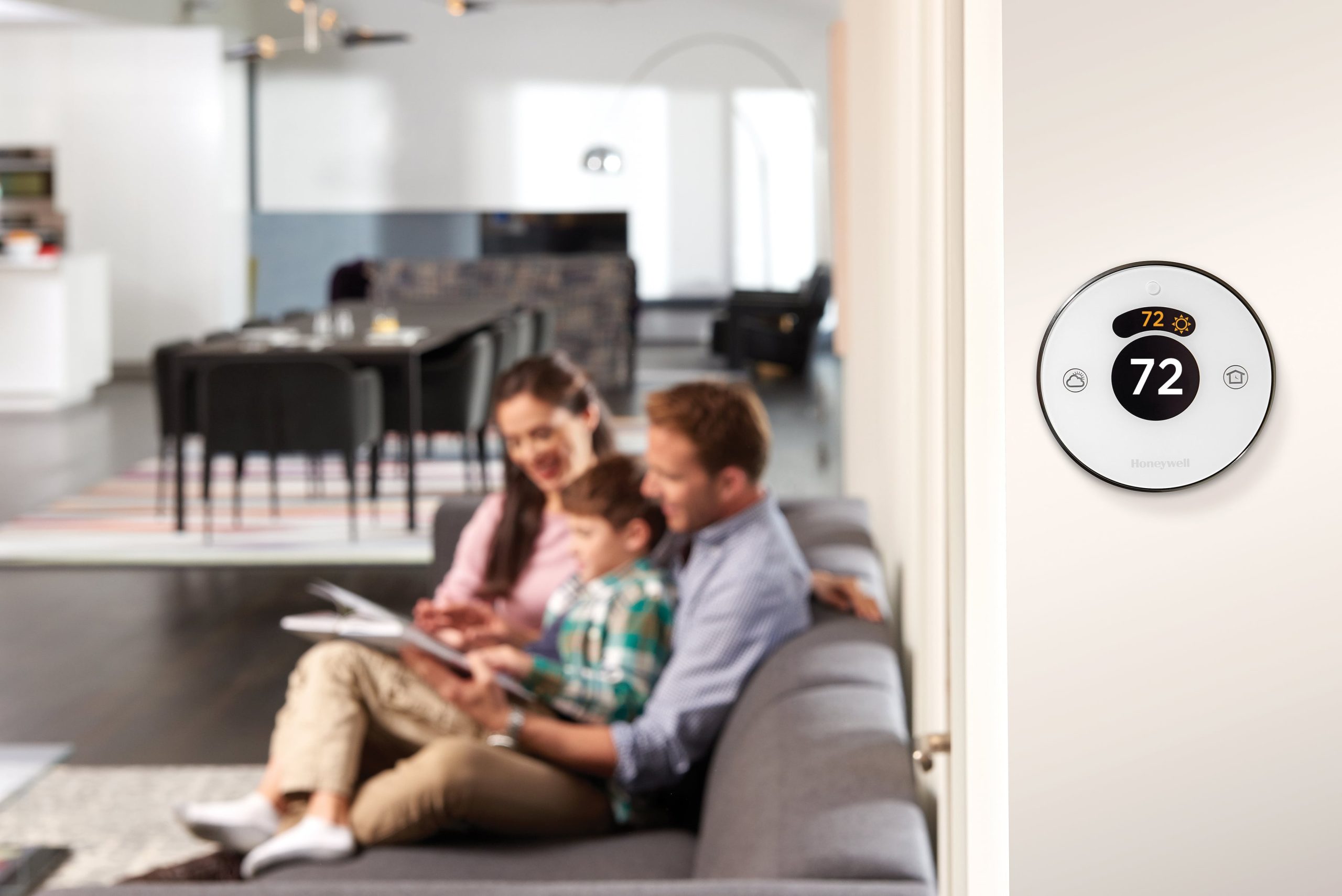
Smart thermostats make it easy to keep the home at the right temperature, and smart lighting can be put on randomized timers so criminals are less able to figure out when people are in the house and make break-ins far less likely.
Smart home security systems can be activated remotely via smartphone to provide seniors with greater freedom to leave the home without needing to worry. These simple and easy-to-use apps that control the system are designed intuitively so that even those who aren’t used to using smartphones or computers can figure out how to use them.
Doorbell Cameras
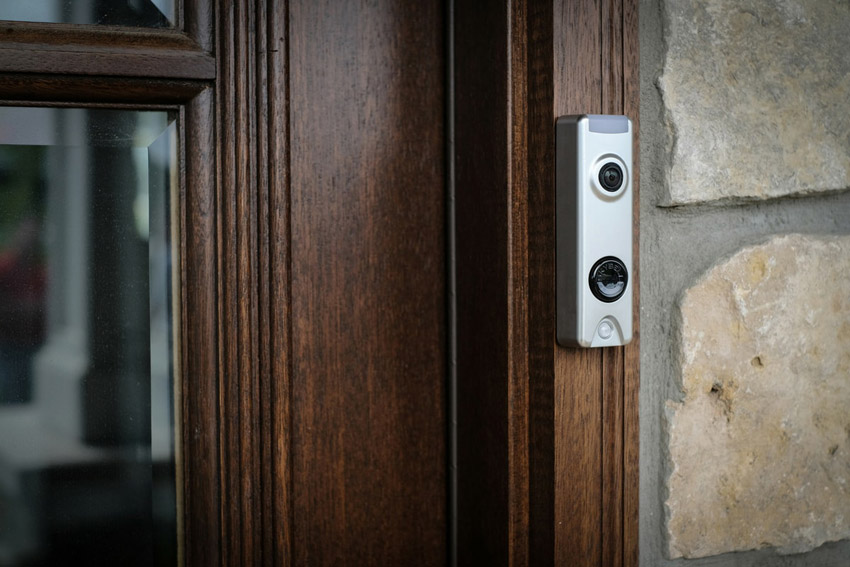
A doorbell camera is another great security device that helps give peace of mind to seniors and their families. Criminals are far less likely to attempt to break into a house that has a doorbell camera system, as the camera captures them the moment they set foot on the front porch. As a burglar, the last thing you want to do is risk getting your face caught on tape and ending up with the police.
Besides acting as a deterrent, video doorbells will also let seniors watch the outside of their house and grant entry to family members, friends, and trusted service workers without having to get up and walk over to the door.
Most doorbell systems integrate with smartphones and can be used remotely. This means seniors can see who’s coming up the front porch, even when they’re not at home.
Follow these home security tips for seniors to help keep your loved ones safe and secure.
Tip 1: Keep doors and downstairs windows locked at all times.
An unlocked window can allow somebody access to the home even when the senior is inside it. Doors and windows are the most vulnerable points of any home, and as such require the most attention. Read our guide on how to reinforce your doors to learn more.
Tip 2: Make sure the front door has a peephole (or a doorbell camera system).
Always make sure you are able to recognize the person on the other side. Do not open the door even slightly if you are uncertain about who the person is and what their intentions are. Additionally, have a mobile phone at the ready when people are at your door. If there is something suspicious going on, call the police right away.
Tip 3: Reinforce your home’s weak points.
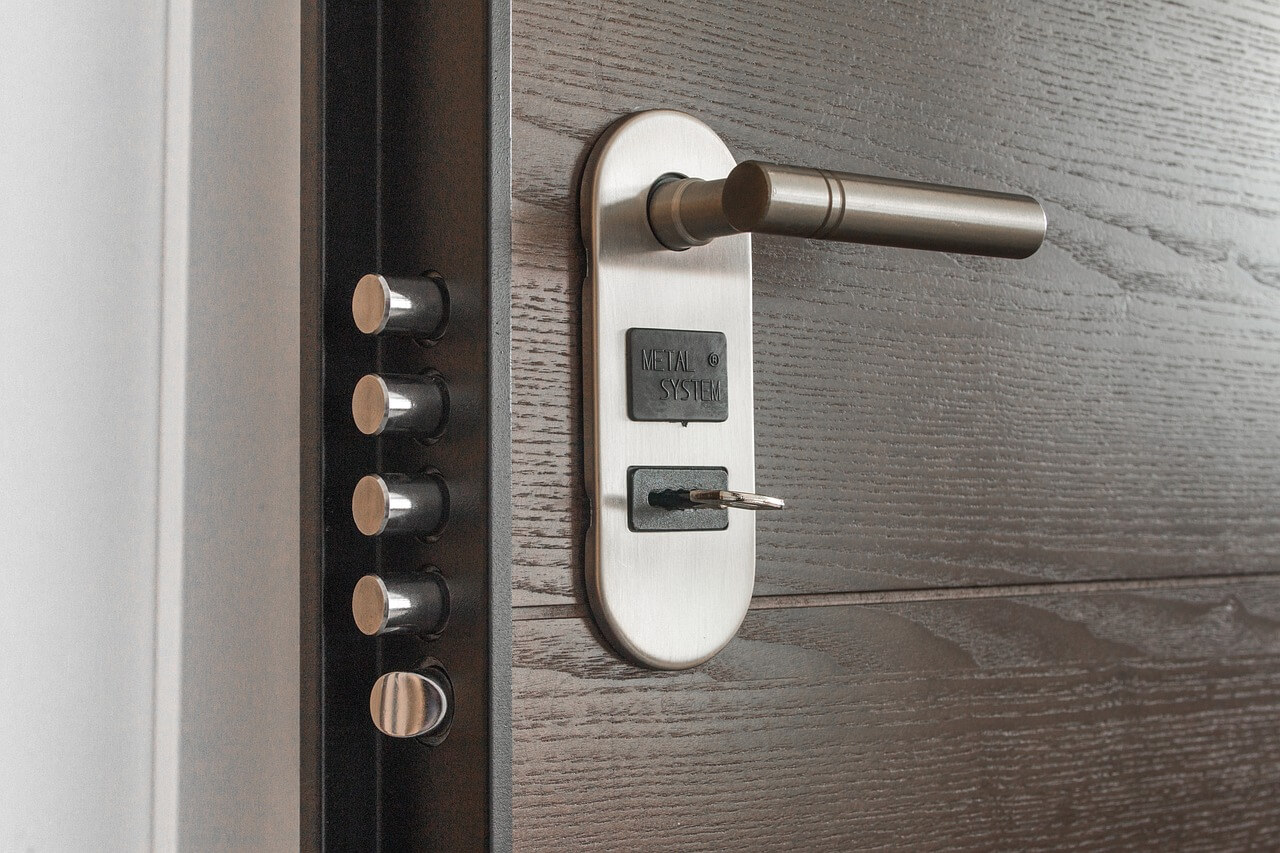
Install solid wood or metal doors for added reinforcement to prevent someone from being able to break through the door. Install double glazed glass panels on your windows if you don’t already have them.
Tip 4: Avoid hiding your key outside your home.
When going on vacation, do not leave keys outside the house (for example, under doormats or inside a flower pot). If you must leave a key behind, give it to a trusted friend or family member.
The Bottom Line
As individuals age, it becomes more important to put safety measures into place proactively. No one wants to be caught up in a bad situation unprepared. The elderly can be the most at-risk when it comes to both accidents and targeted crimes inside of the home. By taking some simple steps and following the tips listed here, seniors can be safer and better prepared in the event of an at-home emergency. From medical devices like panic buttons, to easy-to-use doorbell cameras, to simple “common sense” habits like keeping doors and windows locked, older home owners who heed this advice will remain safer in the long run.
Today, with modern technology becoming commonplace in the home, the traditional reliance on landline-based home security systems is starting to become obsolete. Gone are the days when a physical connection to a telephone line was the primary means of safeguarding our homes. With wireless technology now widely adopted, homeowners have better and more convenient options to help ensure the safety and security without the need for a landline connection.
[popup_anything id=”18269″]
The Evolution of Home Security Systems
In the past, home security systems relied heavily on landline connections to communicate with monitoring centers in the event of an emergency. While these systems served their purpose for many years, they had inherent limitations. Landline-based systems are vulnerable to physical tampering, such as cutting the phone line, which could render them ineffective during a crisis. Also, they lack flexibility and often require professional installation, making them harder to set up, therefore less accessible to the average homeowner.Rapid advancements in wireless technology during the past several years have brought great changes to the landscape of home security. Modern wireless home security systems offer a host of advantages over their landline-based counterparts. Wireless systems make use of more modern technologies, such as cellular networks, Wi-Fi, and Bluetooth to provide seamless connectivity and enhanced functionality.
5 Benefits of Wireless Home Security Systems
Enhanced Reliability
Unlike landline-based systems that can be easily compromised, wireless home security systems are reliable. By leveraging cellular networks, these systems remain operational even in the event of a power outage or tampering attempt. This is vital as it ensures continuous protection for your home and loved ones.
Easy Installation
A significant advantage of wireless home security systems is their ease of installation. Unlike traditional systems that need to be connected to the landline, wireless systems can be easily installed without the need for complex wiring or drilling. This not only saves time and money but also provides greater flexibility in choosing the placement of sensors and cameras.
Remote Access and Monitoring
Often, wireless home security systems offer the convenience of remote access and monitoring through smartphone applications. Whether you’re at work, on vacation, or simply away from home, you can easily monitor your property in real-time, receive instant alerts in case of suspicious activity, and even remotely arm or disarm the system as needed.
Integration with Smart Home Devices
Another compelling feature of wireless home security systems is their compatibility with smart home devices. From smart locks and doorbell cameras to voice-controlled assistants, many wireless systems can integrate with home automation technologies, leading to enhanced safety and convenience.
Scalability and Customization
Wireless home security systems offer better scalability and customization options than systems based off of a landline. Whether you live in a small apartment or a large property with many rooms, you can easily expand or customize your system with additional cameras and sensors.
Choosing the Right Wireless Home Security System
Now that you are convinced about the benefits of a residential security system without a landline, how do you make sure you are choosing the right one? When selecting a wireless security system, it’s essential to consider your specific requirements, budget, and preferences. Here are a few key factors to keep in mind.
Features and Functionality: Evaluate the features and functionality offered by different wireless security systems, such as motion detection, video surveillance, environmental monitoring, and home automation capabilities. Choose a system that aligns with your security needs and lifestyle.
Reliability and Connectivity: Ensure the system you’re using has a cellular backup and Wi-Fi connectivity to ensure uninterrupted protection for your home, even in the event of a Wi-Fi outage.
User-Friendly Interface: Look for a system with an intuitive user interface and mobile app that makes it easy to set up, monitor, and manage your security system from anywhere, anytime.
Customer Support: Choose a reputable security provider that offers responsive customer support, and reliable technical assistance to ensure long-term satisfaction and protection for your investment.
Find The Best Options For Home Security Without A Landline
The era of landline-based home security systems is fading into obscurity as wireless technology continues to provide robust protection for our homes. By embracing wireless home security systems, homeowners can enjoy enhanced reliability, convenience, and peace of mind without the constraints of traditional landline connections.
[popup_anything id=”18269″]
Whether you’re looking to upgrade your existing system or invest in a new security solution, the experts at Alarm New England can help. If you’d like to get rid of your landline and upgrade to a wireless security system, give us a call at (857) 445-4010. We can answer any questions and help walk you through the process.
Boston, also referred to as “The Hub” (never “Beantown”) is New England’s leading city in just about every respect: population, jobs, sports teams, historical significance, and universities.
As the home of the Red Sox, Celtics, Bruins, and the New England Patriots, for many, Boston is primarily a sports powerhouse. Others think of Boston first and foremost as a city of intellectuals due to Harvard and MIT being just across the river.
Although there is a city of Boston, many people use the city name to refer to the Metro Boston region, which extends from Saugus in the north to Weymouth in the south.
Boston is an ideal place to study, work, and raise a family with its eclectic array of arts and culture, restaurants, shopping destinations, outdoor activities, and historical sites. Here is what you need to know before you move.
Know Your Neighborhoods
Like many major American cities, Boston is experiencing an influx of young people who prefer living in swanky apartments in the city to spacious suburban homes. This has created an affordable housing crisis – many residents cannot manage the downtown area’s expensive housing costs and opt for a longer commute from a neighboring town instead.
The government is working to bridge the gap between these prices and the income of most of its expanding population, but this situation is unlikely to improve for the foreseeable future.
Despite these challenges, moving to Boston is still a viable and popular option for those who can afford the high cost of living. There are a number of attractive neighborhood and suburbs where you can choose to live, both within the city center and in the coastal communities surrounding it.
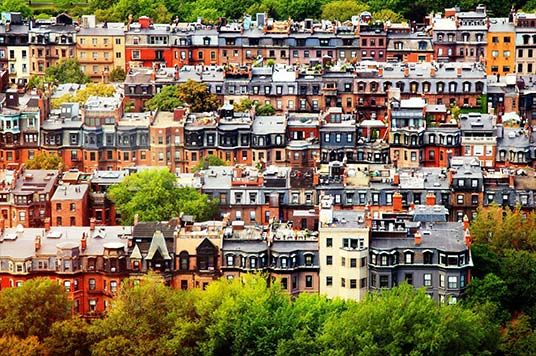
Pick an area based off your income bracket or finances. More affluent neighborhoods, like Beacon Hill or Back Bay, are prime real estate locations and the housing costs in these areas reflect that. These areas tend to be among the safest places to live and also where home security systems are most popular.
In contrast, properties in up-and-coming areas like Roslindale or East Boston will come at a more affordable price. Find a place that is central to the lifestyle and interests of you or your family. Commuting via car can be time-consuming, so factor in the distance and route from your place of work.
Regardless of where you choose to live, remember to take some basic steps to protect your home from burglary and fire. Overall crime rate in Boston is high relative to other cities in the US, so home security in Boston is a great way to both secure your home while you’re away and contribute to making your neighborhood safer. Plus, it lowers your insurance costs, too.
With so many buildings in Boston that are hundreds of years old and densely packed together, the risk of fire is very real. Make sure to update your smoke detectors if they’re over 10 years old. To learn more about the history and demographics of fires in Boston (as well as the rest of the state) and what you can do to reduce these risks, read up on our most recent blog post on the subject.
The Popular Suburbs near Boston
Belmont
For those wanting to get away from the hustle and bustle of Boston but not go too far, Belmont is the suburb for you. It is close enough to still commute into work and offers large parks and outdoor spaces to enjoy on the weekend. This suburb is pricey, however.
Beacon Hill
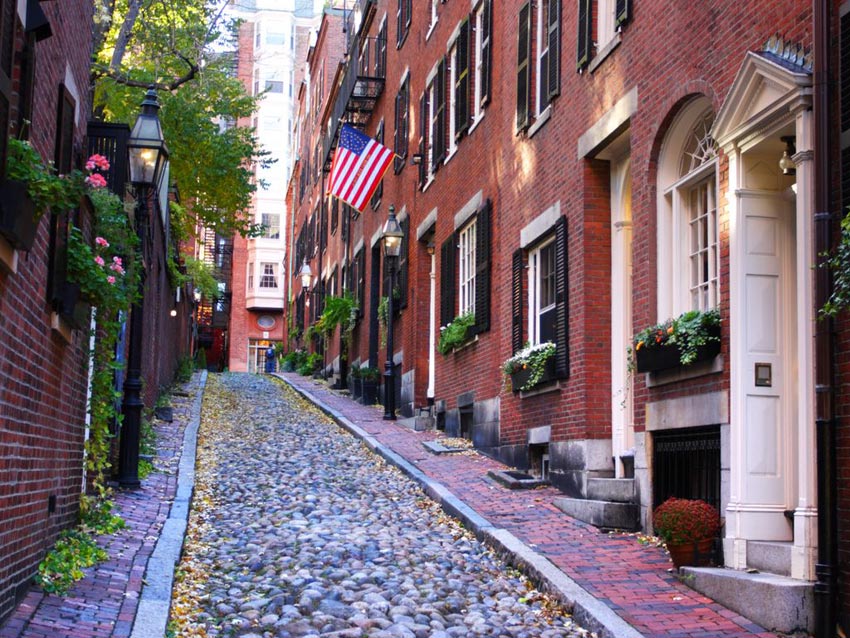
Arguably the most picturesque town because of the rows of historical houses and cobblestone streets. Walking at night along the gas-lit streets take you right back in time. It’s a popular place for both residents and tourists to explore.
Cambridge
Home to both MIT and Harvard, this suburb is home to more than just over-achieving college students. Families love the quiet, charming residential area and excellent public schools.
Winchester
A small suburban town in Boston that is popular with working professionals who commute into the greater metropolitan area. It has earned “Green Community” status because its residents make an effort to cut down on waste and keep the neighborhood environmentally-friendly.
Worcester
Pronounced “Wuhstah”, here you’ll feel the small-town charm while being a relatively short drive away from Boston, provided you plan around rush-hour traffic. Worcester is brimming with college students and residents alike. Purchasing a family home here is significantly cheaper than in other suburbs. It is also a popular place to start a pop-up shop or boutique.
The Cost of Living in Boston
Boston is one of the top five most expensive cities to live in in the country. If you plan on moving here, it is important to understand how it will affect your budget. Speak with a financial advisor or do research into the average living costs of the suburb prior to arriving.
It is possible to share an apartment, especially if you’re a young working professional without dependents or a college/graduate school student. It is also recommended to explore a variety of options to see what is available before purchasing a property online.
And if you’re the type that enjoys eating out or ordering take-out, this too will add up. With Boston’s endless selection of restaurants and cafes, it’s tempting to want to try them all out. As rent in the area is expensive, businesses need to mark up their products to cover such costs.
A local, inexpensive restaurant will set you back around $10-20 a main meal if you include tax and tip, while a three-course meal or fine dining experience starts at around $50 a person.
Massachusetts is a higher-tax state, so if you’re moving here from somewhere outside the region, be mindful of the possibility of paying more. Fortunately, flat taxes apply for income and sale taxes. Taxes on capital gains and owning an estate are where the catch lies, but these typically don’t apply to the average resident.
If you’re a sports fan, you’ll also need to pay the significantly higher ticket prices for the Boston Red Sox games due due to the immense popularity of the team and the size of their fan base. If you’re on a budget, there are many college and state sports teams to support that do not charge for admission.
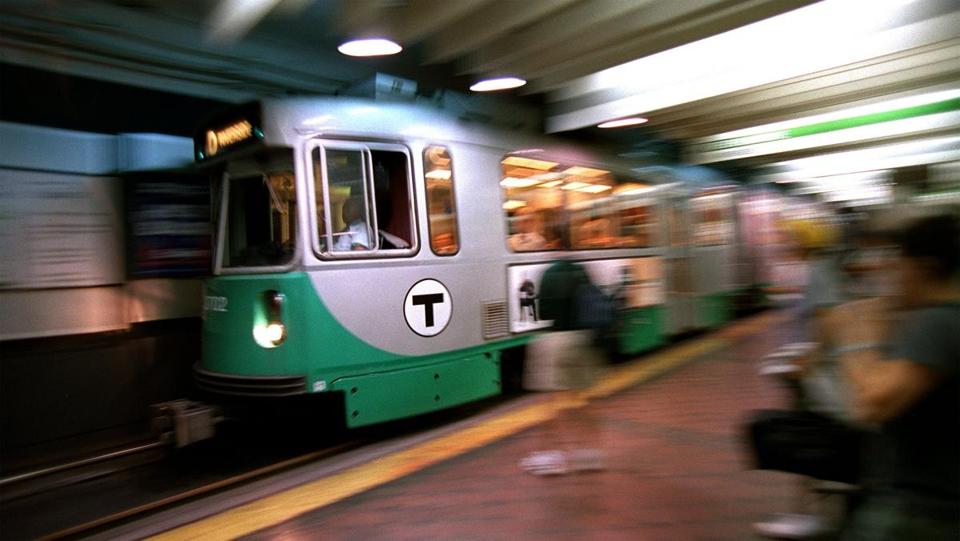
Or if you’re not into sports, visit a museum or spend the day hiking along a trail or historical site. Public transportation is cheap too. A monthly pass gives you unlimited access to the Boston subway line (known as “the T”) and buses for just $90.00 a month as of July 1, 2019. When the trains aren’t derailed, on fire, or suffering from signal problems, public transportation is by far one of the most convenient ways to get around.
Boston’s Green Line subway, known for its characteristically loud screeching. (Source: The Boston Globe)
The Top 10 Safest Neighborhoods in Boston
If you are considering relocating to some of the areas of Boston with the least crime according to data from the Boston Police Department, then this list of the 10 safest neighborhoods in the city is for you:
1. West Roxbury
With its clean, verdant parks, single-family homes, and quiet nights, West Roxbury not only looks but also feels like a suburb, despite its prime location near the heart of the city. In this neighborhood, there is a popular gourmet grocery store called Greek International Food Market and the highly-recommended Sofia Italian Steakhouse.
Maybe what makes West Roxbury popular with families with children, mature professionals and retirees, is its crime rate which is only 1.9%. Plus it’s about a 30-minute shuttle into the center of the city.
2. Charlestown
If you have seen The Departed, then you likely have a Hollywood-inspired image in your head about Charlestown being a major crime center. In reality, that’s far from the truth; Charlestown is one of the safest neighborhoods in Boston with a crime rating of just 2.14%.
Charlestown is not only for young professionals looking for more affordable housing but also for people who want to experience the historic waterfront neighborhood with Irish-American roots.
While Charlestown is a small neighborhood, there are a couple standout restaurants that are worth a visit like Monument and Brewer’s Fork.
3. Jamaica Plain
With a 16% drop in crime in 2016, Jamaica Plain is considered one of the safest places to live in Boston. It also best embodies the spirit of America in that it holds the most ethnic and income-diverse residents in all of Boston.
Despite the rise in the cost of real estate, the takeover of better eating establishments shows that there is a continuous and welcome change in the community. What’s most important is that the ties shared by families and loved ones remain on its grounds.
4. East Boston
Nicknamed Eastie by its beloved residents, East Boston has a little over 40,000 diverse residents and has seen a lot of transformation especially in the areas around the Maverick T stop. One of the most significant issues the neighborhood has faced in the past is its history of crime.
However, law enforcement efforts and gentrification have contributed to reducing the crime rate 1.29%, a 16% decrease from 2016. What’s more, East Boston brands itself as a neighborhood that’s welcoming to members of every race, culture, family size, and sexual orientation. Few people outside of East Boston realize that there are quite a few great restaurants to be found here, from Santarpio’s Pizza to Taqueria Jalisco.
5. Hyde Park
Hyde Park is a neighborhood in Boston that is known for being low-crime, and for good reason. But what makes people love this town is the fact that it is well-maintained with dashes of green on every corner, offering a respite from the concrete (and brick!) jungle of downtown. Despite the 6% increase in crime in 2016, Hyde Park is still one of the safest places in Boston.
6. Dorchester
Dorchester is another part of Boston that has become an amalgam of cultures from Irish-Americans and African Americans to Latinx and a distinctive LGBTQ+ community.
The town is known for its close proximity to Boston harbor and a number of popular green areas and parks courtesy of father of American landscape architecture Frederick Law Olmsted. If you plan to visit or relocate, there are sites like The James Blake House (the oldest house in Boston), Franklin Park Zoo, Dorchester Park, and Franklin Park to get in some bonding time with your family and loved ones.
Allston/Brighton is an up-and-coming area that’s increasingly being taken over by college students and recent graduates fleeing the sky-high rent closer to the city. It’s known for having a great selection of restaurants that are of comparable or superior quality to their competitors downtown for a much lower price such as Carlo’s Cucina and Coreanos Allston.
No matter where you turn, you’ll have no trouble spotting college kids from Harvard, MIT, BU, and Northeastern walking the streets or sipping artisanal beverages in the numerous coffee shops and bars. With regards to safety, in 2017 there were 904 total crimes that took place in a population of 45,801 people, which is a 2% increase from 2016.
8. Mission Hill
Mission Hill is a diverse neighborhood that has seen a recent upsurge in new condos and brick row houses, which is surrounded by Fenway/Kenmore, Roxbury, Jamaica Plain, and Brookline. Mission Hill is cheap and offers something for everybody’s taste.
In addition, this is one of many areas that the Boston Police Department is delegating a lot of their resources to keeping safe. As of 2016, only 1,950 total crimes were reported over a population of 64,759.
9. South Boston
South Boston or “Southie” was once predominately a working-class Irish Catholic community, but these days, it has become a hot spot for young professionals looking for a swanky new pad only minutes away from their office or a short jaunt on the MBTA.
South Boston comprises Dorchester Heights – where George Washington forced British troops to vacate during the American Revolutionary War. With the area becoming increasingly gentrified, crime rates have also declined to the point where it is now one of Boston’s safer places to live.
Back Bay is more or less in the heart of Boston and only a short ride on the Green Line trolleys away from just about everything (assuming the Green Line isn’t experiencing “major delays”).
It is also home to some of the most beautiful real estate in town with many brownstones dating back to centuries ago. If you’ve got something you want to buy, chances are you can find a store on Newbury Street.
For a more relaxing day, check out the Boston Public Library and flip through its massive collection of books or take a stroll through the Public Garden. As for safety, only 2,675 total crimes were reported in 2017 over a population of 76,461 people, a 16% decrease from 2016.
The Back Bay has some of the best restaurants in the city, along with some of the more high-end spots. Sorellina, Deuxave, Grill 23 & Bar, Ostra, and Bistro du Midi are just a few of the most popular upscale options available to you.
Learn How To Get Around Boston
Depending on who you speak with, you’ll receive a mixed list of preferred means of transportation. Boston’s road infrastructure may suffer from a lack of lane markings and confusing one-way streets, but the good news is that the city is small enough to where you can drive from one end to the city of the other reasonably quickly in off-peak hours.
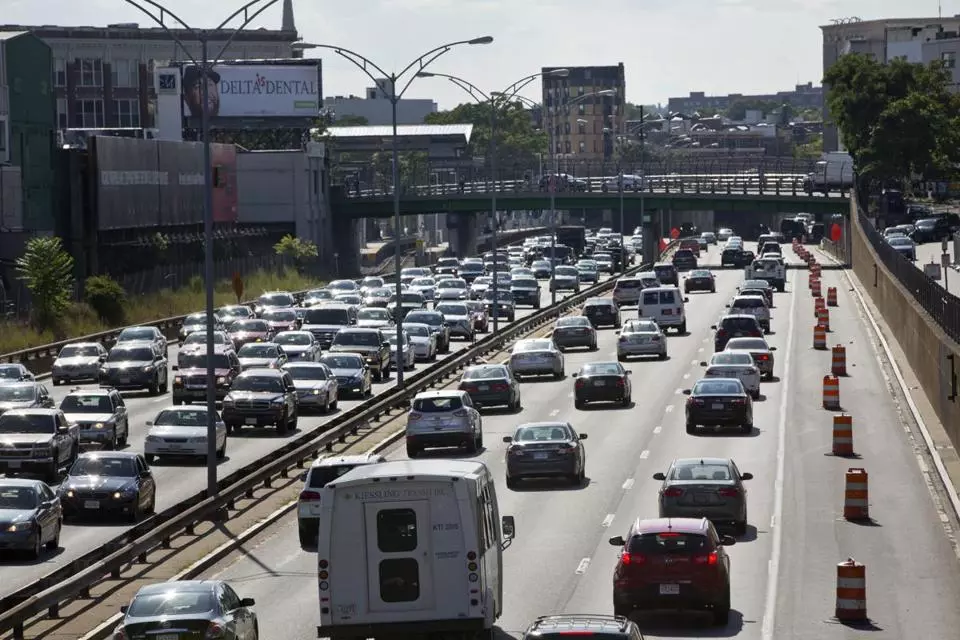
The traffic in and out of the city, especially during rush hours, can be frustrating. So much so that griping about transit problems is a favorite go-to conversation topic.
The Mass Pike, a highway which runs through the heart of Boston. (Source: The Boston Globe)
Don’t let that deter you from living or commuting here. In Boston and its surrounding suburbs, there are reasonably efficient — if somewhat antiquated — public transportation systems in place. And if you’re fortunate enough to live close to a commuter rail station, T stop, or bicycle lane, you may not even need to own a car.
Boston has also been nicknamed “America’s Walking City” for good reason. There are now plenty of sidewalks and pathways that allow one to easily navigate around the busy city districts.
If you do need a car, however, driving isn’t all that bad once you learn how to dodge the potholes. Not to mention that Boston drivers all seem to forget that turn signals exist. If you can, it’s best to use public transportation for commuting and save the car for running errands or traveling outside of the city.
To avoid traffic, keep in mind what weekends there are major sports games scheduled. Expect slowdowns before and after such events as the streets suddenly fill with cars. Remember to apply for a parking permit if it is not provided by your employer, as parking space in the city is limited.
Finding Work in Boston
This will vary depending on your qualifications and career choice. Boston is a major city in the United States and supports a large and growing workforce. You’ll find everything here from small startups to massive Fortune 500 companies.
There are always positions available for employees, it is just a matter of crafting a good CV and going out there and applying. The city itself is always looking for those eager to join their team. Use job posting websites to help you find work in your desired field and secure interviews prior to arriving.
Things to Do in Boston
You will never be bored living here. Few other cities can offer as many attractions and historical points of interest as Boston. It is rich in both culture and history, and can be explored affordably and on foot. Besides common tourist hotspots like the Boston Harbor Islands, Fenway Park, and Harvard University’s campus, there are many hidden gems to be explored.
Walk the Freedom Trail and hear stories about the founding of the nation as you stroll through a series of important locations and landmarks in the American Revolution. Along the way, you’ll see renowned landmarks like the Old North Church, Paul Revere’s home, and the USS Constitution.
Visit one of the city’s many cultural institutions. Our favorites are:
It is natural to feel a sense of anxiety and excitement when moving homes. It is also easy to overlook the small details and get caught up in this process. Take it slow and plan carefully. Do as much research as possible into the suburbs and properties available.
Take the time to explore the surroundings when you first arrive. And most of all, enjoy and keep an open mind. Boston is a big city, but the move will be rewarding.