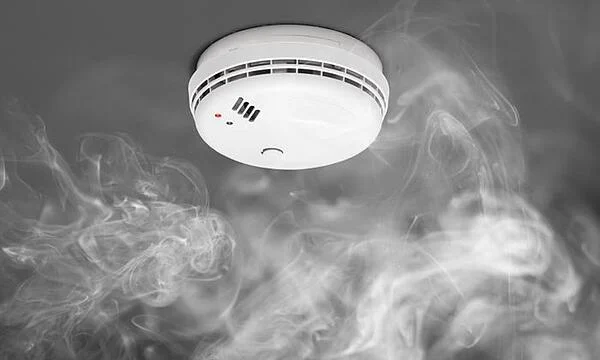
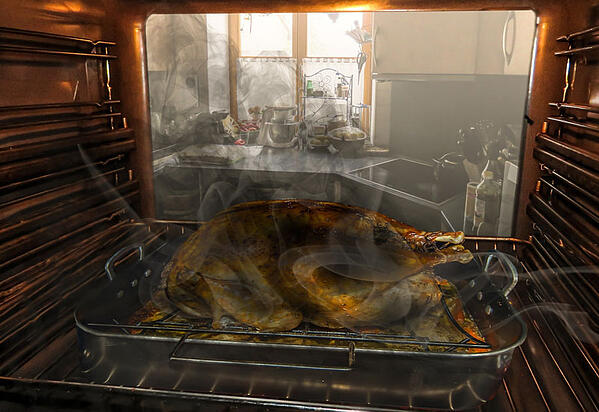
Both glass break detectors and motion sensors are great additions to a home that is protected by door and window sensors.
Door and window sensors will only activate an alarm if the actual door or window is opened, so even if you’ve got contacts on every door and window, you’re still only partially protected.
A criminal that shatters a sliding door or window and then climbs through the opening would be able to walk freely through your home without ever tripping an alarm.
This is why it is imperative to have interior protection as well as exterior systems when you design your home defense layout. Read on to learn about these two simple devices that can provide you with an additional layer of protection.
Glass Break Detectors
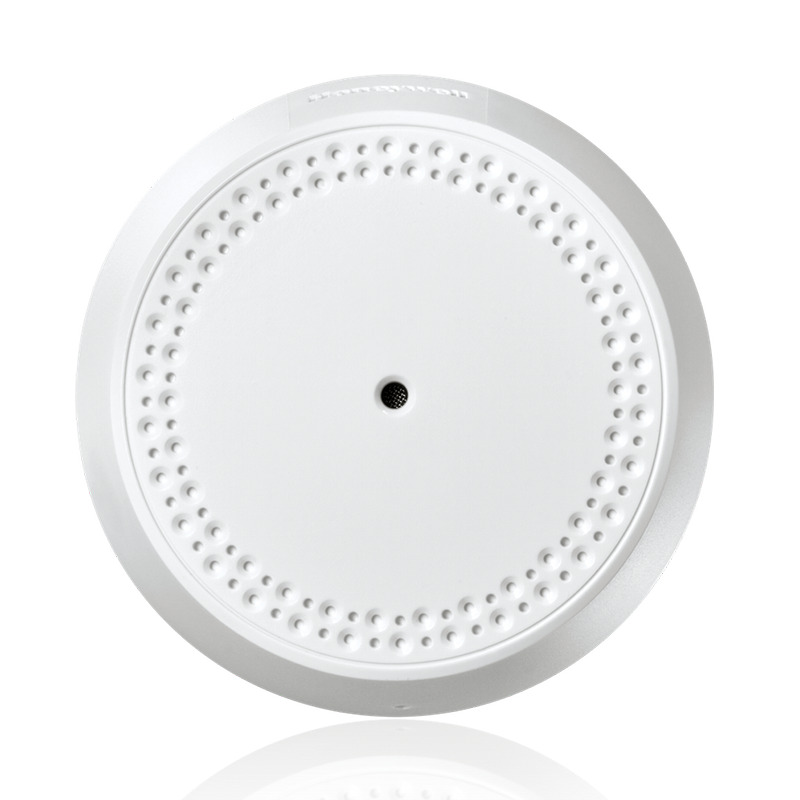
Similar to door or window sensors, a glass break detector is another form of perimeter protection. A glass break detector uses an audio microphone to pick up the audio frequency of broken glass.
If the security system is armed and hears the sound of glass breaking, it will automatically put the system into alarm and notify our central monitoring station.
Whereas door and window sensors protect the door or window from being forced open, glass break detectors protect against someone physically breaking the glass and climbing into your house.
If your home has big windows, sliding doors, or doors with nearby glass panels around it, these detectors are a great way to make your home defense system more robust.
Motion Detectors
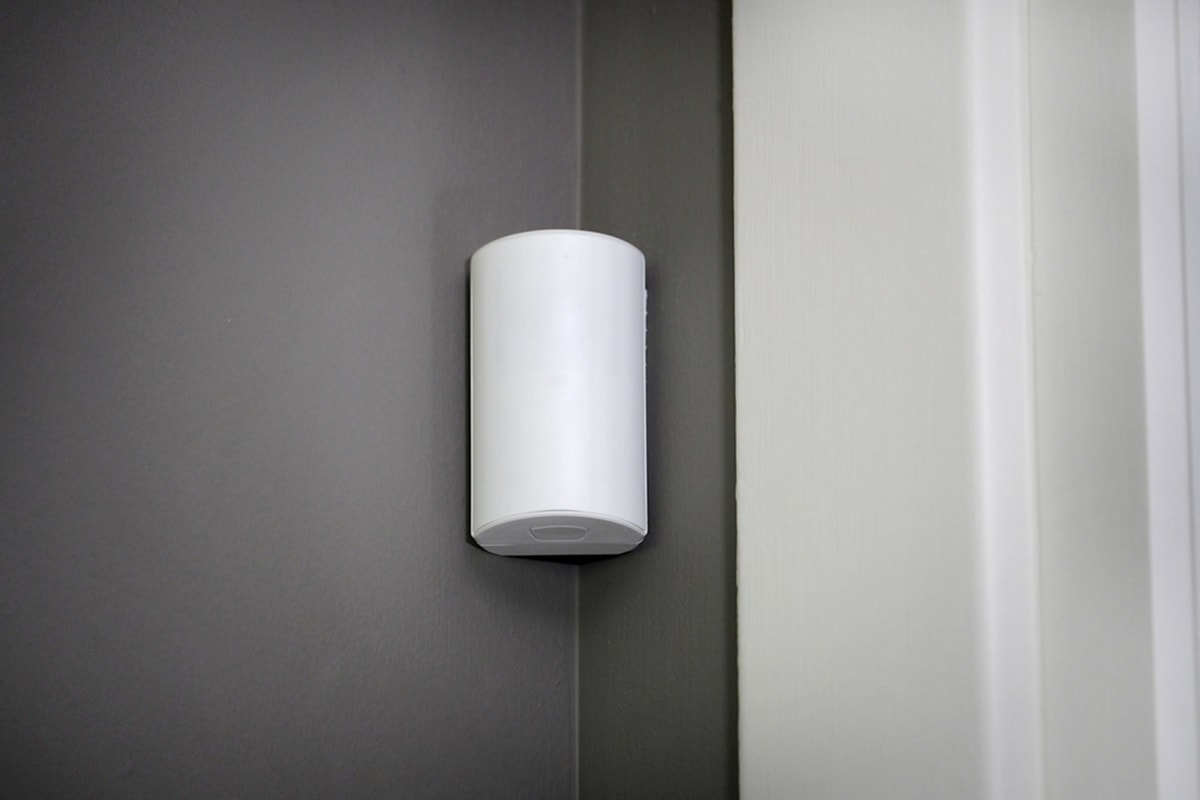
Motion sensors are considered interior protection. While door, window, and glass break detectors protect against an intruder coming through a perimeter point, a motion sensor detects intruders regardless of how they got in.
As long as the intruder walks into a room that’s protected by a motion sensor, an alarm is activated. It is always recommended to have both perimeter and interior protection when upgrading your property with home defense in mind.
Motion sensors protect against a wider range of intrusion types. Some people avoid getting motions out of concern that their pet will set off a false alarm, but the good news is there are pet-immune motion sensors out there that are safe for use with small and medium-sized dogs.
Find out more about which device is more useful for your home when you talk to our sales team at 857-445-4010.
When it comes to modern home security systems, one of the most exciting new products on the market is a new security measure for your front door: video doorbell cameras.
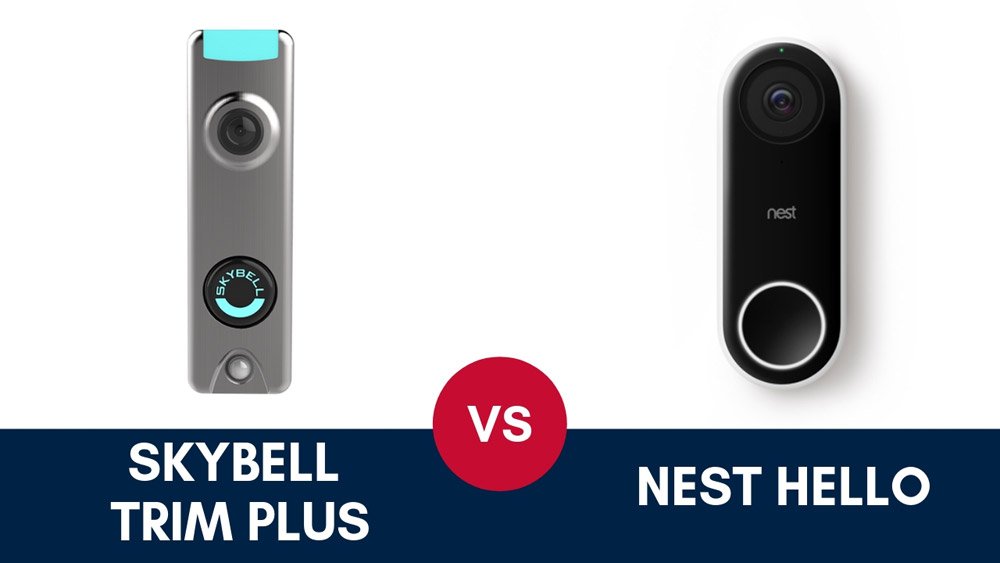
There are only a few well-reviewed options on the market at the moment, so you have likely already come across the Skybell Trim Plus and Nest Hello. To help you decide which is suitable for your home, read on for our comparison of these two leading devices.
What Is A Doorbell Camera?
These devices look just like your regular doorbell and are generally the same size as a regular doorbell and mounted in the same place. The difference is that they contain a camera that takes records and streams footage upon activation. This camera activates the moment a sensor picks up motion within a certain area.
The footage can then be opened up on your phone through an app linked to the camera, allowing you to respond to the visitor and see what is happening in front of your home from absolutely anywhere.
Doorbell cameras are designed to tie in with your home security alarm systeml so that you can control all of your devices and arm/disarm your system from a single app. To make sure that you get the right doorbell for your needs, talk to a reputable Alarm system company in your area.
What to Consider When Choosing Between the Skybell Trim Plus and the Nest Hello
Choosing the right security feature for your home involves asking yourself a number of different questions:
What kind of technology do you need to link your device with?
Do you want it to be able to film at night?
How many people will want access to the device?
How busy is your front door activity?With those questions in mind, here are some features and points of interest in the two different products.
Skybell Trim Plus
Arguably the best doorbell company out there, Skybell manufactures top-quality products with useful and lasting designs. These designs have patents in order to keep their products unique and unchallenged.
Look and Feel
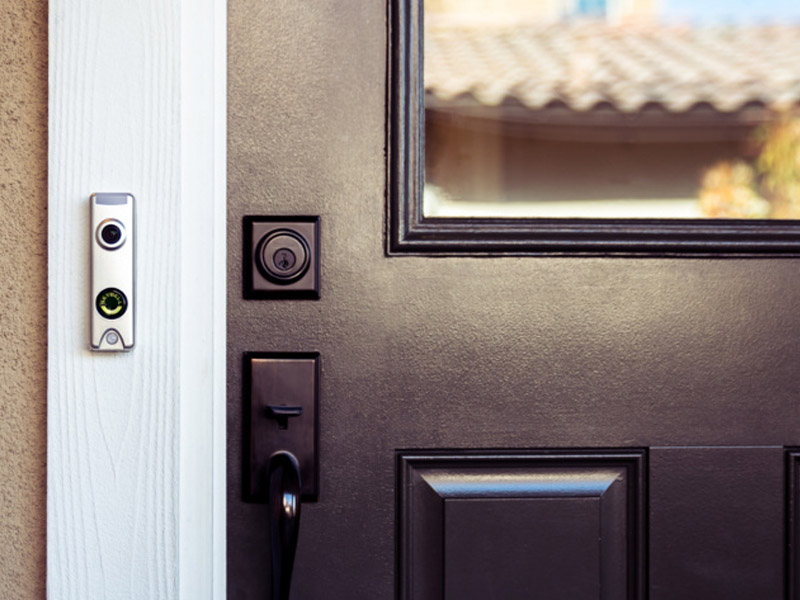
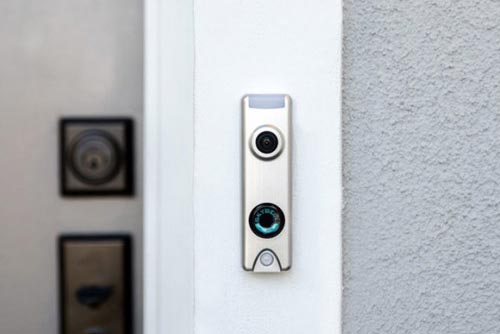
One of the first things you notice about this product is how great it looks. The Skybell Trim Plus is slim, sleek, and elegant.
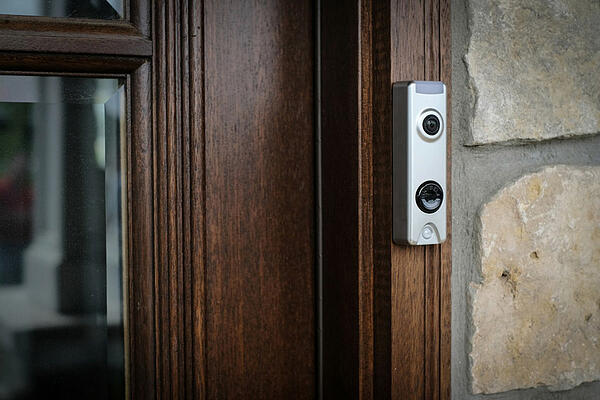
Size-wise it has been designed to fit in perfectly just about anywhere. The slim body never sticks out too much and the neutral silver finish gives it a polished look that never seems out of place. Skybell put some thought into the aesthetics, and this product will easily fit right into the look and design of your home.
Features
Motion Sensor Activity
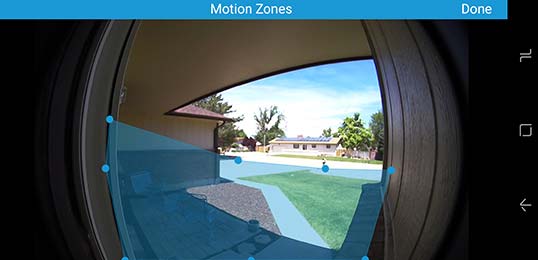
One of the great features of this bell is the motion sensor function, which acts as a useful security and surveillance tool. A sensor on the doorbell detects movement and turns the camera on. This means that even if somebody doesn’t ring the button, you will still be able to see what is going on in front of your house.
Wireless Connectivity
This Skybell product uses your internet connection to stream video to the cloud. This feature is what allows you to access the video footage from your phone or device through the application. Connection over your broadband internet allows for easy setup and constant access to the camera.
180-Degree View
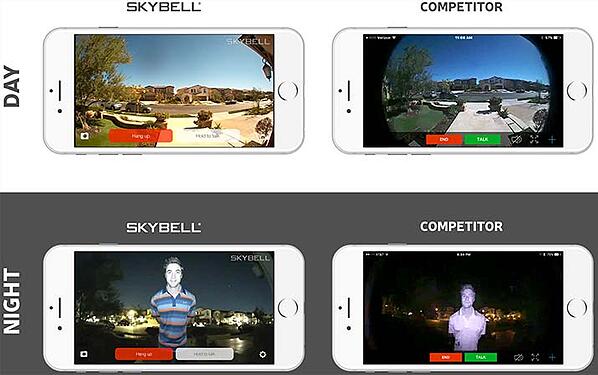
The camera on this doorbell is awesome. It provides a full 180-degree view of everything going on around its location. With the Skybell, you won’t just see what is directly in front of the camera, but will also be able to watch what is happening all around it.
HD Photograph
This camera has the added feature of being able to take a photo of each visitor. This is a useful tool for home security.
Cloud Storage
All footage from the camera is stored and saved in a cloud server. No footage is stored on the actual device, so it can’t be deleted without authorization even in the unlikely event someone would attempt to steal the doorbell.
Cost-Effective
There are no subscriptions or extra fees necessary for this product, as cloud storage is included in the price.
Integrations
Use Amazon Echo and Alexa to control your smart doorbell camera and to integrate the doorbell into the established security features of your home.
Nest Hello
Another great name in doorbells, Nest has a top-quality product on offer with their Hello Doorbell. This model is striking with its pill-shaped shell. It is durable, easy to install, and has a good reputation. If you are looking for a video doorbell that stands out, then the Nest Hello is for you.
Look and Feel
The doorbell itself is small and elegant with a more futuristic look that appeals to a tech-oriented demographic. That being said, this model is also simple and slim enough to not stick out too much.
Overall, the Nest Hello works well with all housing designs.
Features
160-degree field of view
The 160 degree 4:3 HD diagonal view on this camera means that you get the full appearance of someone standing at your door, from head to toe.
Face recognition
If you sign-up for the Nest Aware subscription, then you will get familiar face recognition on this device. What this means is that it recognizes whether there is a person, animal, or otherwise at your door. Then on top of that, it knows whether the person is a stranger or someone you are familiar with, and the doorbell will alert you to this.
Audio
With this device, you can interact with visitors at your door, either in real time as a two-way conversation or via the additional pre-recorded response. This is helpful if you know you are not able to answer the bell for a period of time.
Integrations
Use Google Home Hub and Assistant to control the view of your smart home and Nest Hello doorbell camera device.
Skybell Trim Plus and Nest Hello Compared
Ease of Use
When it comes to comparing these two different doorbell cameras, both the Skybell and the Nest Hello really shine in the usability category.
Both are compatible with your smartphone, which means that you can easily connect to your video doorbell through whatever phone you may be using.
When it comes to communicating with the person at the door, both offer two-way audio, which means you can speak to your visitors. The Nest Hello has the added advantage of being able to play pre-recorded responses—something which adds a bit of simplicity into your life.
In terms of installation, both are very easy too as neither really requires any professional installation or set up. In general, they are easy to use products.
Video Quality
If you are buying a doorbell camera, good video quality is one of your top priorities. The Skybell boasts a highly impressive camera, which can capture HD photographs, has the capability of a 5x zoom, and can be enjoyed with a full 180-degree view.
The Nest Hello also has a super high-quality camera which captures everything around your entrance. Capturing a 1600 by 1200 resolution image at 15 frames per second, this is a seriously impressive camera for a doorbell.
Monthly Fees
A massive bonus of using SkyBell technology is the lack of subscription fees. Once you have paid the retail price, everything you need becomes available to you. Typically whenever you buy a home alarm system with cameras, usually you have to pay a separate fee for cloud storage or set up your local storage solution.
SkyBell allows all users, both free and paid, to access a cloud-based portal where all video footage can be saved.
The Nest Hello does require additional subscription fees if you want to save any videos. As the Nest Hello is already an expensive device, having subscription-based add-ons seems to suggest that this device is aimed at those for whom cost is less important than the number of features.
Installation
While the Skybell can be set up at home without the help of a professional installer, the Nest Hello is slightly more complex. It’s a wired doorbell and requires a chime and a transformer to work.
(Source: Nest Community)
With this in mind, it is often better to get a professional installer to put it in for you, which means you will be liable for installation fees and this could add on another $200 or so to the overall cost.
Weather Resistance
This is an important feature to take into consideration when looking for a doorbell. Both the Skybell and the Nest have great durability in bad weather.
If you purchase the right protective silicone cover, the Nest Hello holds up well against water, UV rays, insects and general bad weather.
However, the Skybell is also a tough and durable piece of equipment. It is important to note that this product can even be used in temperatures of -40 degrees Fahrenheit.
Night Vision
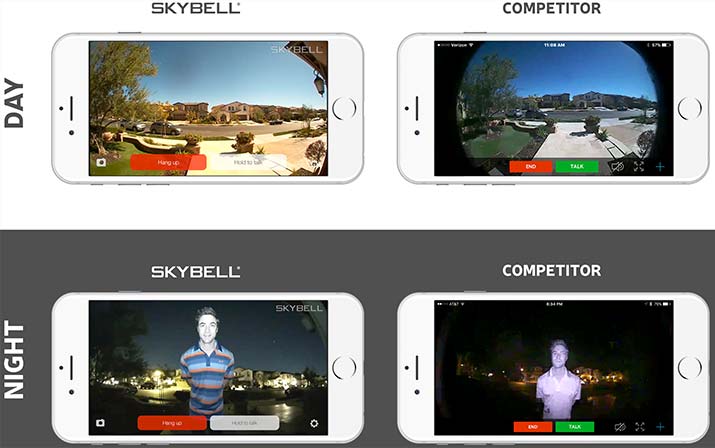
Night time is often when the security of your home is at its most vulnerable. Consequently, night vision is practically a must for your security system. Luckily, both of these doorbell cameras offer night vision and the Skybell goes one step further by offering full-color night vision.
Design
Neither camera suffers much in the looks department. Both of them blend into different home designs and color schemes with ease.
A limited number of customization options are available. While you can try out various colored protective covers on the Nest, the Skybell comes in two different color finishes.
Furthermore, they are both are easily recognizable as being a video recording doorbell. While some may prefer to be discreet and choose a device that is hard to spot, the fact that these two are noticeable actually works as a security advantage. That being said, the Skybell is taller and slimmer than the Nest camera.
Some Nest users have reported problems of the mold of the doorbell not fitting very well.
Silent Mode
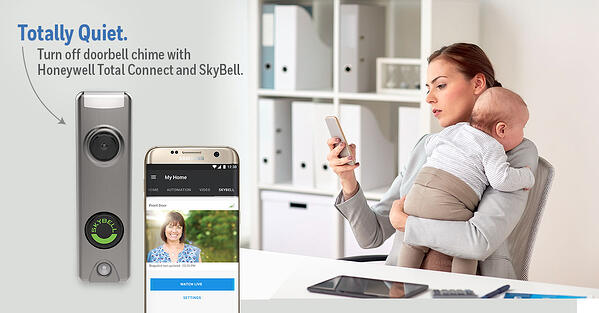
Both of these products offer a silent mode, where you can turn the doorbell off while the camera continues rolling. This feature is great for when you aren’t expecting visitors and do not want to be disturbed.
Do I Need a Doorbell Camera?
When it comes to the safety and security of your home, you really shouldn’t be taking any risks. Having an active doorbell camera positioned at your entrance can be a very useful add-on to a top-rated home security system
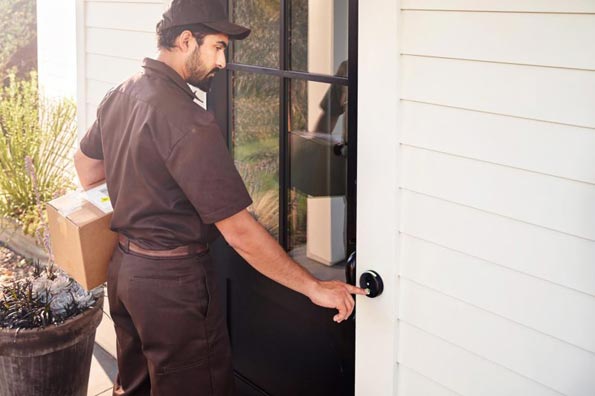
Firstly, a doorbell camera allows you to see who is ringing your bell. This way you know who to let in, who passes by your home, and exactly what the person at your door is doing. If you are not at home, you are still able to monitor what is going on through the phone linking technology.
Besides answering your doorbell, a camera is always a good idea for general surveillance purposes. Being able to access a bank of saved surveillance videos can help you a great deal in terms of safety and monitoring your security.
Final Thoughts
Both the Skybell Trim Plus and the Nest Hello are well-designed products. When the devices are compared, they fare up very well. Here are some of our favorite features that both doorbells share:
A high-quality camera
Easy to install and use
Durable and tough designs
They both look great<
They both offer functional security solutions
Although both products are very worthwhile, we think that the Skybell’s lack of extra subscription fees, slim design, fast response, and HD options give it a decisive advantage. Contact a reputable alarm company in your area to see what kind of doorbells they have on offer.
Trying to decide which SkyBell video doorbell camera is the right one for your home? The good news is you have selected a great brand, as SkyBell is one of the leading smart video doorbell brands and their range of products all meet or exceed the standards we’ve come to expect in the smart home security industry.
Let’s compare the SkyBell HD and the SkyBell Trim Plus. While these products offer many quality features, they are distinct in a few key areas. First, start by knowing which questions to ask when comparing the two video doorbells.
Things to Consider When Choosing a Video Doorbell Camera
A doorbell camera is a smart new solution in home security. These products combine a security camera with your doorbell and can be viewed and controlled through a smartphone or tablet alongside your home security alarm system.
The ability to use the video doorbell remotely adds a great level of convenience and heightened security to your life.
Consider these questions when comparing video doorbells:
Will the design suit your home?
Which doorbell has better camera quality?
What kind of technology integrations does the doorbell allow?
Does it work at night?
How good is the audio?
Is there a motion sensor option?
Let’s explore how the SkyBell HD and the SkyBell Trim Plus compare.
SkyBell HD
The SkyBell HD video doorbell is the Trim Plus’s predecessor, so as you might guess, it lacks the higher-end features that come with the later model. However, that’s not to say that the SkyBell HD isn’t a great product.
The SkyBell HD works with Amazon’s Alexa, allowing you to use simple voice commands with the Echo or Echo Dot for extra convenience. This is a highly useful feature for any doorbell camera.
The motion sensor technology is a handy feature. This allows your doorbell to pick up if someone is standing on your doorstep, even if they didn’t ring the bell. The camera will pick them up, and you can view them from your phone.
The SkyBell HD’s video quality has a high definition of 1080p with a full 180-degree view. Night mode allows you to view visitors in full HD color even when it is completely dark outside. The camera has a powerful 5x zoom that allows you to capture all of the details.
You can use the SkyBell app to control the device from your smartphone or tablet and to access the camera at any time. No matter where you are, you can answer the bell, see who is at your doorstep, and speak to them. The app also allows you to record and download videos and photos taken from the camera.
Multiple people can use the video camera from one account. If you have a family, this is a great feature because each of you can have full access to the doorbell and camera.
The SkyBell HD features a useful silent mode that turns off your indoor chime while you still receive notifications on your phone when somebody rings the bell.
Main features
HD 1080p color video camera
Compatible with Alexa
Uses the SkyBell app for remote access via your smartphone
Pros
Supports multiple users
Good camera at night
Comes with a silent mode
No monthly subscription fees
Cons
Can be difficult to connect to your Wi-Fi
Complicated installation
SkyBell Trim Plus
While you can’t go wrong with a SkyBell product, the Trim Plus is our preferred choice—we sell this version to all our customers. This doorbell camera has the same great features as the SkyBell HD and compacts them into an upgraded, slimmer, and more user-friendly doorbell.
Like the HD model, the Trim Plus is fully compatible with Alexa and can be used with your Echo or Echo Dot. The doorbell also uses the SkyBell app so you can access the video camera from anywhere. You can have a great two-way conversation through this app, and it gives you complete remote access to your doorbell.
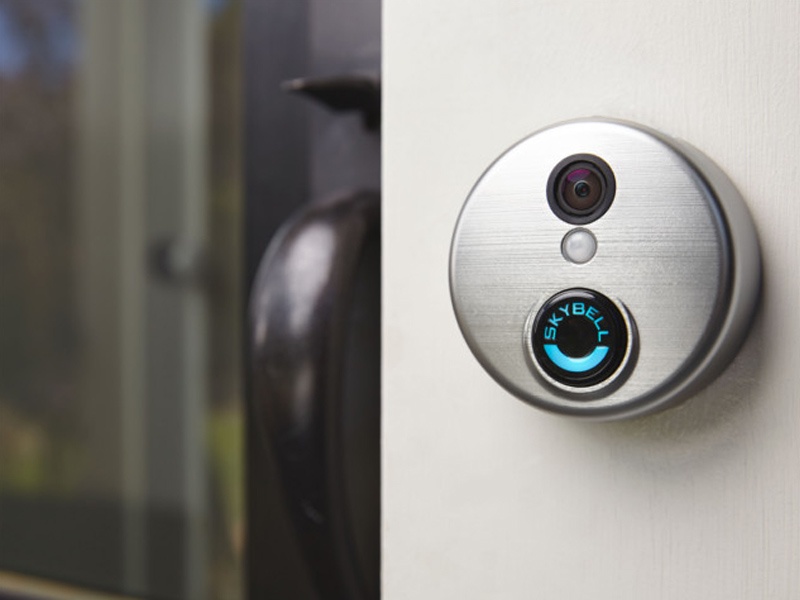
The Trim Plus design is sleeker and more streamlined than the disc-shaped HD model. This product looks more like a standard doorbell and will likely blend in more with the design of your home and doorway.
The full HD video camera makes this product fantastic. It has an HD 1920-by-1080 pixel resolution, with a frame rate of up to 15 frames per second. The camera works well in the dark, allowing you to clearly see any visitor no matter what time of day it is.
The SkyBell Trim Plus holds up well against inclement weather. This doorbell can withstand seriously harsh outdoor climates with a temperature range of -40°F to 140°F. Wherever you live, this doorbell should work flawlessly no matter the weather conditions.
The SkyBell Trim Plus has two accessories available. One is a digital doorbell adapter, which allows you to use the video doorbell with your traditional doorbell chime.
There is also a wedge that lets you mount your Trim Plus at an angle, giving you better visibility depending on the design of your porch and level of your home relative to your street.
Overall, you can expect all of the quality and handy features from your usual SkyBell products packed into a more attractive, easy to use Trim Plus design. If you’re looking for a home alarm system with cameras, we highly recommend you consider the Trim Plus as a great way to enhance your front door security.
Main features
1080p video camera
Compatible with Alexa
Uses the SkyBell app for remote access
Can withstand harsh weather conditions
Available with a digital doorbell adapter and a wedge for increased visibility
Pros
Camera works well at night
Easy to install
Attractive design
Video storage of up to 500MB
Motion sensor technology
Works well with the SkyBell app
No monthly subscription fees
Cons
Occasional false motion detection if set to a high sensitivity level
Frame rate is lower than other cameras
Wide-angle lens can make objects appear farther away than they are
Not as weather-resistant as the HD version
Comparing the SkyBell HD and SkyBell Trim Plus
Ease of use
While both doorbells use the same app for remote access, there is a noticeable difference in their ease of use. Many users have noted that the SkyBell HD can have difficulties maintaining a solid Wi-Fi connection, making it sometimes tricky to access and use.
The HD is quite technical to install and set up, while the Trim Plus has a relatively simple setup compared to most other doorbell cameras. As a whole, the Trim Plus offers a slightly better user experience.
Video quality
When purchasing a video doorbell, the quality of the video is a major factor. Both the SkyBell HD and the Trim Plus have 1080p video and give you a great color video at night and in the dark.
However, the frame rate variation between the two products is noticeable. The HD offers 30 frames per second, while the Trim Plus only offers 15. When it comes to the speed at which the camera can capture, the HD is superior. The result is a less laggy video with a higher potential of recognizing the person at your doorstep.
Design
The HD comes in a signature disc design, while the Trim Plus has a rectangular design. The Trim Plus looks more like your traditional doorbell and will be easier to incorporate into your home. The design of the HD is bigger and includes large SkyBell lettering on the button, making it look a little different than a regular doorbell.
Accessories
A great feature of the Trim Plus is that it can come with two different accessories: a wedge and a digital doorbell adapter. This gives you more room to customize your experience and create greater visibility and ease of use. The HD model does not have accessories.
Choosing Between the SkyBell HD and the SkyBell Trim Plus
While both SkyBell video doorbells offer the kind of quality and innovative features the brand is known for, the two are definitely different. We prefer the Trim Plus because it packs all of the usual fantastic features into an upgraded, more efficient package. Plus, it works better with a Honeywell smart home security system
Whichever product you choose, a SkyBell doorbell will increase the levels of safety in your home while adding an element of fun through modern technology. We highly recommend SkyBell video doorbells for any home.
Doorbells that send phone notifications, door locks that can be opened with your phone, heating systems that learn your habits and adjust to it.
Science fiction is becoming reality as modern homeowners start to invest in high-tech systems to keep their houses comfortable, safe, and energy-efficient.
This has become evident with the rising popularity of “smart thermostats,” which automatically adjust the temperature of your house in accordance to your day-to-day life.
Like any electronic device that’s labeled as “smart,” a smart thermostat is more expensive than a regular thermostat. However, think of the smart thermostat as a small, but impactful, investment.
Smart thermostats have many features that make them vastly more efficient than your run-of-the-mill analog device, so you’re almost certain to make your money back down the road from lower energy bills.
What’s Wrong With My Regular Thermostat?
In terms of its price, there’s nothing wrong with a typical thermostat. The most affordable thermostats in the market are the ones that do nothing else but let you adjust the temperature at home.
Another benefit of an analog thermostat is that even though they can be a bit dated, they are made of simpler parts can be sturdier than the average smart thermostat.
But using an old thermostat will ensure that you’ll miss out on opportunities to save money and conserve electricity. Even if you tried your best to mimic the way a smart thermostat adjusts the temperature with an analog device, you’d have a tough time achieving the same effect.
The energy bill will still have to factor in human error, and you will still be letting go of up to hundreds of dollars in rebates.
How Do Smart Thermostats Reduce Your Expenses?
Besides keeping your home at a comfortable temperature, smart thermostats are made to help you conserve energy. Let us take a look at some of the features that help save money and energy.
Automatic temperature adjustment
Frequently and erratically changing the thermostat settings on an analog thermostat will seriously overload your HVAC appliances. They will go into overdrive just to combat the outside temperature and to keep you comfortable inside. This can make energy conservation especially difficult in the winter and during the summer.
A smart thermostat completely avoids that approach as it automatically adjusts and gradually changes the temperature inside your home. As the thermostat adjusts with a steady and incremental pace, your heating and cooling appliances will have time to adapt to a more comfortable temperature — a transition that requires less power overall.
Keeps track of energy consumption
With analog thermostats, you frequently have to guess what your energy bill will be. But with smart thermostats, that is not a problem.
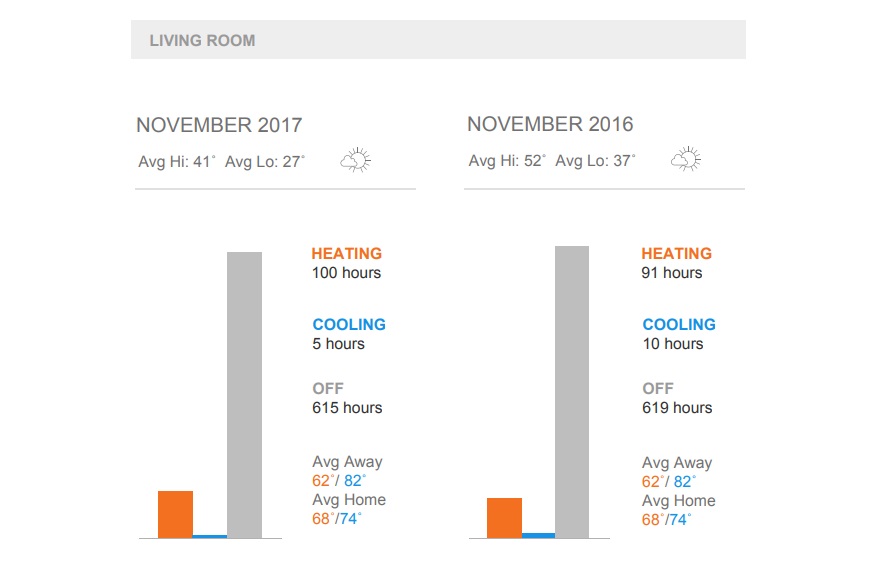
Some smart thermostats use systems that keep track of your HVAC unit’s energy usage and compile it into a neat and easy-to-read report that it sends to your phone. Smart thermostats record the hours of cooling and heating your HVAC appliances have done for the month, and can even let you compare your results with other homes in the same state.
Get rebates for smart thermostats
Not only can smart thermostats cut a significant chunk off your energy bill, but also many utility companies offer rebates for residences that have smart thermostats.
In Massachusetts, for instance, you can save up to $125 on up to three smart thermostats depending on the manufacturer and your energy provider. Once you’ve installed your thermostat, submit your rebate online within 60 days with a receipt or invoice for the thermostat.
How much money can a smart thermostat help you save?
Smart home device companies like Nest have been surveying their consumers, and their reports show that the average smart thermostat can reduce heating costs by 10% and cooling costs by 15% in a residence. For an average household, that could mean around $130 in savings each year.
Want to see how much you can save with a smart thermostat? You can use Duke Energy’s Saving Calculator here.
What brands of smart thermostats are there?
The burgeoning market for smart home devices includes many brands that might not reach the standard your home deserves. Here are five brands you can rely on when it comes to smart thermostats.
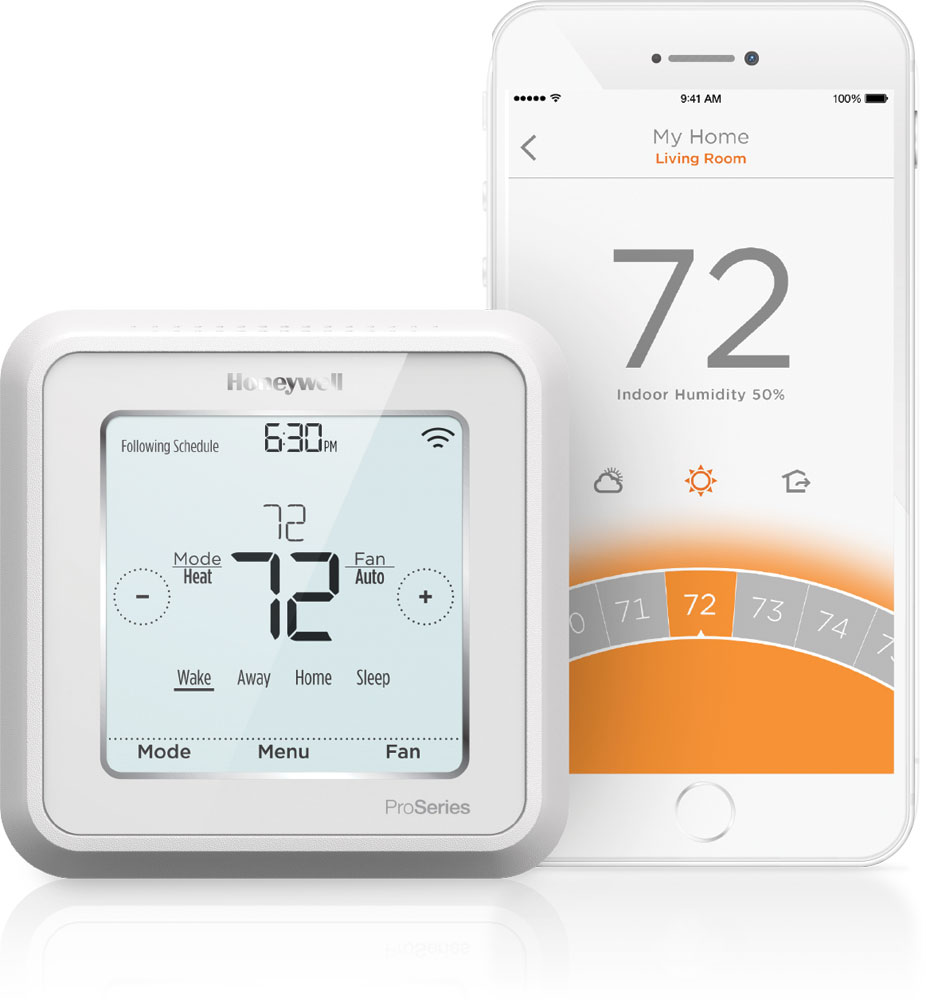
Honeywell
Honeywell is a giant technological conglomerate that offers multiple products to a wide market. They offer engineering services, aerospace systems, security solutions, and smart home devices, to name a few of their services. With their collective accumulated information, it’s pretty safe to say that they can make high-quality smart thermostats.
Their smart thermostat shows off a bright, customizable, and beautiful screen, which makes it easy to read. The screen displays the indoor temperature, outdoor temperature, and the humidity.
This thermostat is easily programmable and it also has a feature where it asks you to fill out a few questions so it can create a week-long thermostat schedule for the household. The thermostat can also adapt to the household’s habits to create optimal comfort.
This thermostat is a great smart home device for starters. It’s caught almost at the halfway point between analog thermostats and top-of-the-line thermostats. With its semi-traditional and straightforward display, it’s easier to understand than most smart thermostats. Honeywell’s thermostat can also be significantly cheaper than many other smart thermostats.
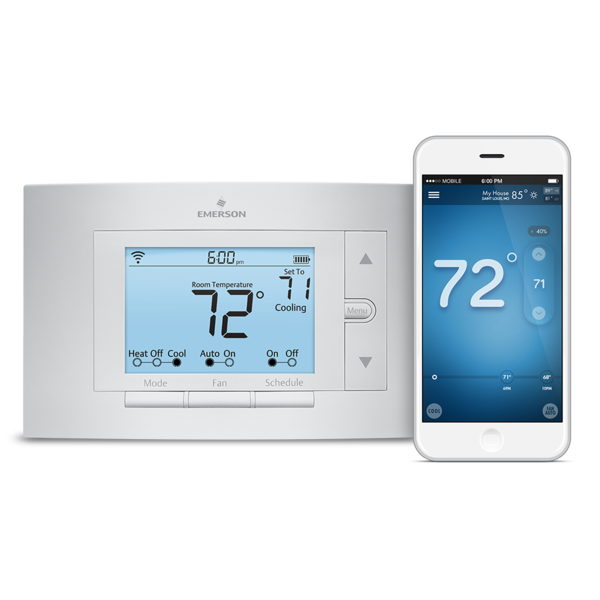
Sensi
Sensi is a brand dedicated to crafting smart thermostats under the manufacturing company Emerson Electric. Sensi carries Emerson’s vision of creating better solutions for its commercial, residential, and industrial consumers. Being under the wing of a long-standing company, Sensi’s thermostats might be just what your home needs.
Although it still classifies as a smart thermostat, Sensi’s product is compatible with many HVAC systems. Its display is similar to older thermostats, but don’t let that fool you. It is highly programmable and can be remotely controlled from its companion app.
This thermostat is great for families that live in older homes. It’s easy to install and can operate on a pair of batteries. If adaptive thermostats aren’t what you’re looking for, then this smart thermostat might be perfect for you.
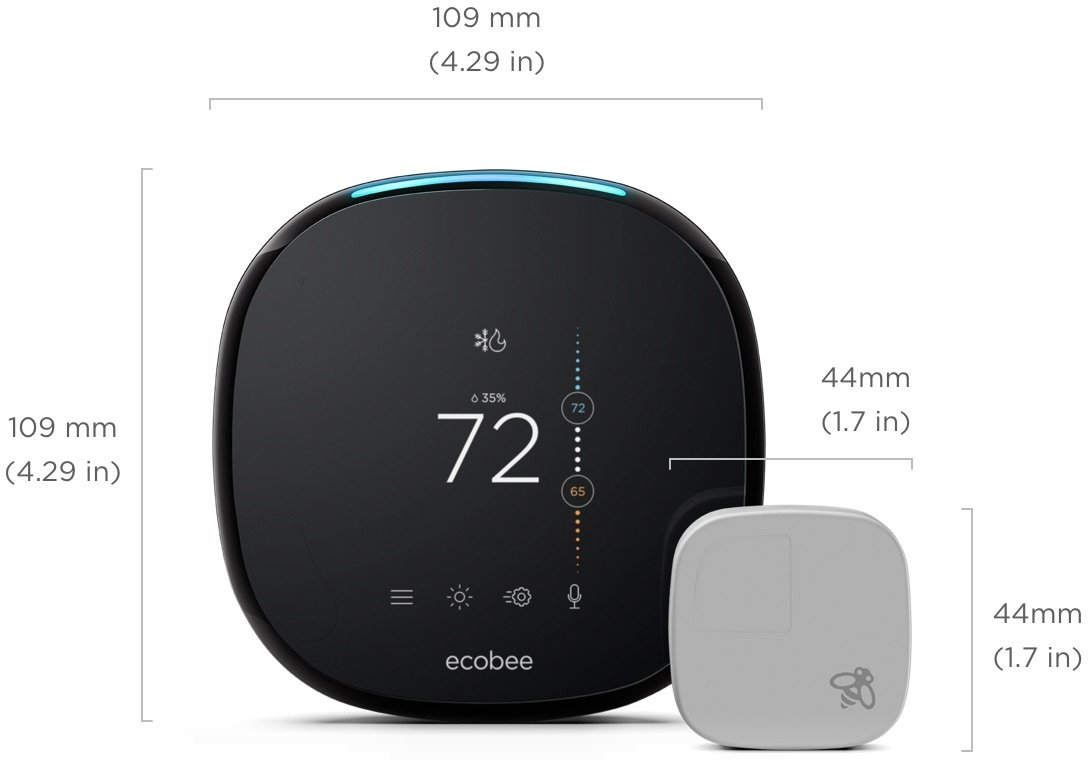
Ecobee
Unlike most smart home device companies, Ecobee has its focus set entirely on smart thermostats. Ecobee company strives to make thermostats that are not just functional, but aesthetically striking as well. With Ecobee’s passion for their business and the environment, their thermostats have nowhere else to go but forward.
At the cutting edge of smart home devices, Ecobee’s thermostat is packed with high-tech features and designs. The thermostat itself is a touchscreen, putting seamless style at the forefront. The thermostat also comes with sensors you can put around the house.
These sensors track your behavior indoors and they help the thermostat automatically adjust the temperature of your home for maximum comfort. The thermostat also tracks your HVAC habits and can create monthly reports.
Ecobee’s thermostat is perfect for a household with at least one resident data and gadget enthusiast. The tracking feature lets you see how much power you’re using monthly, and can help you conserve energy.
If you’re the plug-and-play type of person, this thermostat is great for you, too! It learns from your thermostat adjusting habits so that eventually you may not need to touch the thermostat again at all.
Nest
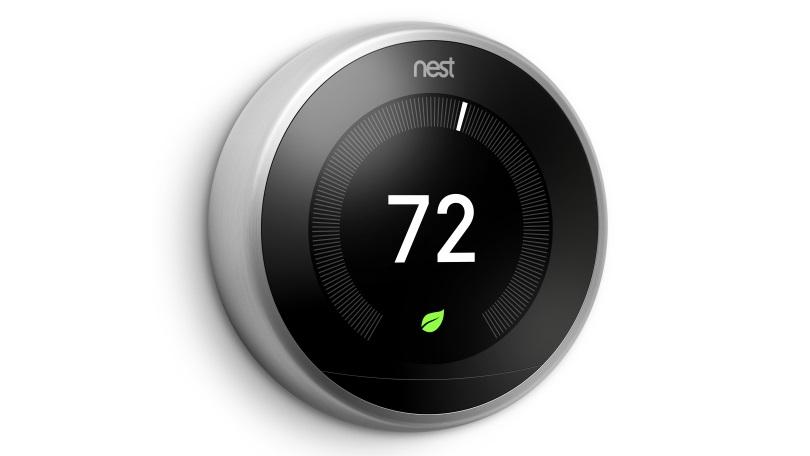
When it comes to creating smart home devices, Nest is a forerunner for many. It’s a home automation organization founded by former Apple engineers and is a subsidiary of Google.
They are focused on creating home automation systems that are self-learning, programmable, and self-driven. Supported by innovative giants in the tech industry, thousands and thousands of people swear by Nest’s thermostat.
Nest doesn’t need a lot to achieve the efficient and comfortable temperature your household has been looking for. It simply learns from your programmed settings and adjustments. When given enough time, it can be the self-driving thermostat you never knew you needed.
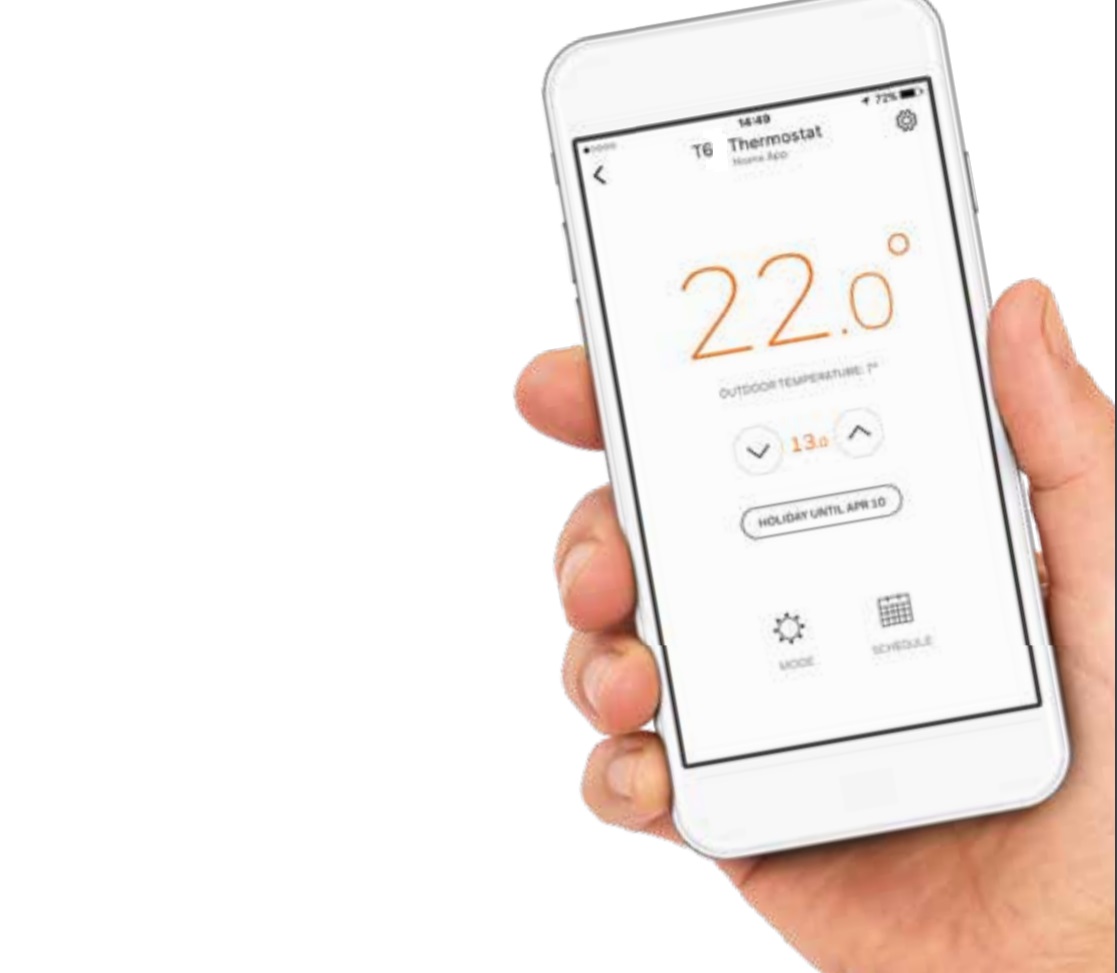
You can remotely control it through its app, even when you’re away from home. It also sports a touchscreen dial on the display, joining the old with the new.
The Nest thermostat is great for families who have already found their forever homes. Its robust systems and software features make for a much more comfortable and hands-free experience.
Once installed, the thermostat—with its simple UI— can be easy to use for people who need more time to get acquainted with new technology. Like other thermostats, the Nest thermostat can also create reports to help you keep track of your power usage.
Conclusion
Besides keeping your family warm during the cold and cool during hot days, smart thermometers can also give peace of mind. Just by taking the basic features of an analog thermostat and giving you more control through the latest technology, smart thermostats can help you save money in the long run.
A startling 12 percent of the remaining fatalities occurred in homes equipped with smoke detectors that were not functional. These harrowing stats have led to the expansion and development of smoke detection laws and requirements in Massachusetts.
The Massachusetts smoke detector law now requires all homeowners to install up-to-date smoke and carbon monoxide detectors that will alert residents to the presence of smoke, fire, or deadly gases. The newest regulations give Massachusetts residents clear instructions on when and how smoke detectors need to be assessed, maintained, and replaced. Homes of any age generally require one smoke detector on every habitable level of the home, and a smoke detector on the ceiling above each stairway. There are different rules and regulations for homes built before January 1, 1975, between 1975 and August 27, 1997, after August 27, 1997, and after January 1, 2008. Therefore, it is important to know when your home was built so you can be prepared for your homes’ unique requirements during and inspection.
Placing smoke detectors in the correct areas can make them more effective and prevent fires from becoming deadly. By tightening up the law, the state hopes to prevent and reduce smoke and fire-related fatalities altogether.
Knowing the most recent Massachusetts smoke detector law and understanding its regulations is essential to keeping your family and home safe in a fire or gas leak. Here is what you need to know to stay up-to-date with the detection laws for smoke detectors Massachusetts.
Without early detection, smoke and deadly gases begin to spread quickly and move faster than heat. In these cases, victims are likely to die from smoke or gas inhalation—not from actual burns. This is why effective and early detection is of the utmost importance. The majority of fire-related fatalities occur because families were asleep and unaware of the danger.
That’s why smoke alarms are an absolute necessity. These systems alert families, giving them adequate time to escape without being harmed. Properly installed and well-maintained smoke and carbon monoxide detector systems are now required by MA smoke detector law to ensure residents take their safety seriously.
If you live in or near Boston, MA, CT or RI, we can help bring your current smoke detectors up to Massachusetts law code and provide professional smoke alarm monitoring. This means that we can immediately dispatch the fire department to your home if your smoke detectors go off without your knowledge. We take home security in Boston seriously, so you can rest assured you’re getting the best protection from up-to-date technology that’s UL approved and NFPA 72 compliant.
The photoelectric smoke detector is more reliable and efficient, but many older homes have ionization detectors. It’s important to know the differences between these two types of smoke detectors so you know what’s best (and legally required) for your home protection. If you’re not sure about which type you need, contact an alarm company near you and ask and they may be able to assist.
Photoelectric Smoke Detectors
As the more recent and advanced technology, photoelectric smoke detectors are becoming the popular choice for equipping your home with detector systems.
Photoelectric systems come with both a light source and a light sensor. Both are arranged so that the rays from the light source hit the light sensor, working in tandem. When a fire occurs, smoke particles cross the path of the light beam, leaving some of the light scattered, redirecting it to the sensor. This immediately activates the smoke detector, sounding an alarm to alert you and your family.
Experts state that this technology is undeniably the most efficient and effective on the market. Photoelectric smoke detectors have the ability to detect both smoldering (slow) fires, which are more likely to result in fatalities, as well as flaming (fast) fires.
Photoelectric detectors are also less sensitive to smoke from steam or cooking, reducing the likelihood of unnecessary false alarms.
Ionization Smoke Detectors
The slightly older technology of ionization systems has a small radioactive source used to charge the air inside the system. An air current crosses through the chamber, running between two electrodes to create a circuit. When smoke makes contact with the system, it blocks the air current, causing the alarm to trigger.
In comparison to photoelectric systems, ionization technology is able to detect flaming fires most efficiently and smoldering fires at a much slower rate. This may also lead to increasing false alarms as a result of cooking smoke or steam.
Change in Smoke Detection Laws in Massachusetts
In 2010, Massachusetts smoke detector laws shifted significantly. The previous smoke detector laws were only implemented when a transfer or sale of property took place. The new 2010 regulations were created to ensure that homes that didn’t change ownership didn’t fall through the cracks.
These laws are generally enforced when a property is being renovated or sold. Without a verified certificate of inspection, the house cannot be sold or legally change hands. But even if you’re not selling your house, you should update your smoke detection systems to meet the following requirements to ensure your home and family is safe.
Minimum Smoke Detector Requirements
The new regulation requires all owners of a residential building to install either photoelectric or combination detectors (which is both photoelectric and ionization). Additionally, any ionization detectors must be placed a minimum of 20 feet away from a kitchen or bathroom. Photoelectric systems, on the other hand, can be installed anywhere in your home.
Under the new law, all homeowners have to assess the fire prevention systems currently installed on their properties and have the option to install a combination system that possesses both photoelectric and ionization detectors or install two separate detectors.
These are the basic requirements homeowners must meet to receive a verified certificate of inspection from a local fire marshal:
1. All preventative fire systems are required to be photoelectric or combination
2. All systems must have sealed, non-replaceable 10-year batteries.
Recommended Requirements for Additional Protection
These are the optional recommendations for added protection.
1. Non-obligatory smoke systems are allowed to have replaceable batteries.
2. Non-obligatory smoke systems may be either photoelectric, ionization, or combination type.
Massachusetts Carbon Monoxide Detector Law
If you are considering selling your home in Massachusetts, you also need to ensure your home meets the state carbon monoxide detector law. This law is referred to as Nicole’s Law, named after 7-year-old Nicole Garofalo who died after a blocked heating vent resulted in carbon monoxide accumulating in her home.
The law states that when selling your home, it is mandatory to have a functional carbon monoxide detector installed.
Carbon monoxide detectors are a requirement for any home that has any of the following:
Boiler
Furnace
Water heater
Fireplace
Any other appliance, apparatus, or device
This regulation states that there must be a detector on each completed level of the home placed within 10 feet of each bedroom door. In this case, detectors need not be hardwired, and battery-powered or plug-in options are usually popular.
According to Massachusetts’s law, the following carbon monoxide detectors are permitted:
Plug-in with a battery backup
Battery powered
Hardwired
Low voltage
Wireless alarms
Combination smoke and carbon monoxide detectors
As per all smoke detector regulations, inspections can be done by MA local authorities, such as a fire marshal, who will then give you a verified certification upon successful completion. This certification is valid for two months, and you can’t sell your home without it.
It is thus imperative to understand how Massachusetts smoke and carbon monoxide laws work hand in hand. Without complying with both of these regulations, you will not be able to sell your home.
How to Prepare Your Home for a Smoke and CO Alarm Inspection
To ensure your home is ready for a smoke and carbon monoxide (CO) alarm inspection, start by locating all the smoke and CO alarms throughout your residence and keeping a record of their locations. Next, research when your home was built and check for any recent building permits, as this information will help you understand the specific alarm requirements for your property. Carefully inspect each alarm, noting its age, whether it’s functioning correctly, and if it has expired or needs replacement. Finally, test all the alarms in your home to verify they are operating as intended. By following these steps – finding and documenting all alarms, understanding your home’s requirements, checking alarm ages and functionality, and testing each unit – you can confidently prepare for a successful smoke and CO alarm inspection.
When Should You Replace Fire Alarms?
Many residential fires occur in homes that have detector systems installed. There are many reasons why these systems may fail to work, including batteries not being changed, system failure from exceeding its shelf life, or removal of the system altogether.
It is for that reason that older homes are expected to have 10-year battery lives on their detector systems. If you are unsure of the lifespan of your system or whether the system has exceeded it, you can always check the date at the back of the alarm system panel.
If there is no date stamped on it, chances are the system has already exceeded its life span and does not qualify, meaning you will need to replace it immediately.
Massachusetts Legal Requirements for Replacing Alarm Systems
According to the Board of Fire Prevention regulations, the state fire code now requires that homes have smoke detector systems that are not expired.
When replacing your smoke detector system, these are the minimum Massachusetts smoke alarm requirements that you must follow (on top of the conventional manufacturer’s instructions):
System must be photoelectric
System must have an easily accessible silence button
All alarms can either be solely photoelectric or combined with an ionization and carbon monoxide systems and technology. (It is important to be aware that carbon monoxide parts can fail well before 10 years and need to be checked regularly.)
Alarms must be on every liveable level of the residence (including basements or attics)
All additional battery-powered alarms that are older than 10 years must be replaced
All alarm replacements must have 10-year sealed, non-rechargeable, and non-replaceable battery packs
In homes that have two or more residents, detector systems should be installed in all common areas
Is Your Home Safe and Compliant With These Regulations?
These laws have been implemented in Massachusetts to avoid unnecessary fatalities that result from dysfunctional or badly installed smoke and carbon monoxide detector systems. All codes outline the compulsory minimum requirements for you and your family’s protection.
In many cases, simply following the minimum requirements is not enough—it’s safer to follow the recommended precautions as well. Going above and beyond the minimum requirements eliminates potential issues from causing harm to you or your family.
In some cases, you may want to find a private company to install and provide professional alarm monitoring services for your smoke alarms. Should a fire or carbon monoxide leak occur at any time, the system will notify the 24/7 monitoring center, who can then dispatch emergency services immediately if need be.
This keeps your home and family safer, especially if you’re asleep or away from your home. Contact Alarm New England today and we can help you update your smoke and CO alarms to meet current regulations and provide you and your family with the highest level of safety.
Resources
If you have questions about the most up-to-date local requirements for smoke alarms that we didn’t answer above, please contact the local fire marshal or the Massachusetts Department of Fire Services:







 (Source: Nest Community)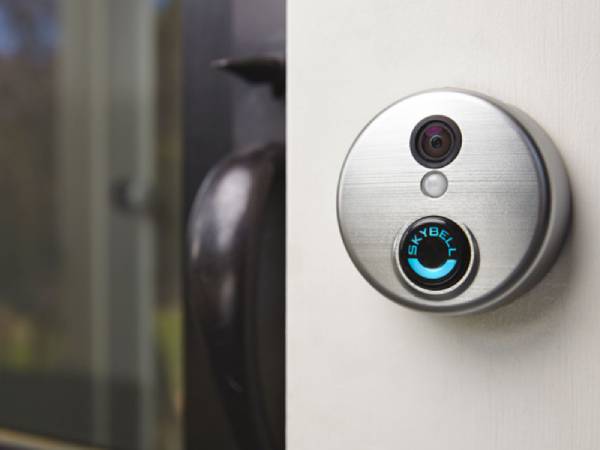





![Massachusetts’ Smoke Detector Law [Expert Guide]](https://alarmnewengland.com/wp-content/uploads/Massachusetts20Smoke20Detector20Law20-smoke20detector.jpg)